Tuesday, November 13, 2018

Nielsen - San Francisco Symphony / Herbert Blomstedt ‎– Symphonies 1 & 6


This is my post from this week's Tuesday Blog.


For November, I’ve lined up a pair of Tuesday posts highlighting symphonies by a pair of Scandinavian composers. This week is a Cover 2 Cover share of a pair of Nielsen symphonies.

A few months back, I featured Nielsen’s Fourth symphony with Herbert Blomstedt and the Danish Radio Symphony Orchestra - part of his earlier Nielsen cycle, recorded between 1973 and 1975, and for their time were the best available recordings of Nielsen's key works.

Later on digital format, Herbert Blomstedt recorded a second Nielsen cycle with the San Francisco Symphony Orchestra. Like its predecessor, it too has been unmatched for 30 years. That is quite an achievement for any conductor.

Today's featured disc includes the Symphonies Nos. 1 and 6 from that second cycle.

Nielsen wrote his first symphony at 27 years of age. Lyrically, Nielsen demonstrated his talents very successfully in his first symphony, and this at 27!

The Sixth Symphony may be partially autobiographical; the composer had just experienced a tremendous success with his Fifth symphony, but had also suffered a series of heart attacks He was to write several more works, but in the remaining six years of his life, the atmosphere of his works began to change.

Note to Collectors: This year we shared a pair of Nielsen symphonies (nos. 4 and 5) in the Vinyl’s Revenge series, and posted a Friday podcast containing the Third and the clarinet concerto. The second symphony was part of a Stokowski Friday montage a few years ago.

Happy Listening!

Carl NIELSEN (1865 –1931)
Symphony No. 1 in G minor, FS 16 (Op. 7)
Symphony No. 6 ("Sinfonia semplice"), FS 116
San Francisco Symphony
Herbert Blomstedt, conducting
Venue – Louise M. Davies Symphony Hall, San Francisco, September 1988.
London Records ‎– 425 607-2 [L|H]
Format: CD, Album
Released: 1989

Details - https://www.discogs.com/Nielsen-San-...lease/11740579 

Internet Archive URL - https://archive.org/details/01SymphonyNo.1InGMinorOp.7Fhttps://archive.org/details/01SymphonyNo.1InGMinorOp.7F

Friday, November 9, 2018

Porgy and Bess

No. 295 of the ongoing ITYWLTMT series of audio montages, which can be found in our archives at https://archive.org/details/pcast295


=====================================================================

At last count, in my Internet Archive collection, I have about 470 audio entries, and a few videos – over the years, only two have been expunged by the site managers due to copyright claims. Today, I’m re-issuing one of these audio shares, originally issued under my Tuesday series Once Upon the Internet by creating a “mashup montage” and combining it with another like-minded work.

Cast recordings of George Gershwin’s lone Grand Opera Porgy and Bess date back to 1935 and the early forties (when the opera was revived after Gershwin’s death). Porgy and Bess: A Symphonic Picture is a 1942 album arranged by Gershwin's collaborator and sometimes arranger Robert Russell Bennett, which includes most of the best-known songs from the opera, although not in the exact order of their appearance. While some of the more esoteric parts of the opera are absent, many of the catchier tunes that can be heard in this suite are absent in others, including Gershwin's own Catfish Row Suite, which tended to highlight the more cerebral elements of the work.

Porgy and Bess has been the subject of many so-called “concept albums”, some of which have had snippets shared on past montages over the years. Two seminal concept albums – both from jazz legends dating from the same year, 1958 – come specifically to mind: Miles Davis’ East-Coast Studio effort and one by the duo of Ella Fitzgerald and Louis Armstrong from the West Coast. The latter is presented in its entirety here today.

The album is considered the most musically successful amongst the jazz vocal versions of the opera and was released to coincide with the 1959 movie version. In 2001, it was awarded a Grammy Hall of Fame Award, a special achievement prize established in 1973 to honor recordings that are at least twenty-five years old, and that have "qualitative or historical significance." The arranger on this album, Russell Garcia, had previously arranged the first jazz vocal recording of the work, 1956's The Complete Porgy and Bess.

A review of the album claimed "What's really great about the Ella and Louis version is Ella, who handles each aria with disarming delicacy, clarion intensity, or usually a blend of both... Pops sounds like he really savored each duet, and his trumpet work – not a whole lot of it, because this is not a trumpeter's opera – is characteristically good as gold. This marvelous album stands quite well on its own, but will sound best when matched with the Ray Charles/Cleo Laine version, especially the songs of the Crab Man, of Peter the Honey Man, and his wife, Lily the Strawberry Woman."

The performance, unlike the Miles Davis version, proposes nearly all the songs (arias) from the opera, and except for the long “overture” does not provide instrumental tracks for Armstrong to perform at the Trumpet, save for a relatively short introduction to “I Got Plenty of Nuthin’”


I Think you will Love this Music too

Tuesday, October 30, 2018

Sir Edward Elgar (1857-1934)


This is my po st from this week's Tuesday Blog.

No. 294 of the ongoing ITYWLTMT 
series of audio montages, which can be found in our archives at https://archive.org/details/pcast294


=====================================================================

This week’s Blog and Podcast – our quarterly “Fifth Tuesday” post - features two of Sir Edward Elgar’s three concertos – his concerto for violin and his more famous cello concerto.

According to the Elgar Society’s website, two concertos for the cello are performed more often than any others. One is by Antonin Dvorak, an epic work brimming with melodies and embracing a wide range of emotion. The other is Elgar's: intimate, highly-concentrated and unlike any other ever written for the instrument.

Elgar wrote the concerto in 1919, just after the Great War. Appalled and disillusioned by the suffering caused by the war, he realized that life in Europe would never be the same after such destruction. His first reaction had been to withdraw from composition, and he wrote very little music during the war's first four years. Then, over a period of twelve months - from August of 1918 to the following August - Elgar poured his feelings into four works that rank among the finest he ever composed. Among that set was the Cello Concerto, Elgar's lament for a lost world. The performance I chose is by Canadian cellist Shauna Rolston.

Elgar was at the height of his fame when the Philharmonic Society commissioned a violin concerto in 1909. The work was dedicated to Fritz Kreisler, the internationally famous violinist who was the soloist at its first performance.

The work is long for a violin concerto and expansive in mood but nevertheless compelling and not overblown. It contains none of the pomposity and swagger found in many of Elgar's works which some commentators find disturbing and rather distasteful. The work is firmly established in the classical repertoire although not performed frequently. The performance on the montage is one by Nigel Kennedy during the early stages of his career.

It is easy to dismiss Salut d'Amour as an insignificant trifle, salon music not deserving a wider audience. However, for the work to establish itself so forcefully in what was a fiercely competitive field says much for its charm and quality. The version of the piece I chose to complete the podcast is a setting for violin and small ensemble, featuring Gil Shaham and the Orpheus Chamber Orchestra.

I think you will love this music too.

Sunday, October 28, 2018

Project 366 - Modern Time Capsules

Project 366 continues in 2017-18 with "Time capsules through the Musical Eras - A Continued journey through the Western Classical Music Repertoire". Read more here.


As we near the end of our series of Time Capsules, we now focus on the music of the last 100-plus years and some of its main currents forming what we collegially call “Modern” or “contemporary” music.

1913 is an important uear in music, and for many people it marks a clear inflexion point in Western Classical Music – the Skandalkonzert of March that year and the infamous evening of ballet in Paris a few months later represent significant events – to quote Don McLean “the day the music died”, or certainly Romantic traditions and approaches. Harmonies and rhythms that were the norm for centuries now were displaced by serialism, 12-tone and miminalism.

Listener Guide # 228 – Alban Berg (1885-1935)
A pillar of the Second Viennese School, Berg wrote atonal and 12-tone compositions that remained true to late 19th-century Romanticism, strongly influenced by the young composer’s musical gods, Gustav Mahler and Richard Wagner. (ITYWLTMT #281 – 1 June 2018)


Modern music trends aren’t limited to atonal construcycts. Mush music of the 20th century, especially that composed in Europe, relied on motifs inspired by local folk music, or even nature. The next set of time capsules illustrates some of these currents.

Listener Guide # 229 – Messiaen, the Spiritual Composer
It is quite an understatement to say that Messaien's music is rhythmically complex. Messiaen chose to make use of rhythms from ancient Greek and from Hindu sources, and the musical language (and sometimes even the titles of his works) have a strong Mid- and Far-Eastern flavour Many of his compositions depict what he termed "the marvellous aspects of the faith", and drew on his deeply held Roman Catholicism. (ITYWLTMT Montage # 45 – 2 March 2012)

Listener Guide # 230 – Jewish Inspirations
We also sometimes talk of music as either sacred or secular. I’m not quite sure where to place music of Hebraic or Jewish inspiration in those contexts – are we talking about a tradition, or a form of religious music? None of the pieces I selected for this Time Capsule are in my view religious in nature, but they do share the common distinctive sound, at times “schmaltzy” we associate with Jewish folk music. (ITYWLTMT Montage # 259 – 22 Sept. 2017)


Listener Guide # 231 – Bela Bartok: The Three Violin Sonatas
Commemorating the 50th anniversary of Béla Bartók's death, violinist Gullermo Figueroa was featured at the first complete New York performance of the composer's violin sonatas. These three works represent two different stages of Bartók's creative life: the Two Sonatas for Violin and Piano, from his most radical and experimental early period, and the Sonata for Solo Violin, one of the four last great works written shortly before his death. (Once Upon the Internet #2 – 24 July 2014) 


Across the pond, music composed in the-Americas developed its own specific sound, mainly inspired by the Blues and Jazz and latin rhythms South of the Equator; though, some composers such as Charles Ives merely extended the overall exploration of his European contemporaries.


Listener Guide # 232 – Bernstein Conducts Ives
I loath to pigeon-hole Charles Ives as an “American:” composer, as his work transcends the ill-defined notion of “American Music”. His music is a blend of late-Romantic and modern music, more akin to, say, Scriabin than to Schoenberg or Stravinsky in that sense (save for the mysticism). His later works can be challenging to listen to at times, but the set assembled by Bernstein is quite accessible, and some of the pieces have become American classical music “standards”. (Vinyl’s Revenge #37 – 24 April 2018)

Listener Guide # 233 - Due South
The theme for this Time Capsule has to do with “going South”. South can be both a relative and an absoluter term. It includes two 20th century works: one by Ralph Vaughan-Williams, the other by the Argentinian King of the Tango, Ástor Piazzolla. (ITYWLTMT #284 – 13 July 2018)


Listener Guide # 234 - Ragtime: Original piano rolls (1896-1917)
Scott Joplin never made an audio recording as a pianist; however his playing is preserved on seven piano rolls. All seven were made between April and June 1916: six released under the Connorized label and the other roll, a recording of "Maple Leaf Rag" was recorded on the Uni-Record label in June 1916. (Once Upon the Internet #53 - 29 Nov. 2016)


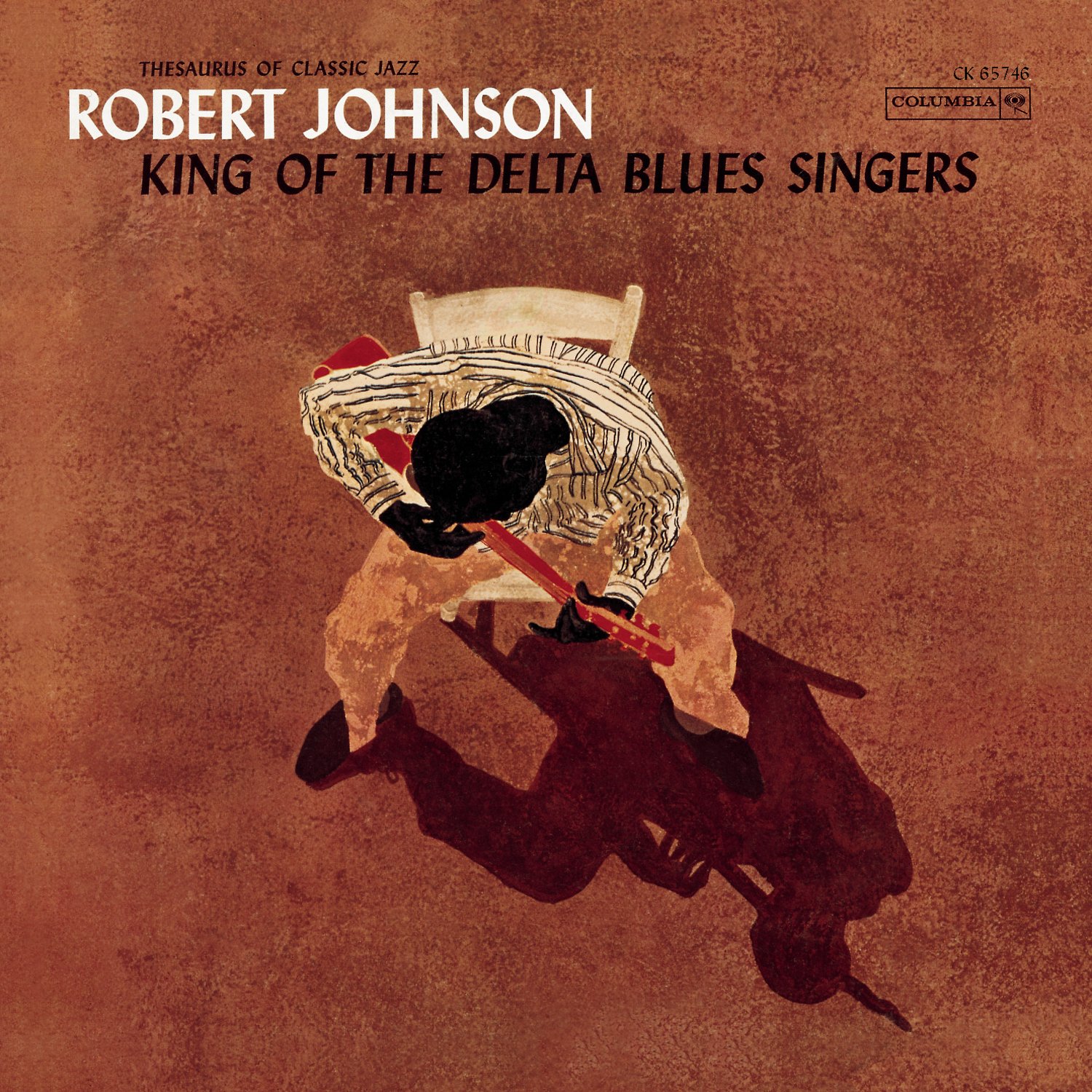
Listener Guide # 235 - King Of The Delta Blues Singers
The Robert Johnson legend rests predominantly on a pair of recording sessions. The first session was held on November 23, 1936, in room 414 of the Gunter Hotel in San Antonio, which Brunswick Records had set up to be a temporary recording studio. In the ensuing three-day session, Johnson reportedly performed facing the wall, which has been cited as evidence he was a shy man and reserved performer. The slide guitarist Ry Cooder speculates that Johnson played facing a corner to enhance the sound of the guitar, a technique he calls "corner loading". (Vinyl’s Revenge #28 - 16 May 2017)


Listener Guide # 236 - The Blues
What is the Blues? Some would say it’s a form of musical expression, others a musical genre, and I think both are right in their own way. It’s about worry, broken hearts, despair and it’s also a musical genre with its own “code” and “patterns”. A key ingredient is the Blue Note – or the worried note - sung or played at a slightly different pitch (typically between a quartertone and a semitone). Like the blues in general, the blue notes can mean many things. One quality that they all have in common, however, is that they are lower than one would expect, classically speaking. (ITYWLTLT Montage # 211 – 27 Nov. 2015)

Listener Guide # 237 - Threatre of the Mind
Our last Time Capsule for this chapter presents speculative works – that is to say, works written (one could think) in anticipation of a stage work. All of the pieces I chose are intended either to depict stage music, or suggest stage music, whilst not necessarily designed to accompany any specific stage work – other, maybe, than the type of stage performance, be it a theatrical play, a ballet or an opera. (ITYWLTMT Montage #282 – 15 June 2018)