Showing posts with label Tuesday Blog. Show all posts

Tuesday, December 6, 2022

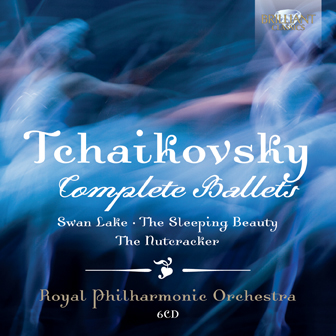
Tchaikovsky: Complete Ballets


This is my post from this week's Tuesday Blog.

This month on our podcasting channel, we are sharing many of our old Tchaikovsky montages, and this month’s Cover2Cover fits into the Tchaikovsky theme, with this mammoth Brilliant Classics YouTUbe post containing all three complete Tchaikovsky ballets.

Tchaikovsky’s ballets, Nutcracker, Sleeping Beauty and Swan Lake, are by far the most popular ballet music ever written, and count among the master’s most famous works. Tchaikovsky, tormented genius, found relief in writing these brilliant, featherweight works, conjuring up fantasy worlds of feel good fairy tales.

Though today all three ballets are much praised and performed,  this was not always so. It took time for their status to be established, and reactions to early productions were decidedly mixed during Tchaikovsky’s lifetime. Particularly saddening is the fact that the great composer died believing Swan Lake, perhaps his most celebrated ballet today, to be a failure – although this is in part due to the fact that the choreography most associated with the work today was developed after his death. The Sleeping Beauty, meanwhile, suffered the insult of a lukewarm imperial reception on its presentation to Tsar Alexander III in 1890; and Tchaikovsky himself believed The Nutcracker to be an inferior work, ‘infinitely worse than Sleeping Beauty’, in his own words.

In order to make the listening easier, I separated the three works into individual tracks in our music archive (and on the podcasting channel, with their publishing dates spread out throughout the month of December). Though all te music is performed by the Royal Philharmonic, each ballet is assigned to its own conductor.

Happy listening!
Pyotr Ilyich TCHAIKOVSKY (1840-1893)

Complete Ballets performed by the Royal Philharmonic Orchestra

Swan Lake (Лебединое озеро), Op. 20 [TH 12]

Nicolae Moldoveanu, conducting

Recorded at Cadogan Hall on the 13th-15th July 2009


The Sleeping Beauty (Спящая красавица), Op. 66 [TH 13]

Barry Wordsworth, conducting

Recorded at Cadogan Hall on the 31st May - 2nd June 2010


The Nutcracker (Щелкунчик), Op. 71 [TH 14]

David Maninov, conducting

Recorded at Henry Wood Hall on the 15th and 16th April 1995

Brilliant Classics 94949

Details - https://www.brilliantclassics.com/articles/t/tchaikovsky-complete-ballets


Internet Archive - https://archive.org/details/1-01-swan-lake-op.-20


Tuesday, November 15, 2022

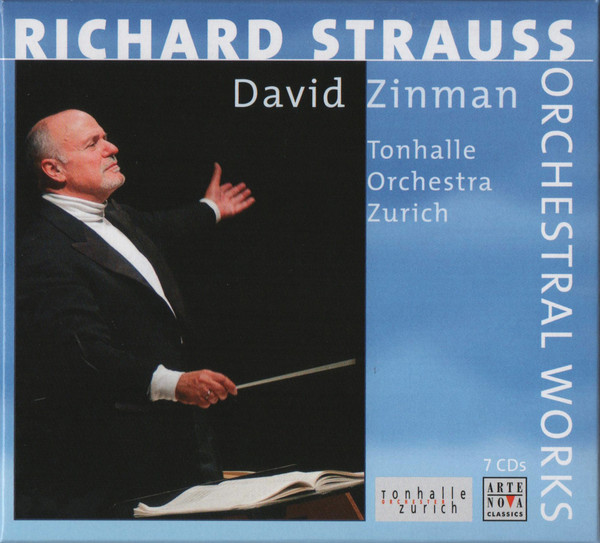
David Zinman Conducts Richard Strauss


This is my post from this week's Tuesday Blog.

Other than updates to old posts, the one share I have planned for this month is a trio of selections from David Zinman’s anthology of orchestral works by Richard Strauss. His complete set (over 7 CDs) compares well to a similar set by Rudof Kempe that we sampled in these pages in the past.

American conductor Davis Zinman trained as a violinist and conductor, with a significant apprenticeship (along with Lorin Maazel) under French-American conductor Pierre Monteux. Monteux had a strong mastery of French repertoire and was renowned for premiering many seminal works from the first two decades of the 20th century (such as Stravinsky’s Rite of Spring) but had a soft spot for German romantics (ditto for another French conductor who made his mark in Boston, Charles Munch).

Most of Zinman’s career has been based out of Europe – early stages in the Netherlands, and in the latter stages of  his memorable tenure  with the Baltimore Symphony (1985-1998), Zinman became music director of the Tonhalle-Orchester Zürich in 1995. 

Monteux’s influence on Zinman’s approach and his great all-around ability to navigate the entire Classical Music repertoire makes him in my mind one of the finest American conductors of his generation.

The below YouTube link points to the complete anthology, but the montage I ha eprepared focuses on three works, including the large tone poem Also Sprach Zarathustra. Aus Italien (From Italy), Strauss's first tone poem, is described by the composer as a "symphonic fantasy". It was completed in 1886 when he was 22 years old. It was inspired by the composer's visit to Italy in the summer of the same year, where he travelled to Rome, Bologna, Naples, Sorrento, Salerno, and Capri. He began to sketch the work while still on the journey.

Strauss’ single movement Romanze for cello and orchestra was composed bout the same time as his cello sonata. The piece somehow came to be forgotten, but was eventually published by Schott in 1987.

Happy Listening!


Richard STRAUSS (1864-1949)

Aus Italien, Symphonic Fantasy for large orchestra in G major, TrV 147 [Op.  16]

Romanze In F Major For Violincello & Orchestra, TrV 178 [AV 75]

Cello – Thomas Grossenbacher

 Also Sprach Zarathustra , tone poem freely after Nietzsche, for orchestra, TrV 176 [Op. 30]

Violin – Primož Novšak

Tonhalle-Orchester Zürich

Conductor – David Zinman

Discogs - https://www.discogs.com/release/20611123-Richard-Strauss-Tonhalle-Orchestra-Zurich-David-Zinman-Orchestral-Works

Arte Nova Classics – 74321 98495 2

Format: 7 x CD, Reissue

YouTube - https://www.youtube.com/playlist?list=PLt_iN-ytBvZxyzGsOuVfSVkSKXpJ4YXRJ

Archive Page - https://archive.org/details/c2c-46


Tuesday, October 4, 2022

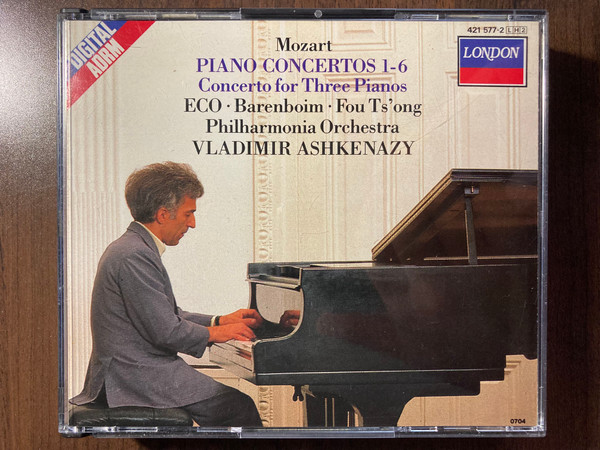
Mozart, Vladimir Ashkenazy – Piano Concertos 1–6 · Concerto For Three Pianos


This is my post from this week's Tuesday Blog.

Over the years, we’ve explored the Mozart piano concertos in several of our blog posts. In the process, we’ve featured several pianists’ recordings, and have often made use of two “cycles” – the Geza Anda cycle from the 1960’s, and the Vladimir Ashkenazy cycle from the 1980’s.

For October, on our podcasts, we are recycling many of these montages, and as part of that project, we are posting this Cover2Cover two CD partial excerpt from the Ashkenazy cycle, featuring the earliest six concerti, and the triple concerto.

Concertos Nos. 1–4 (K. 37, 39, 40 and 41) are orchestral and keyboard arrangements of sonata movements by other composers. The next three concertos (K. 107/1, 2 and 3), featured on our podcasting channel on October 4, are arrangements of piano sonatas by J.C. Bach (Op 5. Nos. 2, 3, and 4, all composed by 1766).

Concerto No. 5, K. 175 from 1773 was his first real effort in the genre, and one that proved popular at the time. Concerto No. 6, K. 238 from 1776 is the first Mozart concerto proper to introduce new thematic material in the piano's first solo section. Concerto No. 7, K. 242 for three pianos is quite well known.

London/Decca reissued the complete set by Ashkenazy and the Philharmonia in box sets several times, but today’s set was issued as a stand-alone collection. The multi-keyboard concertos (7 and 10) make use of Ashkenazy’s collaboration on another cycle issued by London/Decca by Daniel Barenboim. The YouTube link features the complete cycle, not just the first seven.

Happy Listening!


Wolfgang Amadeus Mozart (1756-1791)

All works feature Vladimir Ashkenazy, piano

Piano Concerto No.1 in F, K.37

Piano Concerto No.2 in Bb, K.39

Piano Concerto No.3 in D, K.40

Piano Concerto No.4 in G, K.41

Piano Concerto No.5 in D, K.175

Piano Concerto No.6 in Bb, K.238

Philharmonia Otchestra

(Ashkenazy conducting from the keyboard)


Piano Concerto No.7 in F, for 3 pianos, K.242 ('Lodron')

Fou Ts'Ong, piano

English Chamber Orchestra

Daniel Barenboim, conducting from the keyboard

Cadenzas by Vladimir Ashkenazy except– K40 I, K175 I-II, K238 & K242: Wolfgang Amadeus Mozart; K175 III: Paul Badura-Skoda

Recording locations: Kingsway Hall, London, April 1972 (K242), Walthamstow Assembly Hall, London, May 1986 (K175), October 1986 (K238), St Barnabas' Church, London, May 1987 (K37, K39-41)

London Records – 421 577-2

Format: 2 x CD, Compilation, Stereo

Released: 1988

Discogs - https://www.discogs.com/release/19590778-Mozart-ECO-Barenboim-Fou-TsOng-Philharmonia-Orchestra-Vladimir-Ashkenazy-Piano-Concertos-16-Concerto

YouTube - https://youtube.com/playlist?list=PL92mHU5BB1vs9r0ztMXTll6fbJIraLYMa

Internet Archive - https://archive.org/details/c-2-c-45b-mozart-piano-concertos-5


Tuesday, September 20, 2022

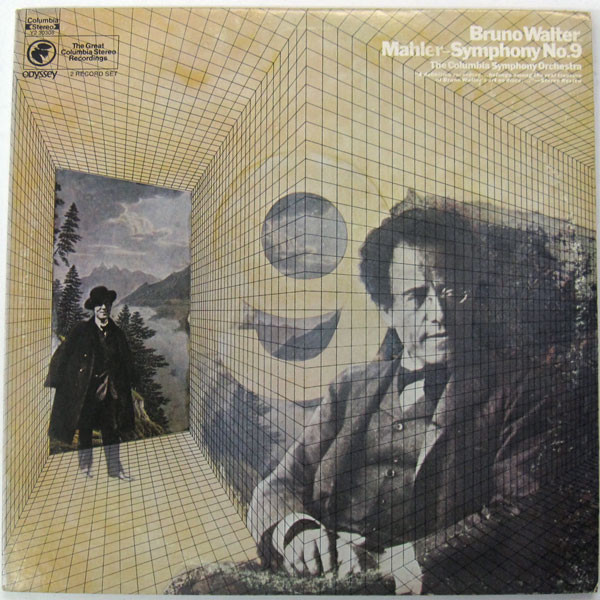
Mahler: Symphony No. 9 - Bruno Walter Conducts the Columbia Symphony Orchestra


This is my post from this week's Tuesday Blog.
On our podcasting channel, we’ve been featuring past (and new) shares of Gustav Mahler’s symphonies. Today’s Vinyl’s Revenge shares a re-issue of Mahler’s Ninth symphony, featuring Bruno Walter and the “Columbia Symphony Orchestra”.

First, let’s establish the orchestra. According to data I gathered, this performance was recorded 26th Jan. 1961 at the American Legion Hall in Hollywood. Thus, this is a California-based incarnation of the Columbia Symphony – probably using the same musicians Stravinsky would use locally for his legendary 80th birthday recordings for the same record label. I’d expect many were members of the Los Angeles Philharmonic and local movie studio contract musicians.

As we know from music history, Mahler’s Ninth is his last “complete” symphony (that is, with full orchestration) and was never performed in Mahler’s lifetime; Walter, Mahler’s longtime assistant and colleague to whom the work is dedicated, conducted its first performance on 26 June 1912, at the Vienna Festival.

Although the symphony follows the usual four-movement form, it is unusual in that the first and last are slow rather than fast. As is often the case with Mahler, one of the middle movements is a ländler. Though the work is often described as being in the key of D major, the tonal scheme of the symphony as a whole is progressive; while the opening movement is in D major, the finale is in D-flat major. As is the case with his latter symphonies, the work not only requires a large orchestra (including clarinets in A, B-Flat and E-Flat, two harps, and a large array of percussion instruments), it lasts well over an hour.

Walter’s discography features at least two recordings of the Ninth – a 1938 concert performance with the Vienna Philharmonic and this 1962 studio recording. There may well be other live recorded performances along the way too.

As a reviewer says, Mahler’s ninth is a bit like Hamlet - there is vast room for varying interpretations Bruno Walter's stereo recording is indispensable for a clear view of the non-neurotic approach to the work.

The recording has been released numerous times – the one in my own collection is part of the Odyssey “budget priced” re-issue series – and more recently on Sony's complete Walter edition. This is a superlative release that belongs in the collection of any and all Mahler enthusiasts; the sound of the original was astonishing in its day, and still is.

Happy listening!


Gustav MAHLER (1860-1911)

Symphony no. 9 in D Major (1908- 09)

Columbia Symphony Orchestra

Bruno Walter, conducting

Recorded 26th Jan. 1961; American Legion Hall, Hollywood, California

Odyssey – Y2 30308

Format: 2 x Vinyl, LP, Album, Reissue, Stereo (1971)

Discogs - https://www.discogs.com/release/3399002-Mahler-Columbia-Symphony-Orchestra-Bruno-Walter-Symphony-No-9


Tuesday, September 6, 2022

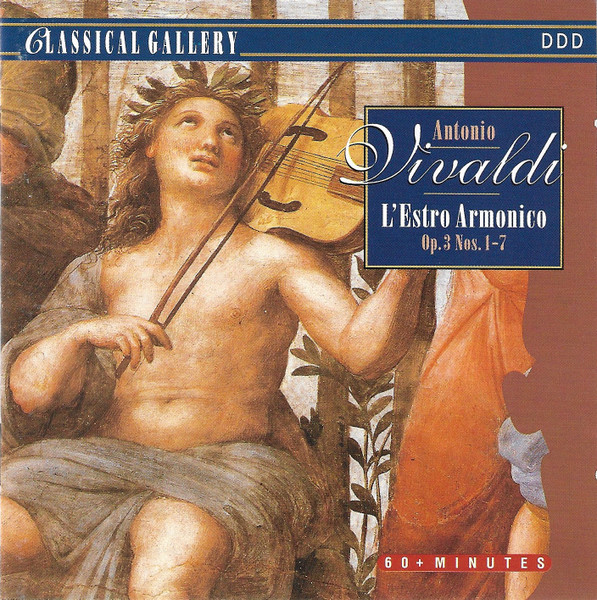
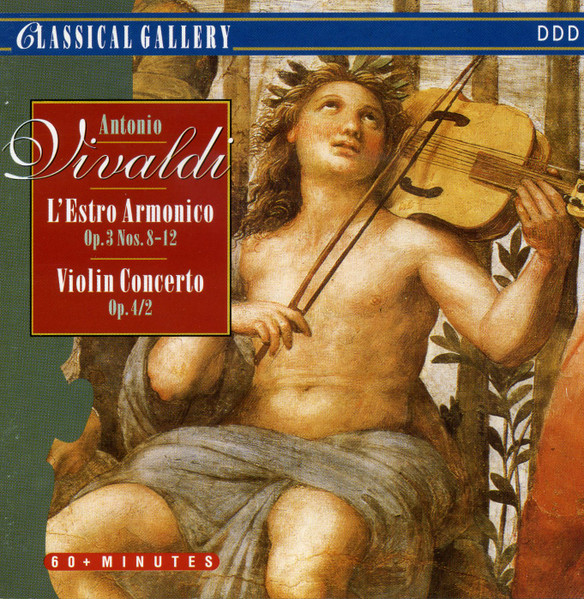
Vivaldi - Camerata Romana, Eugen Duvier – L'estro Armonico


This is my post from this week's Tuesday Blog.

For our first Tuesday Blog after our Summer break, I have prepared a Cover2Cover post of Vivaldi’s complete L’estro armónico.

L'estro armonico (The Harmonic Inspiration) is a set of 12 concertos for stringed instruments first published in Amsterdam in 1711. L'estro armonico was his first collection of Vivaldi  concertos appearing in print.

Each concerto was printed in eight parts: four violins, two violas, cello and continuo. The continuo part was printed as a figured bass for violone and harpsichord. The concertos belong to the concerto a 7 format, that is: for each concerto there are seven independent parts.

In each consecutive group of three concertos, the first is a concerto for four violins, the second for two violins, and the third a solo violin concerto. The cello gets solistic passages in several of the concertos for four and two violins, so that a few of the concertos conform to the traditional Roman concerto grosso format where a concertino of two violins and cello plays in contrast to a string orchestra.

The performances are from the early days of digital recording, when the Point Classics label issued a good number of decent performances at budget price – more on that and conductor Alfred Schotz in a montage in October.

The recordings have been oft reissued, either as two separate CDs or as a 2 CD set. The senond CD (concerti 8-12) adds a concerto from La Stravaganza (op. 4, no. 2) as filler.

Happy Listening!

Antonio VIVALDI (1678-1741)

L'estro armonico, 12 concertos for 1-4 solo instruments, strings and continuo, Op. 3 (1711)

(DISK 1)

No.1 in D for 4 Violins and Cello (in 1st movement only), RV549

No.2 in G- for 2 Violins and Cello, RV578

No.3 in G for Violin, RV310

No.4 in E- for 4 Violins, RV550

No.5 in A, Double Violin Concerto, RV519

No.6 in A- for Violin, RV356

No.7 in F for 4 Violins and Cello, RV567


Classical Gallery – CLG 7108

Discogs - https://www.discogs.com/release/18646786-Camerata-Romana-Eugen-Duvier-Antonio-Vivaldi-LEstro-Armonico-Op3-Nos-1-7

YouTube - https://youtube.com/playlist?list=OLAK5uy_nnvJN5KUYtqRKnnRyX0xwSR8NTXCVT4CI


(DISK 2)

No.8 in A-, Double Concerto, RV522,

No.9 in D for Violin, RV230

No.10 in B- for 4 Violins and Cello, RV580

No.11 in D- for 2 Violins and Cello, RV565

No.12 in E for Violin Concerto, RV265


BONUS - "La Stravaganza" ( Op. 4 No. 2 )  Concerto in E-Flat RV 279


Classical Gallery – CLG 7109

Discogs - https://www.discogs.com/release/14942358-Camerata-Romana-Eugen-Duvier-Antonio-Vivaldi-LEstro-Armonico-Op3-Nos-8-12-Violin-Concertos-Op42-

YouTube - https://youtube.com/playlist?list=OLAK5uy_kVNkzK_g39b8hdhVr0N73VbFQO3kdeDzw

Camarata Romana

Eugen Driver, conducting

Internet Archive - https://archive.org/details/01-c-2-c-44a-vivaldi-concertos-op.


Tuesday, May 31, 2022

“Otto Klemperer A la Carte


No. 387 of the ongoing ITYWLTMT series of audio montages is this week's Friday Blog and Podcast. It can be found in our archives at https://archive.org/details/pcast387


 =====================================================================

Original posts: TalkClassical; Blogger

As may has five Tuesday, my A la Carte post doubles as our quarterly Tuesday podcast. For the occasion, I am extending my Vinyl’s Revenge share from 2016 by adding a Mozart symphony, which in turn uses one of the three symphonies we had featured in our 2011 post called “Mozart’s European Vacation”. Here’s what I wrote then about the Prague symphony:

Mozart is often said to have had a special relationship with the city of Prague and its people. Mozart is claimed to have said, "Meine Prager verstehen mich" ("My Praguers understand me"), a saying which became famous in the Bohemian lands.

Mozart's opera The Marriage of Figaro, which premiered in Vienna, was produced in late 1786 in Prague with tremendous success. The orchestra and some affiliated music lovers funded a personal visit by Mozart so he could hear the production. Mozart arrived on 11 January 1787 and was feted everywhere. On 19 January he gave an "academy" (that is, a concert for his own profit) at which the “Prague” Symphony in D major was premiered.

Again, this performance features Otto Klemperer and the Philharmonia Orchestra

I think you will (still) love this music too


Tuesday, May 17, 2022

Igor Stravinsky, Neville Marriner, Academy Of St. Martin-in-the-Fields – Pulcinella (Complete Ballet) / Suites Nos. 1 & 2 For Small Orchestra


This is my post from this week's Tuesday Blog.

This week’s Tuesday Blog is a new installment in our Vinyl’s Revenge series featuring works by Igos Stravinsky performed by the Academy of St-Martin-in-te-Fields, a pair of soloists, all under the direction of Sir Neville Marriner.

The main work on this Angel ADD release is Stravinsky’s one-act ballet ballet Pulcinella, one of two ballets inspired by the works of earlier composers. It is a based on an 18th-century play, Quatre Polichinelles semblables ("Four identical Pulcinellas"). The ballet premiered at the Paris Opera on 15 May 1920 under the baton of Ernest Ansermet. The dancer Léonide Massine created both the libretto and choreography, and Pablo Picasso designed the original costumes and sets. 

Pulcinella is a classical character that originated in commedia dell'arte of the 17th century and became a stock character in Neapolitan puppetry. Pulcinella's versatility in status and attitude has captivated audiences worldwide and kept the character popular in countless forms since his introduction to commedia dell'arte by Silvio Fiorillo in 1620. Many regional variants of Pulcinella were developed as the character diffused across Europe In many later adaptations, Pulcinella was portrayed as a puppet, as commedia dell'arte-style theatre did not continue to be popular throughout all of the continent over time. He was said to evolve into "Mr. Punch" in England. The key half of Punch and Judy, he is recognized as one of the most important British icons in history.

Not unlike The Fairy’s Kiss (1928) where Stravinsky elaborated several melodies from early piano pieces and songs by Tchaikovsky in his score, Diaghilev wanted a ballet based on an early 18th-century commedia dell'arte libretto and music then believed to have been composed by Giovanni Battista Pergolesi. This attribution has since been proved to be spurious. Some of the music may have been by Domenico Gallo, Unico Wilhelm van Wassenaer, Carlo Ignazio Monza and Alessandro Parisotti. Stravinsky adapted the older music to a more modern style by borrowing specific themes and textures, but interjecting his modern rhythms, cadences, and harmonies.

Pulcinella marked the beginning of Stravinsky's second phase as a composer, his neoclassical period.

As filler, the disk includes Stravinsky’s two suites for small orchestra. These enchanting, gently satirical Suites are orchestrations made by Stravinsky of the eight piano duets he had written for his children, Theodore and Mika, the first three in 1914-1915 and then five more in 1917. 
Note the YouTube link is to a compilation set of Stravinsky music. Clips 29-47 are the contents of today’s disc.

Happy listening!


Igor STRAVINSKY (1882-1971)

Pulcinella, Ballet with Song in One Act (1920)
Bass Vocals – Robert Lloyd 
Soprano Vocals – Yvonne Kenny 
Tenor Vocals – Robert Tear 

Two Suites (Nos. 1 and 2) for Small Orchestra (1921, 1926)

 
Academy Of St. Martin-in-the-Fields
Neville Marriner, conducting
Angel Records Digital – DS-37899
Format: Vinyl, LP, Album, Stereo
Released: 1982


Tuesday, May 3, 2022

Mendelssohn: Lieder ohne Worte / Songs without Words


This is my post from this week's Tuesday Blog.

Our Cover2Cover share this month is taken from YouTube and Brilliant Classics. The following is from the official webpage:

Felix Mendelssohn was a virtuoso pianist, and it worth remembering that he was born in 1809, with his friend Schumann being born a year later in 1810, as was Chopin, and Liszt following in 1811. These composers were among the greatest pianists of the 19th century, and they were born at a time when the piano was a relatively modern instrument, and composers such as Hummel, Moscheles (Mendelssohn’s friend), Kalkbrenner and Ries were accorded adulation similar to pop stars today. Beethoven commenced his career in the 1790s as a virtuoso pianist.

No surprise then that the young Mendelssohn composed extensively for his chosen instrument from the outset. From early concertos and sonatas he quickly established his ‘mature’ style in works such as the Rondo capriccioso, and the Andante cantabile e Presto agitato. The masterpieces that followed include the famous Songs without Words. On this recording, these piano 'songs' are played by Dutch pianist Frank van der Laar.

We will deploy this share on our podcasting channel over 2 episodes, May 3rd and 4th). Happy Listening!


Felix MENDELSSOHN-BARTHOLDY (1809-1847)

Lieder ohne Worte (Songs without Words) 

Songs without Words, Book 1, Op.19b
Songs without Words, Book 2, Op.30
Songs without Words, Book 3, Op.38
Songs without Words, Book 4, Op.53
Songs without Words, Book 5, Op.62
Songs without Words, Book 6, Op.67
Songs without Words, Book 7, Op.85 
Songs without Words, Book 8, Op.102 

Frank van de Laar, piano

Brilliant Classics 93833
Release November 2007


Tuesday, March 29, 2022

Jochum conducts Bruckner: Symphony no. 8


No. 381 of the ongoing ITYWLTMT series of audio montages is this week's Tuesday Blog. It can be found in our archives at https://archive.org/details/pcast381


 =====================================================================

This week’s Tuesday Blog is a “Fifth Tuesday” podcast featuring Bruckner’s Eighth symphony, thus concluding our survey of the Jochum/DGG cycle from the 1960’s.

Bruckner's Symphony No. 8 in C minor is the last symphony the composer completed. This symphony is sometimes nicknamed The Apocalyptic, but this was not a name Bruckner gave to the work himself.

It exists in two major versions of 1887 and 1890. In September 1887, Bruckner had the score copied and sent to conductor Hermann Levi, one of Bruckner's closest collaborators, having given a performance of the Symphony No. 7 in Munich that was "the greatest triumph Bruckner had yet experienced".

However the conductor wrote back to Bruckner that he found the symphony “impossible to perform” in its current form. “As much as the themes are magnificent and direct, their working-out seems to me dubious”.

By January 1888, Bruckner had come to agree with Levi that the symphony would benefit from further work and completed the new version of the symphony in March 1890. Once the new version was completed, the composer wrote to Emperor Franz Josef I for permission to dedicate the symphony to him. The emperor accepted Bruckner's request and also offered to help pay for the work's publication.

By the time the 1890 revision was complete, Levi was no longer conducting concerts in Munich. As a result, he recommended that his protege Felix Weingartner. The premiere was twice scheduled to occur under the young conductor's direction during 1891, but each time Weingartner substituted another work at the last minute. Weingartner admitted, in a letter to Levi, that the real reason he was unable to perform the symphony was because the work was too difficult and he did not have enough rehearsal time: in particular, the Wagner tuba players in his orchestra did not have enough experience to cope with their parts. At last Hans Richter, subscription conductor of the Vienna Philharmonic, agreed to conduct the work. The first performance took place on 18 December 1892.

Today, Bruckner's Eighth remains somewhat controversial. This is a piece that is attempting something so extraordinary that if you're not prepared to encounter its expressive demons, or to be shocked and awed by the places Bruckner's imagination takes you, then you're missing out on the essential experience of the symphony.

If you think of Bruckner only as a creator of symphonic cathedrals of mindful - or mindless, according to taste - spiritual contemplation, who wields huge chunks of musical material around like an orchestral stone mason with implacable, monumental perfection, then you won't hear the profoundly disturbing drama of what he's really up to.

I think you will love this music too.

Tuesday, March 8, 2022

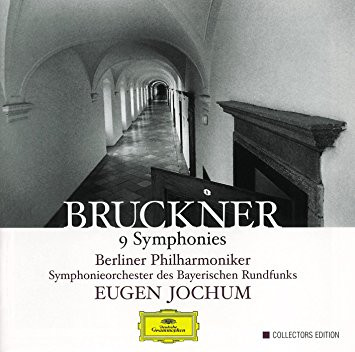
Anton Bruckner, Eugen Jochum, 9 Symphonies (1958,1964-68)


This is my post from this week's Tuesday Blog.

This month, my only Tuesday post is this Cover2Cover share of the great late fifties/early sixties Bruckner symphony cycle by Eugen Jochum. Thanks to this cycle, along with a later cycle with the Staatskapelle Dresden, Jochum has established himself as an authority when it comes to Bruckner’s orchestral output.

A few years back, a thread on TalkClassical explored the relative merits of both these cycles and I won’t be feeding the debate here. In my personal collection, I have individual albums by Jochum from both cycles, and I also have a weak spot for Tintner’s cycle for NAXOS.

As I’ve discussed in other circumstances, when I consider a cycle release, I look for consistency and cohesion between the individual performances. What is unique about this DGG ensemble is that this cohesion is achieved with two different orchestras (as opposed to the single orchestra with the EMI set). We can haggle over individual symphonies (I like the fourth with EMI better, as I do the Eighth with DGG). There are no wrong answers, though.

Enjoy the complete set here from YouTube. For listeners of my podcast, I will be sharing all nine symphonies over 8 different episodes, three of which will cross over on our Friday series.

Happy Listening!


Anton BRUCKNER (1824-1896)
Symphony No.1 in C-, WAB101 (1, 1966)
Symphony No.2 in C-, WAB102 (2, 1967)
Symphony No.3 in D-, WAB103 ('Wagner') (2, 1968)
Symphony No.4 in Eb, WAB104 ('Romantic') (1, 1967)
Symphony No.5 in Bb, WAB105 (2, 1958)
Symphony No.6 in A, WAB106 (2, 1967)
Symphony No.7 in E, WAB107 ('Lyric') (1, 1967)
Symphony No.8 in C-, WAB108 ('Apocalyptic') (1, 1964)
Symphony No.9 in D-, WAB109 ('Unfinished') (1, 1966)

Berliner Philharmoniker (1)
Symphonie-Orchester Des Bayerischen Rundfunks (2)
Eugen Jochum, conducting

Deutsche Grammophon – 469 810-2
(Reiisued, original recording dates as indicated)

DISCOGS - https://www.discogs.com/release/1091...n-Rundfunks-9-

Tuesday, February 15, 2022

Rossini/Respighi – La Boutique Fantasque - Suite Rossiniana


This is my post from this week's Tuesday Blog.

This week’s Vinyl’s Revenge digs out an old cassette I acquired in the early 1980’s featuring the music of Ottorino Respighi inspired by music composed by his compatriot, Gioacchino Rossini.

Respighi had written the ballet La Boutique fantasque for Léonide Massine and Diaghilev’s Ballets Russes in 1919, basing it on short piano pieces from Rossini's collection Péchés de vieillesse (Sins of Old Age).

Massine described how, in Rome for a ballet season, Respighi brought the score of Rossini's Péchés de vieillesse to Diaghilev. Toulouse-Lautrec was an influence on the period setting and style of La Boutique fantasque, and Massine envisaged the principal character "quite Lautrec-like".

The story of the ballet has similarities to Die Puppenfee ("The Fairy Doll") of Josef Bayer, an old German ballet that had been performed by Jose Mendez in Moscow in 1897 and by Serge and Nicholas Legat in Saint Petersburg in 1903. Others note the similarities to Hans Christian Andersen's The Steadfast Tin Soldier. Massine's scenario centers on the love story between two can-can dancer dolls in a toyshop, incorporating elements of comedy, national folk dance and mime, as well as classical choreography.

In 1925, Respighi returned to Rossini's music, but not as a ballet, simply as concert music. He again used Sins of Old Age, specifically Quelques riens (Various nothings) from Volume XII, and applied what he called a trascrizione libera (free transcription) to them.

The four-movement score is brilliant, but also dark and evocative. Although not written for ballet, Rossiniana has been choreographed as a dance performance work.

Antal Dorati recorded many of Respighi’s seminal orchestral music for Mercury with the Minneapolis and London symphonies in the 1950’s, and his recording of the Ancient Airs and Dances with the Philharmonia Hungarica (again for Mercury, featured here a few years ago) is a reference recording. This coupling of the two Rossini-inspired scores comes much later, in the mid-1970’s for Decca, with the Royal Philharmonic. I note that the Boutique score is labelled a “ballet suite”, meaning some sections of the complete ballet are omitted in this performance – it still remains crisp and enjoyable.

Happy Listening!


Ottorino RESPIGHI (1879-1936)
La boutique fantasque (ballet after Rossini), P.120 – ballet suite
Rossiniana, P.148 (after Rossini)
Royal Philharmonic Orchestra
Antal Dorati, conducting

Decca Jubilee Series – KJBC 79

Discogs - https://www.discogs.com/release/1068...ite-Rossiniana


Tuesday, February 1, 2022

Sibelius, Sir Colin Davis, London Symphony Orchestra – Symphonies Nos 5 & 6


This is my post from this week's Tuesday Blog.

For our second post featuring the symphonies of Jean Sibelius, I am featuring Cover2Cover a disc I acquired (of all places) at the Virgin store at Heathrow Airport about 15 years ago.

Since the beginning of his recording career, Colin Davis has been a champion of the music of Jean Sibelius, and his highly regarded cycle of the seven symphonies recorded between 1975 and 1979 with the Boston Symphony Orchestra has been a mainstay of many LP and CD collections over the years. This disc, however, is much more recent, part of anther Sibelius cycle from the early 2000’s with the London Symphony on the orchestra’s LSO Live home label.

In my opinion, the performances compare well to the oft-reissued BSO set. Crisp and clear, and helmed by a more mature (and restrained) Davis, these two symphonies get a very valid reading.

Hope you agree!


Jean SIBELIUS (1865-1957)
Symphony No 5 In E Flat Major, Op 82
Symphony No 6 In D Minor, Op 104

London Symphony Orchestra
Sir Colin Davis, condicting
Recorded live 10-11 December 2003 (No 5) and 28-29 September 2002 (No 6) at the Barbican, London

LSO Live – LSO0037
Format: CD
Released: Jun 2004

Discogs - https://www.discogs.com/release/1329...honies-Nos-5-6

YouTube - https://youtube.com/playlist?list=OL...MshGIfGq7mxmB0

Tuesday, January 25, 2022

Ormandy Conducts Sibelius


This is my post from this week's Tuesday Blog.

This week's Vinyl's Revenge post is the first of two Tuesday musings featuring the symphonies o Jean Sibelius.

It is fair to say that Eugene Ormandy had the good fortune of performing the music of some great Late Romantic composers he had the pleasure of meeting himself: Bela Bartok, Sergey Rachmaninov, and Jean Sibelius figure especially in his repertoire.

Eugene Ormandy talks about Sibelius:

Meeting Sibelius for the first time, I had the impression of being in the presence of someone almost superhuman. Here was a being I had admired and looked up to all my life — and suddenly I was in his presence. He was a towering man, a towering personality, with a magnificent head and powerful face. His beautiful home was full of records, many of which we had sent him from America throughout the years.

Sibelius’ First Symphony was the “first” for me in another sense — it was the first of the master’s symphonies I ever conducted. This was in 1932, with the Minneapolis Symphony Orchestra — and we recorded it for RCA Victor in that year. I think perhaps it was the first Sibelius symphony to be recorded outside of Scandinavia. Of course the great Finnish conductor, Sibelius’ friend Kajanus, had broken ground for Sibelius years before, and so had Koussevitzky, Stokowski and Beecham. I have played the First Symphony many times in the intervening thirty years, and it never loses its fascination for me. Recordings have changed a great deal since 1932, and so have interpretations of his works to the end, and he always had admiration for the work of my colleagues Stokowski and Koussevitzky. I will risk immodesty to add that he praised my readings too. His enthusiasm is a source of great pride to me.
The below YouTube link is a compilation of Sibelius symphonies recorded by Ormandy for RCA, one of which featuring the First Symphony I own in my vinyl collection and share on the specific Archive link.

Happy Listening!


Jean SIBELIUS (1865-1957)
Symphony No.1 in E Minor, Op.39
Valse Triste, from Kuolema, Op. 44
The Swan of Tuonela, Op. 22 no. 2

Philadelphia Orchestra
Eugene Ormandy, conducting

RCA Red Seal – ARL1-4901
Format: Vinyl, LP, Album
Released: 1984

Discogs - https://www.discogs.com/release/5222...wan-Of-Tuonela

YouTube - https://youtube.com/playlist?list=OL...ieV1KBl6xT46K8

Internet Archive - https://archive.org/details/symphony...nor-op.-39-iv.

Tuesday, January 11, 2022

Chopin / Arthur Rubinstein, Skrowaczewski, Wallenstein – Concertos Nos. 1 & 2


This is my post from this week's Tuesday Blog.

This week’s Cover2Cover is part of a week-long series on our podcasting channel I have dubbed “The One-Two Punch”, focused on pairs of concerti that follow that numerical sequence. Our share is focused on the coupling of Chopin’s two piano concerti featuring the late great Arthur Rubinstein.

Here is a post tken nearly verbaim from Classics Today by Jed Distler:

[Rubinstein’s 1961 Chopin E minor concerto recording is easily] the finest of Rubinstein’s three recorded versions (indeed, one of his best recordings of anything), where panache and poetry fuse to magical, impeccably timed effect. Obviously Stanislaw Skrowaczewski’s beautifully balanced and shapely accompaniment inspires the soloist.

The F minor concerto performance is not quite on the same level, mainly because Rubinstein’s straightforward brio often yields perfunctory, even glib returns. For instance, there’s more anguish and drama in the slow movement’s octave outbursts than Rubinstein’s hard-nosed reading suggests, while opportunities for poetic nuance in the outer movements also go by unnoticed. […]

In addition, Alfred Wallenstein uncovers important orchestral detail many conductors ignore, such as the motives in the finale that pass back and forth between the solo wind players. Wallenstein also complies with two misguided textual emendations that Rubinstein always asked for–a foreshortened final tutti at the first movement’s end, and a “normal” bowing of the violins’ percussive ponticello (back of the bow) effect in the finale’s mazurka episode.
Happy Listening!


Frédéric CHOPIN (1810-1849)
All tracks feature Arthur Rubinstein, piano

Piano Concerto No.1 in E Minor, Op.11
New Symphony Orchestra Of London
Stanislaw Skrowaczewski, conducting
Recorded June 8 & 9, 1961 at Walthamstow, London

Piano Concerto No.2 in F Minor, Op.21
Symphony Of The Air
Alfred Wallenstein, conducting
Recorded January 20, 1958, Carnegie Hall, NYC.

RCA Red Seal – 82876-67902-2, Sony BMG Music Entertainment – 82876-67902-2
Format: SACD, Hybrid, Stereo, Compilation, Remastered

Discogs - https://www.discogs.com/release/1489...certos-Nos-1-2

Tuesday, December 21, 2021

PTB Classic - Xavier Cugat


This is my post from this week's Tuesday Blog.

My last Tuesday Blog for 2021 follows the classic format we brought back this year.

My mom would have been 90 this year, and in some small way, this post is a wink in her direction. As an awkward teenager, my mom tried to teach me (and my brother before me) what she thought to be a basic life skill – ballroom dancing. She tried her best to get us to learn the basic steps to Latin dances, particularly the cha-cha and rumba. Her go-to vinyl record was an old Mercury disk featuring Xavier Cugat and his orchestra.

Xavier Cugat (1900-1990) was a Calatan musician and bandleader who spent his formative years in Havana, Cuba. A trained violinist and arranger, he was a leading figure in the spread of Latin music. In New York City he was the leader of the resident orchestra at the Waldorf–Astoria before and after World War II. One of his trademark gestures was to hold a chihuahua while he waved his baton with the other arm.

Cugat recorded for Columbia (1940s and 1950s, and Epic), RCA Victor (1930s and 1950s), Mercury (1951–52 and the 1960s), and Decca (1960s). Cugat followed trends closely, making records for the conga, the mambo, the cha-cha, and the twist when these dances were popular. In 1940 his recording of "Perfidia" became a hit. In 1943 "Brazil" was Cugat's most successful chart hit. It spent seven weeks at No. 2 on the Billboard magazine National Best Selling Retail Records chart.

Past members of his orchestra have included Desi Arnaz, Lina Romay, Abbe Lane, Tito Rodriguez, Yma Sumac, Miguelito Valdés, Frank Berardi, Gene Lorello, George Lopez, Glenn E. Brown, Henry Greher, Isabello Marerro, James English, John Haluko, Joseph Gutierrez, Luis Castellanos, Manuel Paxtot, Oswaldo Oliveira, Otto Bolívar, Otto Garcia, Rafael Angelo, Richard Hoffman, Robert De Joseph, and Robert Jones.


Today’s share features two specific Cugat albums: a “Best Of” compilation and the record that my mother used for her lessons, “Viva Cugat”.

The Best Of Xavier Cugat And His Orchestra
  1. Sway [Norman Gimbel, Pablo Beltran Ruiz]
  2. Tequila [Chuck Rio]
  3. Fly Me To The Moon [Bart Howard]
  4. Brazil (Aquareia Do Brasil) [Ary Barroso]
  5. Desafinado [Antônio Carlos Jobim]
  6. Witchcraft [Cy Coleman]
  7. Green Eyes ("Aquellos Ojos Verdes") [Adolfo Utrera and Nilo Menéndez]
  8. Besame Mucho [Consuelo Velázquez]
  9. Yours (Quiéreme Mucho) [ Gonzalo Roig]
  10. Amor [Gabriel Ruiz, Ricardo Lopez Mendez]
  11. It Happened In Monterey [ William Rose, Mabel Wayne]
  12. Tea For Two [Vincent Youmans]
  13. What a Diff'rence a Day Made ("Cuando vuelva a tu lado") [María Grever]
  14. Papa Loves Mambo [ Al Hoffman, Dick Manning, and Bix Reichner]
  15. La cumparsita [ Gerardo Matos Rodríguez]
  16. El Cumbanchero [ Rafael Hernández]
  17. I've Got The World on a String [ Harold Arlen]
  18. Always In My Heart [ Ernesto Lecuona, Kim Gannon]


Spectrum Music 554 767-2
CD, Compilation
Released: 1998
Discogs - https://www.discogs.com/release/1762...-His-Orchestra


Viva Cugat!
  1. Jungle Concerto [Xavier Cugat]
  2. The Peanut Vendor (El Manisero) [Marion Sunshine, Moises Simons, L. Wolfe Gilbert]
  3. Isle Of Capri [Jimmy Kennedy, Will Gross]
  4. Tropical Merengue (Amanecer Tropical) [Don Marsh, Lawrence Elow, Rafael Munoz]
  5. Nightingale [Fred Wise, George Rosner, Xavier Cugat]
  6. Perfidia [Alberto Dominguez]
  7. Siboney [Dolly Morse, Ernesto Lecuona]
  8. Jungle Drums (Canto Karabali) [Carmen Lombardo, Charles O'Flynn, Ernesto Lecuona]
  9. Anna (El Negro Zumbon) [Armando Trovajoli]
  10. Maria Elena [Lorenzo Barcelata]
  11. Poinciana (Song Of The Tree) [Buddy Bernier, Manuel Lliso, Nat Simon]
  12. Say Si Si (Para Vigo Me Voy) [ Al Stillman, Ernesto Lecuona, Francia Luban]


Mercury – SR 60868
Released: 1951, reissued 1961
Discogs - https://www.discogs.com/release/6147...tra-Viva-Cugat

YouTube - https://youtube.com/playlist?list=PL...mtRn7Z6L6cgEH8