Showing posts with label Project 366. Show all posts

Saturday, August 1, 2020

Project 366 - Dates on the musical calendar for August 2020

Project 366 continues in 2019 with "Dates on the Musical Calendar


This month makes the final installment of Project 366, a long-standing long-term project we began in April 2016 to mark what was then the fifth anniversary of our music blog. Today, we will share the last few listener guides in this series, and will discuss in a post later this month how we will program our daily podcasts for the foreseeable future - stay tunes.

Highlights

  • 10-Aug - Happy Birthday Marie-Claire Alain (*1929) [Guide #10
  • 13-Aug - Left-Handers Day [Guide # 362]
  • 15-Aug -  Happy Birthday Samuel Coleridge-Taylor (*1875) [Guide #363]
  • 18-Aug -  Happy Birthday Antonio Salieri (*1750) [Guide #146]
  • 22-Aug  -  Happy Birthday Claude Debussy (*1862) [Guide #84]
  • 31-Aug - FP of Weill's  Threepenny Opera (OTD 1928) [Guide #366]

If you recall, our very first listener guides were our two-part musical alphabet. As a fitting close to the project, and to fill the remaining dates on the calendar, we will revisit the musical alphabet therough a series of listener guides. Here is our "new" alphabet (noting some listener guides tackle more than one letter)


Your Listener Guides

Listener Guides #357 & 358 - A for Aida

Verdi composed his first opera (Oberto) in 1839 and from then on strung together great works achieving critical and popular success: Nabucco (1842), Rigoletto (1851), Il trovatore (1853), and the list goes on and on. Probably one of Opera’s most celebrated spectacles of excesses, Aida was a commission by the ruler (Khedive) of Egypt for the great opera house he’d inaugurated in Cairo in 1869. Versi’s Rigoletto was the first production put up at the opera house, and so Verdi was approached to create the spectacular stage work. [Once or Twice a Fortnight - August 15th, 2013]

[L/G 357 – Acts 1 & 2, L/G 358 – Acts 3 & 4]
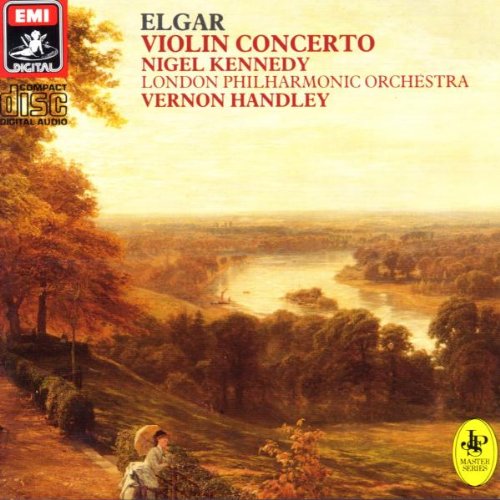


Listener Guides #359 - E for Elgar

Elgar was at the height of his fame when the Philharmonic Society commissioned a violin concerto in 1909. The work was dedicated to Fritz Kreisler, the internationally famous violinist who was the soloist at its first performance. The work is long for a violin concerto and expansive in mood but nevertheless compelling and not overblown. It contains none of the pomposity and swagger found in many of Elgar's works which some commentators find disturbing and rather distasteful. The work is firmly established in the classical repertoire although not performed frequently. [ITYWLTMT Montage # 294 – October 30 2018]


Listener Guides #360 - J for Jongen

Joseph Jongen’s Symphonie Concertante of 1926 is a tour de force, considered by many to be among the greatest works ever written for organ and orchestra. The work was commissioned by Rodman Wanamaker for debut in the Grand Court of his palatial Philadelphia department store, Wanamaker's. Its intended use was for the re-dedication of the world's largest pipe organ there, the Wanamaker Organ. As part of a series of concerts Rodman Wanamaker funded with Leopold Stokowski and the Philadelphia Orchestra. Wanamaker's death in 1928 precluded the performance of the work at that time in the venue for which it was written, but it was finally performed for the first time with the Wanamaker Organ and the Philadelphia Orchestra in 2008. [ITYWLTMT Montage #191 - March 27, 2015]


Listener Guides #361- K for Kabalevsky & Khachaturian

After a tenure with the Bolshoi Theatre (1943-56), Kirill Kondrashin concentrated on orchestral conducting, becoming sought after as a concerto accompanist and working with the country’s leading instrumentalists, such as Emil Gilels, Leonid Kogan, David Oistrakh, Sviatoslav Richter and Rostropovich. In the first International Tchaikovsky Competition in 1958, Kondrashin was the conductor for Van Cliburn, who won the first prize. After the competition he toured the USA with Cliburn, being the first Russian conductor to visit America since the Cold War began. The two suites (Comedians and Masquerade) are taken from the same October 20, 1958 Manhattan Center recording by the RCA Symphony Orchestra (the likely remnants of the NBC Symphony/Symphony of the Air) under Kondrashin, a few months after the Cliburn sessions at Carnegie Hall.  [ITYWLTMT Montage #316 - July 12, 2019]


Listener Guides #362- The Left Hand
Pianists limited to the use of their left hands are not uncommon. As an example, in 1964, American pianist Fleisher lost the use of his right hand due to a condition that was eventually diagnosed as focal dystonia. Fleisher commenced performing and recording the left-handed repertoire while searching for a cure for his condition. In the 1990s, Fleisher was able to gradually overcome his focal dystonia symptoms after experimental botox injections to the point where he could play with both hands again. [ITYWLTMT Montage #320 - August 13, 2019]


Listener Guides #363- The Dark Continent
The Dark Continent has long been associated with adventure, immense deserts, fierce predators and a population that lives in the extremes of riches and poverty. Africa has also been the stage of colonial expansion, followed by self-governance and (often times, it seems) civil war, unrest and despots. [ITYWLTMT Montage #118 - August 16, 2013]


Listener Guides #364- O for Offenbach
Offenbach was born in Germany of a musician father, cantor of a synagogue. Early on, Jacob Offenbach showed himself adept at the cello, which convinced his father to send him to study in Paris. Offenbach joined the Conservatoire to become a soloist, but his clownish behavior saw him leaving after a year. Thanks to his talent, he still performs in concert - after having francized his given name - then joins the orchestra of the Opéra-Comique in which he plays while establishing himself as a composer. [ITYWLTMT Montage #299 - December 21, 2018]
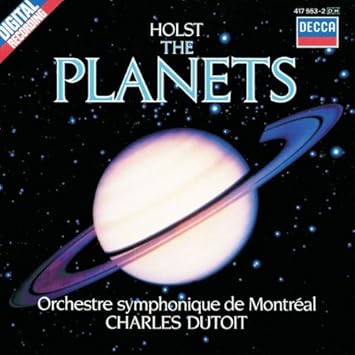


Listener Guides #365 - P for the Planets

Written between 1914-1916 by British composer Gustav Holst, ‘The Planets’ is a suite of seven short tone poems, each representing one the known planets of the Solar System seen from Earth at the time, and their corresponding astrological character. [Vinyl’s Revenge #33 - December 12, 2017]


Listener Guides #366 - The Three-Penny Opera

A milestone of 20th century musical theatre, The Threepenny Opera rolls on unstoppably into the 21st. In their opera "by and for beggars", Weill and Brecht transformed old-fashioned opera and operetta forms, incorporating a sharp political perspective and the sound of 1920s Berlin dance bands and cabaret. Weill's acid harmonies and Brecht's biting texts created a revolutionary new musical theatre that inspired such subsequent hits as Cabaret, Chicago, and Urinetown. [Once or Twice a Fortnight - August 31st, 2013]


Wednesday, July 1, 2020

Project 366 - Dates on the Musical Calendar for July 2020

Project 366 continues in 2019 with "Dates on the Musical Calendar". Read more here.


HIghlights
  • 1-Jul       Canada Day [Guide #350]
  • 4-Jul       Independence Day (USA) [Guide #351]
  • 7-Jul       Happy Birthday Gustav  Mahler (Born OTD 1860) [Guide #264]
  • 14-Jul    Bastille Day (France) [Guide #352]

On account of the COVID-19 pandemic, public health measures as well as continuing concern for the health and well-being of the community led organizers to the 2020 edition of the Calgary Stampede. Though it cannot be celebrated in traditional way, Stampede Spirit can’t be cancelled! In this spirit, spirit we have kept our Cowboy Classics montage on the calendar [Guide #61]
Symphonies by Tchaikovsky, Nielsen and Mahler adorn the calendar, along with two full-lengtyh operas: Dialogues of the Carmelites [Guides # 353 & 354] and L’Elisir d’Amore [Guides # 355 & 356]

Your Listener Guides

Listener Guide #350 – Canada Day
As our regular listeners will attest, scarcely a listener guide goes by without its fair share of "Canadian content". To celebrate Canada Day, we assembled a montage of music featuring Canadian compositions and performers. (ITYWLTMT Montage # 12 - July 1, 2011)


Listener Guide #351 – America
America is synonymous with migration - save for the people from the First Nations, everybody (or their ancestors) have come from elsewhere. Many of today's musical selections are indicative of travel to America, or of people that have elected to live in America. (ITYWLTMT Montage # 116 - 02 Aug, 2013)


Listener Guide #352 – Séjour musical en France
Tarbes is a commune in the Hautes-Pyrénées, in south-western France. And it is the birthplace of French pianist Cécile Ousset, who will be our soloist in Poulenc’s Piano Concerto. In this (in my opinion) definitive performance, she is ably backed-up by Rudolf Barshai and the Bournemouth Symphony Orchestra. (ITYWLTMTMontage #15 - July 22, 2011)


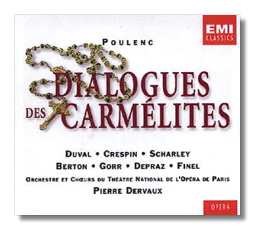
Listener Guide #353 & 354 – Dialogues des carmélites
The opera explores the drama surrounding the Carmelites of Compiegne, sixteen Carmelite nuns (cloistered) sentenced to death in July 1794 by the Revolutionary Tribunal on the grounds of "fanaticism and sedition." Arrested and convicted at the height of the Terror, they had two years earlier, vowed to give their lives to "appease the wrath of God and the divine peace that his dear Son came to bring the world." Their peaceful death on the scaffold impressed the crowd and was one of the many seminal events that put an end to this dark chapter in post-Revolutionary France. (Once or Twice a Fortnight -14 Nov 2013)

Acts 1 &2 - L/G 353, Acts 3 & 4 - L/G 354


Listener Guide #355 & 356 – L'Elisir d'Amore
L'elisir d'amore (The Elixir of Love) is a melodramma giocoso in two acts. Felice Romani wrote the Italian libretto, after Eugène Scribe's libretto for Daniel Auber's Le philtre (1831). Composed in less than a month (according to The New Grove Masters of Italian Opera) l’elisir d'amore was the most often performed opera in Italy between 1838 and 1848 and has remained continually in the international opera repertoire. Today it is one of the most frequently performed of Donizetti's 75 operas. (Once or Twice a Fortnight - 20 Oct 2012)

Act 1 - L/G 355, Act 2 - L/G 356

Sunday, May 31, 2020

Project 366 - Dates on the Musical Calendar for June 2020

Project 366 continues in 2019 with "Dates on the Musical Calendar". Read more here.


Highlights


  • 2-Jun     Coronation of Queen Elizabeth II (OTD 1953) [Guide # 254]
  • 17-Jun   HB Igor Stravinsky (* 1882) [Guide #297]
  • 20-Jun   Father's Day (North America) [Guide # 345]
  • 21-Jun   Summer Solstice (Northern Hemisphere) [Guide # 346]
  • 24-Jun Fête Nationale du Québec (St-Jean-Baptiste) [Guide #347]

Filler listener guides for June revisit posts from the Modern era and the piano concertos of Wolfgang Mozart. Two new operas are also added to our series: Maskarade (Nielsen, Guides # 343 & 344) and Louise (Charpentier, Guides # 348 & 349)

Your Listener Guides


Listener Guides # 343 & 344 - Maskarade (Nielsen)

Any opera lover worth his or her salt will see right through the plot of this opera: Leander is something of a party animal, which displeases his father Jeronimus to no end. Jeronimus has struck a gentleman’s agreement with Leonard (a well-to-do Copenhagen resident) that Leander will marry Leonard’s daughter Leonora. Leander, meanwhile, has met a wonderful girl at a masquerade ball, and is determined to marry her and not Leonora (whom he’s not formally met). At Leonard’s house, the mirror-image of the story is revealed. Now, one has to wonder who it is that both of these young people have met – as if you don’t know, but why spoil the antics that will invariably ensue… (Once or Twice a Fortnight - Feb 7 2013)

[L/G # 343 - Acts 1 &2, L/G #344 - Act 3]


Listener Guide # 345 - Father's Day

I don;t know if it;s just me, but why is it that composers, writers and other artists seem to have strained relationships with their fathers? Leopold and Wolfgang Mozart, Johan Strauss (father and son), Alexandre Dumas (father and son), Emile and David Nelligan, Richard and Franz Strauss (no relation with the other ones) (ITYWLTMT Montage #10 - June 17, 2011)


Listener Guide # 346 - Summer

All across Canada, French Canadians express their cultural pride and rich heritage through colourful parades and lively parties on June 24 marking Saint-Jean-Baptiste Day. These festivities combine the ancient rites of the summer solstice - a period of light and hope - with the traditional celebration in honour of the Patron Saint of French Canadians. So, we mark the Summer Solstice with a podcast montage dedicated to “everything Summer" with a few selections from French Canada to also mark "La Saint-Jean".  (ITYWLTMT Montage #11 - June 24, 2011)


Listener Guide # 347 - Québec sait chanter

The title of today’s post, Québec sait chanter (loosely translated as Quebec can sing), makes reference to an old television show from my youth, where host Yoland Guérard would welcome great operatic voices, share anecdotes and would feature their voices in studio. Names like Raoul Jobin, Robert Savoie, André Turp, Huguette Tourangeau and the husband and wife duo of Pierrette Alarie and Léopold Simoneau – most of whom featured today – had their turn on television with Mr. Guérard. (ITYWLTMT Montage #315 - June 28, 2019)


Listener Guides # 348 & 349 - Luoise (Charpentoer)

Paul Dukas once wrote of Louise: "The first and last acts are those of a master; the other two are those of an artist; the whole is the work of a man." Louise is an opera that may be known today as a work with only one hit "Depuis le jour" to its credit, but at one time it was a staple at the great opera houses of the world and was reputed to be a favorite of the Metropolitan Opera's Sir Rudolf Bing who could never remember its name and referred to it as "the one with the girls and the sewing machines." (Once or Twice a Fortnight - June 15, 2014)

[L/G # 348 - Acts 1 &2, L/G #349 - Acts 3 & 4]


Friday, May 1, 2020

Project 366 - Dates on the Musical Calendar for May 2020

Project 366 continues in 2019 with "Dates on the Musical Calendar". Read more here.


Highlights


  • 1-May   May Day [Guide #337]
  • 2-May   Judicial hanging of Florence Lassandro in Fort Saskatchewan, AB (OTD 1923) [Guides # 338 & 339]
  • 4-May   Star Wars Day (“May the Fourth be With You”) [Guide # 60]
  • 7-May   FP of Beethoven's Ninth Symphony (OTD, 1824) [Guide# 260]
  • 10-May Mother's Day (North America) [Guide #340]
  • 12-May Prague Spring Music Festival Opening Concert (OTD, 1990) [Guide # 341]
  • 22-May HB Richard Wagner (* 1813) [Guide # 34]
  • 24-May Eid-al-Fitr [Guide # 214]
  • 29-May FP of The Rite of Spring (OTD, 1913) [Guide # 58]

As you can see, the musical calendar for May is quite full! We are filling the calendar with listener guides from the late Romantic and early modern, including a pair of symphonies by Rachmaninov, Carl Nielsen Sibelius and Prokofiev (Guide # 342).

Your Listener Guides

Listener Guide #337 – Sousa & Suppé
When I think of a parade, I tghink Marching Band. When I think of Marching Bands, I think Sousa. I programmed for this listener guide are bonbons, sweet, tasty works for orchestra (or band) by probably two of the great masters of the genre: John Philip Sousa and Franz von Suppé. (ITYWLTMT Podcast # 121 - 06 Sep, 2013)

Listener Guides #338 & 339 – Filumena (Estacio)
In 1920’s Alberta,  many entrepreneurial individuals had a hand in smuggling liquor across provincial lines. Chief among them was “Emperor Pic”, Emilio Picariello, who had befriended an innkeeper and his wife, Florence Lassandro. Bootlegging was a “family business” for the Picariellos, and Emilio’s son Steven would make runs through the Crowsnest Pass between BC and Alberta. During one of these runs, he was intercepted by the Provincial Police, and Picariello believed he had been killed in the process. The story is sketchy, but it is undeniable that Florence and Emilio were at the APP barracks in Coleman, Alberta when APP Corporal Stephen Lawson was shot and killed in front of this building on September 21, 1922. Both Lassandro and Picariello were tried and convicted of capital murder, and subsequently hanged at the penitentiary at Fort Saskatchewan om May 2nd, 1923. (Once Upon a Fortnight - 2 May 2012)
[L/G 338 - Act 1, L/G 339 - Act 2]


Listener Guide #340 – A Gift of Flowers for Mother’s Day
I have put together music from several composers revolving around “flowers”: Chrysanthemums, lilacs, sunflowers, and just plain flowers. You will recognize a couple of nice ones in there, including Delibes’ Flower Duet from Lakme among them. As a feature work, I chose “Nights in the Gardens of Spain”. Three symphonic "impressions" about gardens and the mood of the composer as he walks through them. (ITYWLTMT Podcast #5 - May 6, 2011)


Listener Guide #341 – Opening Concert Of 1990 Prague Spring Festival
Rafael Kubelik suffered from near-debilitating arthritis, and he was forced into retirement in the mid-1980's. Then, there were radical political changes in Eastern Europe, and Czechoslovakia was transformed. In 1990 (as Prague was undergoing these changes) Kuubelik was invited by his old orchestra to come and conduct the opening concert of that year's Spring Festival - this memorable performance was recorded for posterity, and we should be glad that it was! (Tuesday Blog - 26 Dec 2011)


Listener Guide #342 – Prokofiev & Sibelius Symphonies no. 5
The year 2014 marked the 100th anniversary of the start of World War I, the 75th anniversary of the start of World War II and the 70th anniversary of the Normandy invasion, so it is appropriate to consider two symphonies composed during the First and Second World Wars. (ITYWLTMT Podcast # 157 - 23 May 2014)


Wednesday, April 1, 2020

Project 366 - Dates on the Musical Calendar for April 2020

Project 366 continues in 2019 with "Dates on the Musical Calendar". Read more here.


Highlights
This month’s “musical dates” include the conclusion of our Lenten Listener Guides (culminating with the three-day period starting on Good Friday), four complete operas (Beethoven’s Fidelio, Thomas’ Mignon, Wagner’s Tristan and Leoncavallo’s (not Puccini’s) version of La Bohème (Guides 334 and 335). And a few stage works including Debussy’s seculat cantata La demoiselle élue (Guide #332). Among some new “filler” listener guides, I added three Mendelssohn concertos (Guide #333) and a selection of Liszt’s Hungarian Rhapsodies in their original piano form (Guide #336).

Your Listener Guides

Listener Guide #332 - In Memoriam - Claude Debussy (1862-1918)
Claude Debussy died a century ago, but his music has not grown old. Bound only lightly to the past, it floats in time. As it coalesces, bar by bar, it appears to be improvising itself into being—which is the effect Debussy wanted. After a rehearsal of his orchestral suite “Images,” he said, with satisfaction, “This has the air of not having been written down.” In a conversation with one of his former teachers, he declared, “There is no theory. You merely have to listen. Pleasure is the law.” (ITYWLTMT Montage # 297 - 30 Nov 2018)


Listener Guide #333 - Felix Mendelssohn: Concertos
Felix Mendelssohn composed eight concertos, for solo piano, violin and combinations thereof. In addition to the E Minor violin concerto we can add the two piano concertos (opp. 25 and 40) as part of the “mature” works in the genre by Mendelssohn. The violin concerto in D Minor from 1823 is probably the best-known of the “early” Mendelssohn concertos. (ITYWLTMT Podcast #183 - 30 Jan 2015)


Listener Guide #334 & 335 – La Bohème (Leoncavallo)
Puccini wasn’t the only composer to attempt a work on Henri Murger's novel Scènes de la vie de bohème. In February 1893, two Milan newspapers announced that two operas were to be composed on the subject of La bohème, one by Leoncavallo and one by Puccini. Ruggero Leoncavallo, best known as the composer of Pagliacci, first considered composing the opera, and offered a libretto that he had written to Puccini, who refused because he supposedly was considering another subject. Puccini then employed Luigi Illica and Giuseppe Giacosa to provide him with their version, which reached the stage in 1896, while Leoncavallo’s version debuted in the following year. Although Leoncavallo’s version was well received at its premiere, it shortly was totally eclipsed by Puccini’s work. (Once or Twice a Fortnight – 15 Oct 2016)


L/G 334 (Acts 1 and 2) - 

L/G 335 (Acts 3 and 4) - 

Listener Guide #336 - Liszt’s Hungarian Rhapsodies (original piano version)
As Liszt toured Europe as a piano virtuoso, notably in the late 1830’s, he returned to his native Hungary where he re-encountered the folk tunes of his youth, and from there the Hungarian Rhapsodies are finally hatched. All the works bear dedications to important Hungarians of the day (Szerdahelyi, Teleki, Festetics, Kázmér Esterházy, Mme Reviczky, Apponyi, Orczy, Augusz, Egressy), or to musicians with Hungarian interests (Joachim, Ernst, von Bülow). (ITYWLTMT Podcast #177 - 12 Dec 2014)


Sunday, March 1, 2020

Project 366 - Dates on the musical calendar for March 2020

Project 366 continues in 2019 with "Dates on the Musical Calendar". Read more here.


Highlights


  • March 1st - HB Frederic Chopin (Born OTD1810) [Guide #186]
  • March 8 - Daylight Savings Time begins in North America [Guide #329]
  • March 10 - HB Pablo de Sarasate (Born OTD 1844) [Guide #289]
  • March 17 - St-Patrick's Day [Guide #216]
  • March 20 - Spring Equinox in North America [Guide #218]
  • March 31 – The Skandalkonzert (OTD 1913) [Guide #73]
This month continues our look at the music of the Classical era, and provides a few Lenten selections, including St-Matthew’s Passion (Guide # 330 and 331).

Your Listener Guides
Listener Guide # 329 – L’heure Espagnole (Ravel)

Ravel’s vocal output is surprisingly diverse – from settings of old Greek songs to a pair of short, one-act operas. L'heure espagnole is a one of those, best described as a musical comedy to a French libretto by Franc-Nohain, based on his 'comédie-bouffe' of the same name first staged in 1904. (Once or Twice a Fortnight - May 12, 2017)


Listener Guide # 330 & 331 – Mathias-Passion

Although Johann Sebastian Bach wrote "five passions, of which one is for double chorus", only two works have survived: the St John Passion (performed 1724, 1725, 1732 & 1749) and the St Matthew Passion (1727, 1729, rev. 1736, 1742), this last using double chorus. Their popularity rests in their immense emotional power, and in the blend of drama and spirituality that Bach's music offers. Neither of his Passions is a work that an audience or a choir embarks on without due thought: The Passion According to St John of 1724 runs to about two hours, the St Matthew of 1727 to three or more. (Once or Twice a Fortnight - April 4th, 2012.)

Part 1 (L/G 330) -


 Part 2 (L/G 331) - 


Saturday, February 1, 2020

Project 366 - Dates on the Musical Calendar for February 2020

Project 366 continues in 2019 with "Dates on the Musical Calendar". Read more here.


Highlights
  • 2-Feb - Groundhog Day [Guide #324]
  • 9-Feb - HB Alban Berg (Born OTD, 1885) [Guide # 228]
  • 14-Feb - Vallentine's Day [Guide # 325]
  • 17-Feb - Family Day (in parts of Canada) [Guide #106]
  • 25-Feb - Mardi Gras (the last day before the start of Lent) [Guide # 240]
  • 26-Feb - Ash Wednesday (first day of Lent) [Guide # 181]
  • 29-Feb - Leap Day [Guide # 328]

In terms of the remaining dates on the Calendar, many are filled with Listener Guides from our look at Earlu music, the music of J. S. Bach and Classicists. Additional listener Guides include a montage of works sharing the “number 104” [Guide #327] and, in keeping with Weber’s music, some clarinet works performed by Slovenian clarinetist Joze Kotar [Guide #326].

Your Listener Guides

Listener Guide #324 – Groundhog Day
Groundhog Day is a celebrated on February 2nd in the United States and Canada. According to folklore, if it is cloudy when a groundhog emerges from its burrow on this day, it will leave the burrow, signifying that winter-like weather will soon end. If it is sunny, the groundhog will supposedly see its shadow and retreat back into its burrow, and the winter weather will continue for six more weeks. (ITYWLTMT Podcast #41 - 2 Feb 2012)


Listener Guide #325 – Plaisir d’amour
In anticipation of Valentine’s Day, this listener guide is a montage of love-themed songs spanning 300 years – from lieder, to opera/stage to popular repertoires. (ITYWLTMT Montage #303 - 8 Feb 2019)


Listener Guide #326 – Joze Kotar, clarinet
Jože Kotar is born in Trbovlje and became principal clarinetist of the RTV Slovenia Symphony Orchestra in 2007 after serving in that role at the Slovenian Philharmonic Orchestra for 12 years. He is also a tenured professor at the Academy of Music in Ljubljana. Kotar is a member, co-founder and artistic director of the Slovenian Clarinet Orchestra and a member of the Ariart Wind Quintet and the MD7 Contemporary Music Ensemble. As a clarinetist, he collaborates with the Slovenian Chamber Orchestra, the Academie Ars Musicae Orchestra, etc.) Since 2007 he is a conductor and artistic director at the Trbovlje Workers Band.. (Once Upon the Internet #29 - 823 September 2014)


Listener Guide #327 – No. 104
We find numbers everywhere in music: three movements in a concerto, four movements in a symphony, the opus numbers, the catalog numbers (K, BWV, FWV, S, D, Sz, …). The numerical order of like-works (27 Mozart Piano Concertos, 104 Haydn symphonies, 48 preludes and fugues in two books of the Well-Tempered Clavier). Many great works have in common the number 104. (ITYWLTMT Podcast #57 - 01 Jun 2012)

Listener Guide #328 – Sonate a quattro
In the 1940s, composer Alfredo Casella discovered a set of six string sonatas written by Rossini in 1804, when he was still quite young. The pieces were written for his friend, Agostino Triossi, who was an accomplished amateur bassist. Triossi, Morini (Triossi's violinist cousin), Morini's cellist brother, and Rossini performed the pieces, apparently in a less-than-stellar fashion. Rossini says his playing (on the second violin part) was the worst of all. (Once Upon the Internet #30- Oct-14-2014)


Wednesday, January 1, 2020

Project 366 - Dates on the musical calendar for January 2020

Project 366 continues in 2019 with "Dates on the Musical Calendar". Read more here.


We begin a new year and a new four month tranche of our Musical Calendar (See the four month layout here). 

Highlights
  • 1 Jan – New Year’s Day (Guide #68)
  • 7 Jan – HB Francis Poulenc (Born OTD, 1899) (Guide #321)
  • 16 Jan – Rachmaninov and Mahler at Carnegie Hall (OTD, 1910) (Guide #72)
  • 20 Jan – Martin Luther King Jr. Day (US Holiday) (Guide #234)


The remainder of the listener guides for this month picks up things near the end of Part 1, and starts Part 2 with a few baroque entries. Added this month, a pair of Schubert symphonies (Guide # 320), compositions from composer and organist Alexandre Guilmant (Guide #323) and clarinettist Benny Goodman playing Mozart and Copland (Guide #322).

Your Listener Guides


Listener Guide # 320 - Schubert, Klemperer, Philharmonia Orchestra ‎– Symphony No. 5 & 8

Schubert would be especially amazed to learn that he has come to be regarded as a great symphonist. Of all the genres in which he excelled, these fared the worst during his life. His first two were written for his school orchestra and the next four for an amateur group he was able to assemble, all intended to be heard once and then forever forgotten. Written in his teens, they gleam with dewy innocence, reminiscent of Mozart's juvenilia, with only the barest hint of an incursion of strife. Among his most enduring from that period we can single out the Fifth, a buoyant package of joy. (Vinyl's Revenge # 15 - March 22, 2016)


Listener Guide # 321 - Francis Poulenc (1899-1963)


Music was not the Poulenc family business - pharmaceuticals was - but the well-off Poulenc explored music as a hobby at first and (later uder the tutilage of Spanish pianist Ricardo Viñes) as an all-consuming passion. Very early on, Poulenc hooked up with a group of up-and-coming composers that author Jean Cocteau would champion under "Les Six" (a kind of thinly-veiled homage to the Russian Mighty Handful). Though their music wasn't strictly nationalistic, it was distinctive and indicative of their shared carefree lifestyle. (ITYWLTMT Podcast # 133 - 29 Nov 2013)


Listener Guide # 322 - Mozart & Goodman

Goodman was a well-established Jazz clarinetist when he answered, shall we say, a late calling to explore the classical clarinet repertoire. In 1949, when he was 40, Goodman decided to study with Reginald Kell, one of the world's leading classical clarinetists. To do so, he had to change his entire technique: instead of holding the mouthpiece between his front teeth and lower lip, as he had done since he first took a clarinet in hand 30 years earlier, Goodman learned to adjust his embouchure to the use of both lips and even to use new fingering techniques. He had his old finger calluses removed and started to learn how to play his clarinet again—almost from scratch. (ITYWLTMT Podcast # 72 - 21 Sep, 2012)


Listener Guide # 323 - Alexandre Guilmant (1837-1911)

A student of his father, then of the Belgian master Jacques-Nicolas Lemmens, Guilmant became an organist and teacher in Boulogne-sur-Mer, a city ion Northern France and his place of birth. In 1871 he was appointed to play the organ regularly at la Trinité church in Paris - the same church and organ Messiaen occupied for 60 years and a position Guilmant himself held for a mere… 30 years.(ITYWLTMT Podcast #149 - 28 Mar 2014)


Sunday, December 1, 2019

Project 366 - Dates on the Musical Calendar for December 2019

Project 366 continues in 2019 with "Dates on the Musical Calendar". Read more here.


December is Holiday Season, as evidenced by most of the highlighted dates

Highlights

  • December 22nd - FP of Beethoven's Symphonies 5 and 6 (Guide #180)
  • December 24 - Christmas Eve (Guide #50)
  • December 25 - Christmas Day (Guide # 318)
  • December 26 - Boxing Day (Guide # 227)
  • December 31 - New Year's Eve (Guide # 65)

As we work through Part 1 of the Project, we encounter “the trifecta” which is a good opportunity to add a few “threesomes” as filler guides (Guides 315 and 316) and provide complete Scott Slapin’s rendering of J.s S. Bach’s works for solo violin (and solo flute) performed on the viola (Guide #317). As a “bonus” holiday selections, we added Amahl and the Night Visitors (Guide #63) and Debussy’s delightful “Toy Box” (Guide #319). Finally, notice a few Beethoven Listener Guides, in keeping with the Beethoven Year.

Your Listener Guides

Listener Guide # 315 - Three Scandinavian Symphonies
Jean Sibelius wrote seven symphonies; and his Third Symphony represents a turning point in Sibelius's symphonic output. His First and Second symphonies are grandiose Romantic and patriotic works. The Third, however, is a good-natured, triumphal, and deceptively simple-sounding piece which hardly foreshadows the more austere complexity of his later symphonies. The Sibelius is flanked by a pair of symphonies by the early-romantic Swedish composer Franz Berwald. (Once Upon the Internet #55 – 17 January 2017)


Listener Guide # 316 - Afro-American Opera
If Porgy and Bess is without a doubt the most well-known opera that deals with African Americans, there are many other works that have African American subject matters in the stage repertoire, and I chose to assemble three of them in this Listener Guide. Works by Scott Joplin, George Gershwin and Jerome Kern. (ITYWLTMT Podcast #209 - 11 Sep. 2015)


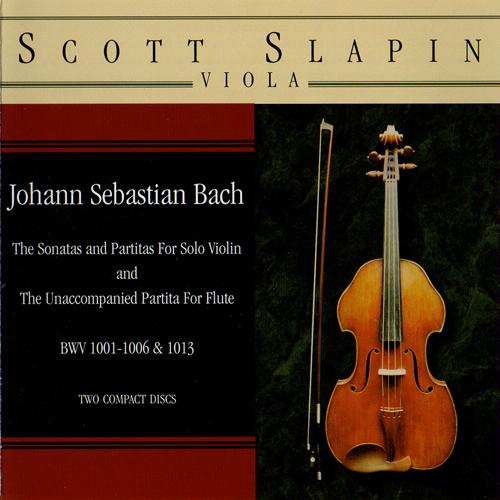
Listener Guide # 317 - J.S. Bach: Sonatas for Solo Violin
The complete set of solo violin works by J.S. Bach consists of three sonatas da Chiesa (or church sonatas), in four movements, and three partitas (or partias), which are “dance suites”. The set was completed by 1720, but was only published in 1802 by Nikolaus Simrock in Bonn. Even after publication, it was largely ignored until the celebrated violinist Joseph Joachim started performing these works. Today, Bach's Sonatas and Partitas are an essential part of the violin repertoire, and they are frequently performed and recorded. (Once Upon theInternet #38 – 9 June 2015)


Listener Guide # 318 - Christmas
This Christmas playlist programs titles from both the French (Canadian) and English repertoires. Some of the "stand alone" classics come from Adolphe Adam (Minuit, Chrétiens, which is known in English as O Holy Night), Frederick Delius (his charming sleigh ride) and Corelli's Christmas Concerto. Bemjamin Britten and Ralph Vaighan-WIlliams both provide variations based on a pair of well-known carols: God Rest Ye Merry, Gentlemen and Greensleeves. Marcel Dupre also adapted a well-known French carol for organ. (ITYWLTMT Podcast #212 - 25 Dec 2015)

 
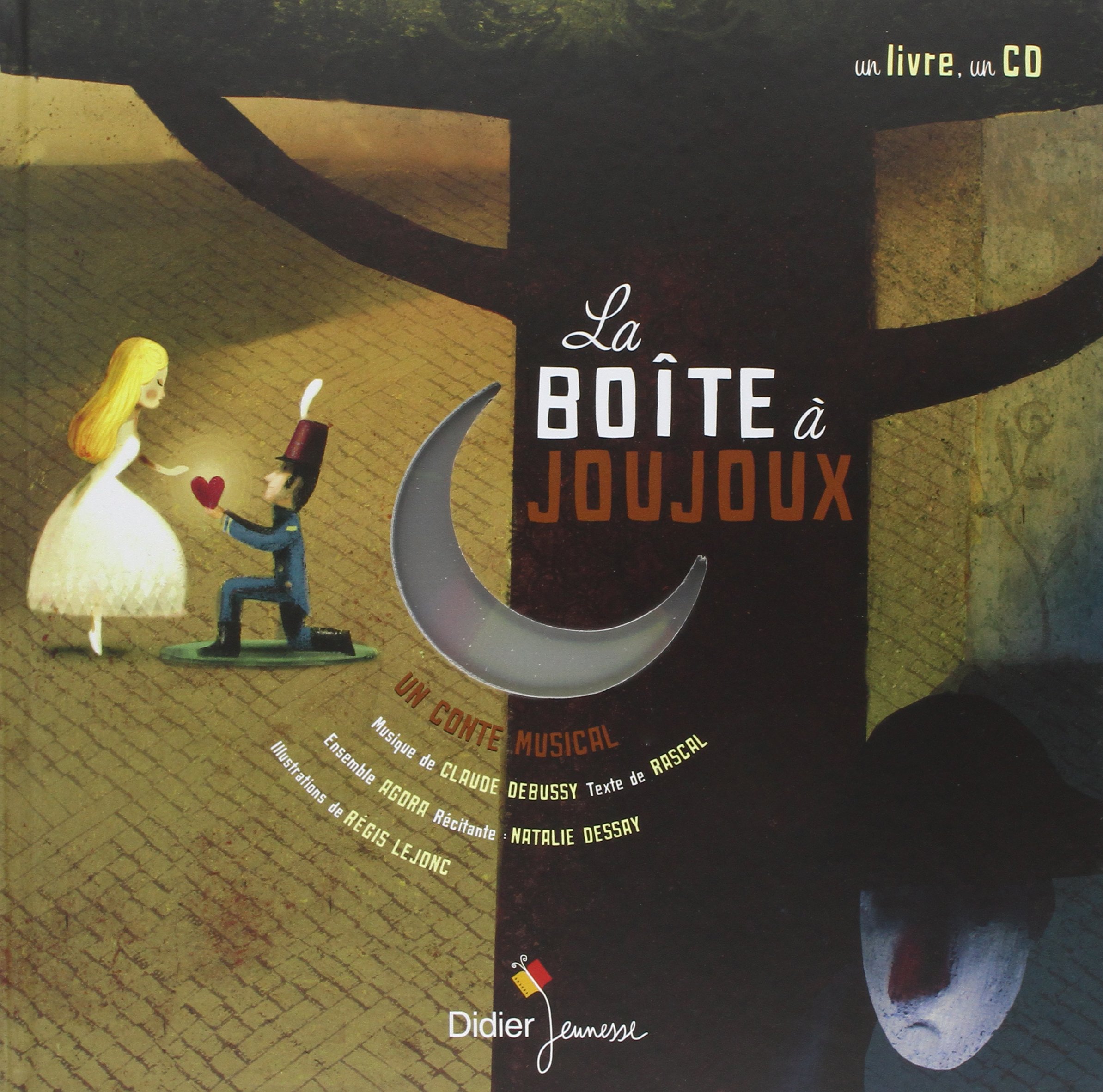
Listener Guide # 319 – Child’s Play
Kids and Toys are what Christmas is about. This Listener Guide proposes some music that is appropriate for young (and young at heart) music lovers. There are three main ideas that intermingle in this montage: children, children’s tales and (of course) toys. (ITYWLTMT Podcast #85 - 21 Dec 2012)