Showing posts sorted by relevance for query continent. Sort by date Show all posts

Friday, August 16, 2013

Montage # 118 – The Dark Continent / Le continent mystérieux


As of September 13, 2013, this montage will no longer be available on Pod-O-Matic. It can be heard or downloaded from the Internet Archive at the following address / A compter du 13 septembre 2013, ce montage ne sera plus disponible en baladodiffusion Pod-O-Matic. Il peut être téléchargé ou entendu au site Internet Archive à l'adresse suivante:

https://archive.org/details/Pcast118


pcast118- Playlist

===================================================================== English Commentary – le commentaire français suit


Today’s stop on our Musical Passport series is Africa. The Dark Continent has long been associated with adventure, immense deserts, fierce predators and a population that lives in the extremes of riches and poverty. Africa has also been the stage of colonial expansion, followed by self-governance and (often times, it seems) civil war, unrest and despots.

Much of the music I chose tries to avoid some of the (shall we say) stereotypes and bad PR, and concentrates on music inspired by the people, the sounds and the brilliant landscapes of the continent.
From opera, I retained selections from Meyerbeer (L’Africaine) and Rossini (The Italian Girl in Algiers), avoiding the obvious Aida (which is the subject of an OTF post from a few days ago). The Maghreb region of North Africa, which were colonized by France) are notable in today’s montage – some of Max Steiner’s music for the film Casablanca representing Morocco, and the catchy Dizzy Gillespie standard Night in Tunisia rounding off the region (with, as a bonus, the mesmerizing out-take from the recording I chose, by Charlie Parker at Alto Sax.)

The lone African composer in the montage is Malcolm Forsyth, who left South Africa and Apartheid in the late 1960’s to join the Edmonton Symphony and the faculty at the University of Alberta. While a member of the Cape Town Symphony, Forsyth wrote this Jubilee Overture for his hometown orchestra.

Samuel Coleridge-Taylor sought to do for African music what Johannes Brahms did for Hungarian music and Antonín Dvořák for Bohemian music. Born in 1875 to an English mother and a Sierra Leonean Creole father, Coleridge-Taylor was brought up in Croydon by his mother and her father. Her brother was a professional musician and Taylor studied the violin at the Royal College of Music and composition under Charles Villiers Stanford. He also taught at the Crystal Palace School of Music, and conducted the orchestra at the Croydon Conservatoire. Coleridge-Taylor made three tours of the United States, which increased his interest in his racial heritage. Though certainly not as ambitious as the folk dances by Brahms and Dvořák, Coleridge-Taylor’s African Dances do explore some of the sounds that Europeans of the Victorian and Edwardian eras would have associated with Africa.

Egypt is an icon of civilization, but has also had its share of occupiers from Europe – from Caesar’s Rome all the way to Napoleon’s France. Camille Saint-Saëns' Piano Concerto No. 5, popularly known as The Egyptian, was his last. He wrote it in 1896, 20 years after his Fourth, to play himself at his own Jubilee Concert on May 6 of that year. This concert celebrated the fiftieth anniversary of his début at the Salle Pleyel in 1846.

This concerto is nicknamed "The Egyptian" for two reasons. Firstly, Saint-Saëns composed it in the temple town of Luxor while on one of his frequent winter vacations to Egypt, and secondly, the music is among his most exotic, displaying influences from Javanese and Spanish as well as Middle-eastern music. Saint-Saëns said that the piece represented a sea voyage.

Although I avoided the Verdi version, I could have chosen the Tim Rice/Elton John version of Aida as part of this montage. I chose, instead, to close off with one of the many comic relief numbers from another of their collaborations…


No worries – I think you will love this music too!


=====================================================================
Commentaire français


Aujourd’hui, notre passeport musical nous donne accès à l’Afrique. Parfois appelé le continent mystérieux (en anglais, on dit Dark Continent, ou continent obscur), l’Afrioque est synonyme d’aventure, de féroces prédateurs, et largement associé avec le tiers-monde – la population africaine vit soit dans un luxe surprenant ou dans la pauvreté extrême.  Plus récemment, avec la dé-colonisation et un sens d’autonomie renouvelée, l’Afrique est aussi le siège de conflits, de génocides, et a sa large part de gouvernements autocratiques.

Pour la durée de ce montage, mettons de côté les aspects moins savoureux et concentrons-nous sur la musique qui s’inspire de l’aspect exotique et aventurier de ce large continent. Certaines des musiques les plus célèbres qu’on pourrait monter aujourd’hui proviennent du monde de l’opéra – Aïda de Verdi étant bien sûr le meilleur exemple. J’ai programmé Aïda ôur l’opéra du mois de septembre, ce qui explique pourquoi il ne fait pas l palmarès. Toutefois, Meyerbeer (L’Africaine) et Rossini (L’Italienne à Algers) sont du montage cette semaine. Afin de compléter le survol du Maghreb, j’ai ajouté la musique du film Casablanca (Maroc) et la Tunisie est représentée par Charlkie Parker et sa version inoubliable de la composition de Dizzy Gillespie A Night In Tunisia. (En prime, j’ai ajouté le court vestige d’une des prises rejetées de la session d’enregistrement, où Parker sidère ses complices avec un solo d’Alto légendaire).

Le seul compositeur africain retenu aujourd’hui est d’Afrique du Sud. Malcolm Forsyth quittera son pays natal à la fin des années 1960 pour s’établir au Canada, se joignant comme trombone-solo avec l’orchestre Symphonique d’Edmonton et s’associer avec la faculté de musique de l’Université d’Alberta. Jeune homme, Forsyth était membre de l’orchestre de Cape Town, et composa pour leur usage l’ouverture du jubilée proposée cette semaine.

Contemporain et compatriote d’Edward Elgar, Samuel Coleridge-Taylor est né à Londres d’une mère Anglaise et d’un père créole du Sierra Leone. Elevé en Angleterre par une mère-célibataire, Coleridge-Taylor se formera comme musicien, et fera carrière comme chef d’orchestre et compositeur. Pour des raisons fort évidentes (les mulâtres ne devaient pas courir les rues à Londres au XIXe siècle), Coleridge-Taylor s’intéresse à son patrimoine africain, et voue se faire le champion de la musique africaine, au même titre que Brahms et Dvořák pour la musique hongroise ou slave. Sans vouloir comparer les danses africaines de Coleridge-Taylor à celles de ces deux compositeurs, il faut admettre que les thèmes exploités restent en-deçà des sons que les Anglais Victoriens ou Edwardiens associaient au continent.

Camille Saint-Saëns' s’offrira en concert à la salle Pleyel en 1896, cinquante ans après y avoir fait ses débuts. Pour l’occasion, il agira comme soliste pour la première de  son cinquième concerto pour piano (son quatrième fut créé 20 ans plus tôt). Le sous-titre donné au concerto est «L’Égyptien», en grande partie à cause de son usage de motifs musicaux considérés exotiques, et car ilk fut composé en grande partie lors d’un séjour à la ville Égyptienne de Luxor.

Pour compléter le montage, un rappel qu’on peut vivre sa vie, sans aucun souci, gracieuseté de Tim Rice et Elton John, de la trame originale du film Le Roi Lion.


Bonne écoute!


Saturday, August 1, 2020

Project 366 - Dates on the musical calendar for August 2020

Project 366 continues in 2019 with "Dates on the Musical Calendar


This month makes the final installment of Project 366, a long-standing long-term project we began in April 2016 to mark what was then the fifth anniversary of our music blog. Today, we will share the last few listener guides in this series, and will discuss in a post later this month how we will program our daily podcasts for the foreseeable future - stay tunes.

Highlights

  • 10-Aug - Happy Birthday Marie-Claire Alain (*1929) [Guide #10
  • 13-Aug - Left-Handers Day [Guide # 362]
  • 15-Aug -  Happy Birthday Samuel Coleridge-Taylor (*1875) [Guide #363]
  • 18-Aug -  Happy Birthday Antonio Salieri (*1750) [Guide #146]
  • 22-Aug  -  Happy Birthday Claude Debussy (*1862) [Guide #84]
  • 31-Aug - FP of Weill's  Threepenny Opera (OTD 1928) [Guide #366]

If you recall, our very first listener guides were our two-part musical alphabet. As a fitting close to the project, and to fill the remaining dates on the calendar, we will revisit the musical alphabet therough a series of listener guides. Here is our "new" alphabet (noting some listener guides tackle more than one letter)


Your Listener Guides

Listener Guides #357 & 358 - A for Aida

Verdi composed his first opera (Oberto) in 1839 and from then on strung together great works achieving critical and popular success: Nabucco (1842), Rigoletto (1851), Il trovatore (1853), and the list goes on and on. Probably one of Opera’s most celebrated spectacles of excesses, Aida was a commission by the ruler (Khedive) of Egypt for the great opera house he’d inaugurated in Cairo in 1869. Versi’s Rigoletto was the first production put up at the opera house, and so Verdi was approached to create the spectacular stage work. [Once or Twice a Fortnight - August 15th, 2013]

[L/G 357 – Acts 1 & 2, L/G 358 – Acts 3 & 4]


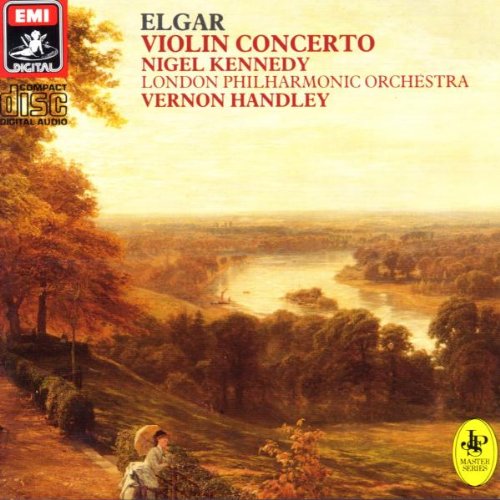
Listener Guides #359 - E for Elgar

Elgar was at the height of his fame when the Philharmonic Society commissioned a violin concerto in 1909. The work was dedicated to Fritz Kreisler, the internationally famous violinist who was the soloist at its first performance. The work is long for a violin concerto and expansive in mood but nevertheless compelling and not overblown. It contains none of the pomposity and swagger found in many of Elgar's works which some commentators find disturbing and rather distasteful. The work is firmly established in the classical repertoire although not performed frequently. [ITYWLTMT Montage # 294 – October 30 2018]


Listener Guides #360 - J for Jongen

Joseph Jongen’s Symphonie Concertante of 1926 is a tour de force, considered by many to be among the greatest works ever written for organ and orchestra. The work was commissioned by Rodman Wanamaker for debut in the Grand Court of his palatial Philadelphia department store, Wanamaker's. Its intended use was for the re-dedication of the world's largest pipe organ there, the Wanamaker Organ. As part of a series of concerts Rodman Wanamaker funded with Leopold Stokowski and the Philadelphia Orchestra. Wanamaker's death in 1928 precluded the performance of the work at that time in the venue for which it was written, but it was finally performed for the first time with the Wanamaker Organ and the Philadelphia Orchestra in 2008. [ITYWLTMT Montage #191 - March 27, 2015]


Listener Guides #361- K for Kabalevsky & Khachaturian

After a tenure with the Bolshoi Theatre (1943-56), Kirill Kondrashin concentrated on orchestral conducting, becoming sought after as a concerto accompanist and working with the country’s leading instrumentalists, such as Emil Gilels, Leonid Kogan, David Oistrakh, Sviatoslav Richter and Rostropovich. In the first International Tchaikovsky Competition in 1958, Kondrashin was the conductor for Van Cliburn, who won the first prize. After the competition he toured the USA with Cliburn, being the first Russian conductor to visit America since the Cold War began. The two suites (Comedians and Masquerade) are taken from the same October 20, 1958 Manhattan Center recording by the RCA Symphony Orchestra (the likely remnants of the NBC Symphony/Symphony of the Air) under Kondrashin, a few months after the Cliburn sessions at Carnegie Hall.  [ITYWLTMT Montage #316 - July 12, 2019]


Listener Guides #362- The Left Hand
Pianists limited to the use of their left hands are not uncommon. As an example, in 1964, American pianist Fleisher lost the use of his right hand due to a condition that was eventually diagnosed as focal dystonia. Fleisher commenced performing and recording the left-handed repertoire while searching for a cure for his condition. In the 1990s, Fleisher was able to gradually overcome his focal dystonia symptoms after experimental botox injections to the point where he could play with both hands again. [ITYWLTMT Montage #320 - August 13, 2019]


Listener Guides #363- The Dark Continent
The Dark Continent has long been associated with adventure, immense deserts, fierce predators and a population that lives in the extremes of riches and poverty. Africa has also been the stage of colonial expansion, followed by self-governance and (often times, it seems) civil war, unrest and despots. [ITYWLTMT Montage #118 - August 16, 2013]


Listener Guides #364- O for Offenbach
Offenbach was born in Germany of a musician father, cantor of a synagogue. Early on, Jacob Offenbach showed himself adept at the cello, which convinced his father to send him to study in Paris. Offenbach joined the Conservatoire to become a soloist, but his clownish behavior saw him leaving after a year. Thanks to his talent, he still performs in concert - after having francized his given name - then joins the orchestra of the Opéra-Comique in which he plays while establishing himself as a composer. [ITYWLTMT Montage #299 - December 21, 2018]


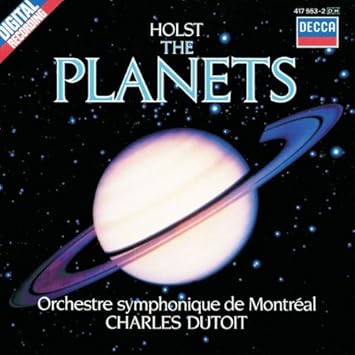
Listener Guides #365 - P for the Planets

Written between 1914-1916 by British composer Gustav Holst, ‘The Planets’ is a suite of seven short tone poems, each representing one the known planets of the Solar System seen from Earth at the time, and their corresponding astrological character. [Vinyl’s Revenge #33 - December 12, 2017]


Listener Guides #366 - The Three-Penny Opera

A milestone of 20th century musical theatre, The Threepenny Opera rolls on unstoppably into the 21st. In their opera "by and for beggars", Weill and Brecht transformed old-fashioned opera and operetta forms, incorporating a sharp political perspective and the sound of 1920s Berlin dance bands and cabaret. Weill's acid harmonies and Brecht's biting texts created a revolutionary new musical theatre that inspired such subsequent hits as Cabaret, Chicago, and Urinetown. [Once or Twice a Fortnight - August 31st, 2013]


Tuesday, August 9, 2016

Two Schubert Symphonies


This is my post from this week's Tuesday Blog.


For the last few Once Upon the Internet posts in our monthly series, I shared some "complete" recordings I downloaded from now defunct sites. Today's share is from the old Public Domain Classicsite, but borrows from two separate recordings.

As I stated not so long ago on a post, when we think of Schubert, we think lieder and other intimate settings and not necessarily of symphonies. That having been said, Schubert did leave us 12 works (many of them fragmentary) that are in the symphonic form, and eight of hem (including the "Unfinished") are part of the repertoire, though some get performed mire often than others.

Among the more performed, we find the two symphonies in C Major - the sixth and ninth - are among my favourites. The sixth sometimes called "little" C Major to distinguish it from the more ambitious ninth is not "little"a t all. It is very much in the classical vein - in the form pioneered by Haydn and perfected by Mozart that Beethoven had set about shattering when Schubert was still a nursing infant.

That Franz Schubert, as a young man still learning his craft, was more influenced by the music of Haydn and Mozart than by the symphonies of Beethoven (just then reaching their stride) is readily apparent in his early orchestral works; the Symphony No. 4 in C minor, D. 417 (the "Tragic" Symphony, as Schubert called it), composed during the spring of 1816, is no exception. Despite the frequent comparisons made between this work and Beethoven's famous symphony in the same key, it is difficult to think of another symphonic work from the 1810s that more completely ignores Beethoven's special contributions to dramatic orchestral writing.


The performances I chose are in good hands - Igor Markevitch studied composition under Nadia Boulanger and in spite of relative success as a composer early on, he is best remembered as a conductor, best known for his performance of the Russian repertoire and twentieth century music. He had a quick temper, reflected in his music in sharp emotional shifts, yet the music was meticulously prepared and nearly always followed the composer's directions with exceptional care. In the late 1990s, his recordings came back into demand in re-release, and even his compositions were finding a small but interested market and were praised anew for their originality.


Sir Thomas Beecham, known as a promoter of classical music in Brutain and as an orchestra builder. In 1932, Beecham, dissatisfied with the standards of the orchestral scene, founded the London Philharmonic Orchestra, staffing it with the finest players. It quickly became a top-rank ensemble and successfully toured the Continent.

Both conductors are featured today in vintage recordings.

Happy Listening!


Franz SCHUBERT (1797-1828)
Symphony No.4 in C Minor, D.417 ('Tragic')
Berliner Philharmoniker
Igor Markevitch, conducting

Symphony No.6 in C Major, D.589 ('Little C Major')
London Philharmonic Orchestra
Sir Thomas Beecham, conducting.


Tuesday, May 17, 2022

Igor Stravinsky, Neville Marriner, Academy Of St. Martin-in-the-Fields – Pulcinella (Complete Ballet) / Suites Nos. 1 & 2 For Small Orchestra


This is my post from this week's Tuesday Blog.

This week’s Tuesday Blog is a new installment in our Vinyl’s Revenge series featuring works by Igos Stravinsky performed by the Academy of St-Martin-in-te-Fields, a pair of soloists, all under the direction of Sir Neville Marriner.

The main work on this Angel ADD release is Stravinsky’s one-act ballet ballet Pulcinella, one of two ballets inspired by the works of earlier composers. It is a based on an 18th-century play, Quatre Polichinelles semblables ("Four identical Pulcinellas"). The ballet premiered at the Paris Opera on 15 May 1920 under the baton of Ernest Ansermet. The dancer Léonide Massine created both the libretto and choreography, and Pablo Picasso designed the original costumes and sets. 

Pulcinella is a classical character that originated in commedia dell'arte of the 17th century and became a stock character in Neapolitan puppetry. Pulcinella's versatility in status and attitude has captivated audiences worldwide and kept the character popular in countless forms since his introduction to commedia dell'arte by Silvio Fiorillo in 1620. Many regional variants of Pulcinella were developed as the character diffused across Europe In many later adaptations, Pulcinella was portrayed as a puppet, as commedia dell'arte-style theatre did not continue to be popular throughout all of the continent over time. He was said to evolve into "Mr. Punch" in England. The key half of Punch and Judy, he is recognized as one of the most important British icons in history.

Not unlike The Fairy’s Kiss (1928) where Stravinsky elaborated several melodies from early piano pieces and songs by Tchaikovsky in his score, Diaghilev wanted a ballet based on an early 18th-century commedia dell'arte libretto and music then believed to have been composed by Giovanni Battista Pergolesi. This attribution has since been proved to be spurious. Some of the music may have been by Domenico Gallo, Unico Wilhelm van Wassenaer, Carlo Ignazio Monza and Alessandro Parisotti. Stravinsky adapted the older music to a more modern style by borrowing specific themes and textures, but interjecting his modern rhythms, cadences, and harmonies.

Pulcinella marked the beginning of Stravinsky's second phase as a composer, his neoclassical period.

As filler, the disk includes Stravinsky’s two suites for small orchestra. These enchanting, gently satirical Suites are orchestrations made by Stravinsky of the eight piano duets he had written for his children, Theodore and Mika, the first three in 1914-1915 and then five more in 1917. 
Note the YouTube link is to a compilation set of Stravinsky music. Clips 29-47 are the contents of today’s disc.

Happy listening!


Igor STRAVINSKY (1882-1971)

Pulcinella, Ballet with Song in One Act (1920)
Bass Vocals – Robert Lloyd 
Soprano Vocals – Yvonne Kenny 
Tenor Vocals – Robert Tear 

Two Suites (Nos. 1 and 2) for Small Orchestra (1921, 1926)

 
Academy Of St. Martin-in-the-Fields
Neville Marriner, conducting
Angel Records Digital – DS-37899
Format: Vinyl, LP, Album, Stereo
Released: 1982


Tuesday, June 18, 2013

Jadis sur Internet - Beethoven "In Camara"

Vous me permettrez quelques instants afin d’exprimer mes meilleurs vœux à mon épouse Marian pour notre 25e anniversaire de mariage. Bravo à toi, qui a dû m’endurer pendant toutes ces années! Je réserve une baladodiffusion axée sur le mariage vendredi de cette semaine – à suivre!
Le billet d’aujourd’hui propose la performance d’un couple (mari et femme), et sert de réchauffement pour notre série estivale de musiques de chambre, que je proposerai encore cette année (volet français) sur MQCD Musique Classique.
L’état de Washington aux Etats-Unis a la distinction d’être sur la côte du Pacifique, au Nord-Ouest du continent, juste au Sud de la Colombie-Britannique. Sa métropole, Seattle, est à quelques heures de voiture de Vancouver, et on y trouve en banlieue la maison-mère de l’empire Bill Gates, Microsoft. L’état de Washington, représente le café, les vergers, et un train de vie plus relax que celui qui domine le sud de la côte, et plus particulièrement la Californie.
Les universités qui sillonnent l’état sont des écoles surtout reconnues pour leurs équipes sportives (le football Américain et le basket) et les facultés de musique de ces institutions ne fait pas partie nécessairement de la longue liste de conservatoires prestigieux : Julliard, Curtis, Eastman ou même Indiana. Le Central Washington University, toutefois, offre un programme qui se distingue par sa variété artistique et son rayonnement culturel communautaire.

Pour notre récital de cham,bre tout-Beethoven, j’ai fait appel à des plages téléchargées de MP3.COM mettant en vedette la violoniste Carrie Rehkopf et sion mari, le violoncelliste John Michel.

A Propos de nos artistes

Mme Rehkopf et M. Michel sont des emebres du personnel enseignat de CWU depuis les années 1990, et ajoutent à leurs tâches enseignantes un clendrier chargé de récitals avec des musiciens locaux, des élèves et les orchestres environnants.
Carrie  Rehkopf  prend ses premi;ères leçons de violon à l’âge de 4 ans, et fairt ses études à l’Université du Michigan, avec un stage à Londres. En plus de ses responsabilités académiques, elle s’est produite un peu partout en Amérique du Nord, dont aux festivals de Tanglewood, Banff et Norfolk
Lui aussi un finissant de l’Université du Michigan, John Michel s’est perfectionné auprès de Bernard Greenhouse, Jeffrey Solow, Stefan Popov, Ned Johnson, John Lenz et Susan s. Son répertoire inclut les concerti de Chostakovitch, Dvorak, Elgar, Haydn, Maria Newman, Saint Saëns et Vivaldi et il offre régulièrement les suites de Bach (jouées de mèmoire).

Accompagnant nos artistes dans leurs sonates et se joignant à eux pour le trio Archiduc, les pianistes 
Lisa Bergman professeure à l’Université de Washington à Seattle (spécialiste en accompagnement) et un autre membre de la fac du CWU, John Pickett , respectivement.
DETAILS

Ludwig van BEETHOVEN (1770-1827)

Sonate pour violon no. 5, en fa majeur, op. 24 "
Frühling "
Sonate pour  violoncelle no. 3, en la majeur, op. 69
Trio no. 6, en si bémol majeur, op. 97 "Archiduc"

Carrie Rehkopf, violon (op. 24, op. 97)
John Michel, violoncellle (op. 69, op. 97)
Lisa Bergman, piano (op. 24, op. 69)
John Pickett, piano (op. 97)
Téléchargement MP3.COM on 19 Mar 2002

Friday, August 24, 2012

Montage #68 - South of the Border/Vers le Sud


As of September 28, 2012, this montage will no longer be available on Pod-O-Matic. It can be heard or downloaded from the Internet Archive at the following address / A compter du 28 septembre 2012, ce montage ne sera plus disponible en baladodiffusion Pod-O-Matic. Il peut être téléchargé ou entendu au site Internet Archive à l'adresse suivante:

http://archive.org/details/SouthOfTheBorder_423


pcast068 Playlist

=====================================================================
English Commentary – le commentaire français suit


This week we bring our travelog series the Great Escape to a close with a visit “South of the Border”, as they say, or to Latin America more precisely…

From a Canadian perspective, the Canada–United States border, officially known as the International Boundary, is the longest international border in the world shared between the same pair of countries. The terrestrial boundary (including small portions of maritime boundaries on the Atlantic, Pacific, and Arctic coasts, as well as the Great Lakes) is 8,891 kilometres (5,525 mi) long, including 2,475 kilometres (1,538 mi) shared with Alaska. It is Canada's only land border.

However, the United States–Mexico border runs from Imperial Beach, California, and Tijuana, Baja California, in the west to Matamoros, Tamaulipas, and Brownsville, Texas, in the east, and traverses a variety of terrains, ranging from major urban areas to inhospitable deserts. The border's total length is3,169 kilometres (1,969 mi), and is the most frequently crossed international border in the world.

To begin our journey, we cross the US-Mexico border and encounter serenading musicians in folk garb.Mariachi is the best known form of folk music from Mexico. The name refers to the music, the musicians and the bands that play it. Mariachi began as a regional folk style called “Son Jaliscience” in the center west of Mexico originally played only with string instruments and musicians dressed in the white pants and shirts of peasant farmers.

Probably one of the most recognized ballads in mariachi music is Cielito lindo (Lovely Sweet One) – you know it probably as “Ay, ay, ay ay”. Like ion the 1960’s jingle:

Ay, ay, ay, ay! oh, I am dee Frito Bandito. I like Frito's Corn Chips. I love them, I do. I want Frito's corn chips. I'll take them, from you.


Another Mexican favourite is Bésame Mucho, a song written in 1940 by songwriter Consuelo Velázquez and played in our montage by Cuban bandleader Xavier Cugat. According to Velázquez herself, she wrote this song even though she had never been kissed yet at the time, and kissing as she heard was considered a sin.

Another musician of Cuban descent is composer and arranger Aldo Forte, who was long associated woith the US Air Force band based in Fort Langley, VA. His Dance Suite on Spanish and Latin Rythms hits the spot half-way through our journey.

Most of Latin America speaks Spanish, except for Brazil where they speak Portuguese. We retained some Brazilian-inspired music: a few of Darius Milhaud’s Saudades do Brasil and one of Hector Villa-LobosBachianas Brasileiras.

The Bachianas Brasileiras are an attempt by Villa-Lobos to fuse Brazilian folk and popular music on the one hand, and the style of Johann Sebastian Bach on the other, as an attempt freely to adapt a number of Baroque harmonic and contrapuntal procedures to Brazilian music. Most of the movements in each suite have two titles: one "Bachian" (Preludio, Fuga, etc.), the other Brazilian (Embolada, O canto da nossa terra, etc.).

If we keep going south, we find our way to Argentina, which is a surprising melting pot of Spanish and Italian cultures deep in the Southern Hemisphere. Argentine tango is a musical genre of simple quadruple metre and binary musical form, and the social dance that accompanies it. Its lyrics and music are marked by nostalgia, expressed through melodic instruments including the bandoneón. Originated at the ending of the 19th century in the suburbs of Buenos Aires, it quickly grew in popularity and spread internationally. Among its leading figures is Ástor Piazzolla. Piazzolla, in addition to earning a living as a tango artist and performer, took serious music lessons with la grande dame Nadia Boulanger, and many of his works transcend into the concert hall –such as the Concierto de Nácar which I included in today’s montage. Why, even Stravinsky took a shot at the tango…

To bring the journey to a close, we return to Mexico and to American coimposer Aaron Copland – another famous Boulanger pupil. El Salón México is a musical depiction of an eponymous dance hall in Mexico City and even carries the subtitle, "A Popular Type Dance Hall in Mexico City." Although Copland visited Mexico early in the 1930s, he based this tone poem not on songs he heard there, but rather on written sheet music for at least four Mexican folk songs that he had obtained: "El Palo Verde," "La Jesusita," "El Mosco," and "El Malacate." The powerful refrain that appears in the piece three times stems from "El Palo Verde."

I think you will love this music too!


=====================================================================
Commentaire français


Le montage de cette semaine met un terme à notre grande évasion avec un pèlerinage vers le Sud, soit en Amérique Latine.

Pour nous Canadiens, nos voisins du Sud sont les Américains avec qui nous partageons une frontière qui s’étale sur près de 9000 km (si on inclut la bordure de presque 2500 km  avec l’Alaska, et on serpente le long des côtes des Grands Lacs. Toutefois, les Américains partagent une frontière avec le Mexique qui fait moins le la moitié de ce parcours (environ 3200 km), divisés entre la frontière avec la Basse Californie ainsi que les sections qui longent la côte Ouest du Golfe du Mexique, incluant la capitale du meurtre Juarez (outre-frontière du hameau d’El Paso au Texas).

Au risque de s’embourber dans les clichés, notre montage s’amorce avec un regard sur la musique folklorique mexicaine, telle qu’incarnée par les mariachis, ces troubadours vêtus de sombreros qui s’accompagnet à la guitare et au violon. Sans doute l’un des airs les plus connus du répertoire mariachi est Cielito lindo (trad. Libre « Ma douce ») qui se ponctue du refrain “Ay, ay, ay, ay”…

Qui parle Amérique Latine parle, bien sûr, des pas de danses qu’on associe étroitement avec les orchestres des grandes salles de danse: le cha-cha, le mambo, la rumba, et j’en passe… Maman avait son musicien préféré, et sa mission était d’enseigner à son pauvre fils tous ces pas de danse dans le salon familial, avec le vieux tourne-disques qui jouait Xavier Cugat. Je n’ai jamais pu maitriser la danse sociale, mais ce vieux Cugat… Je l’ai monté ici avec son orchestre du Waldorf –Astoria de New-York dans la ballade mexicaine Bésame Mucho.

L’an dernier dans un mardi dédié au musée, j’avais proposé une pièce du compositeur Cubano-Américain  Aldo Forte, longtemps associé à l’harmonie de concert de l’Armée de l’Air Américaine en Virginie. J’ai monté une autre de ses compositions, une suite de danses d’inspiration hispano-latines.

Le Brésil est un pays particulier en Amérique Latine, principalement car on n’y parle pas espagnol, mais plutôt le portugais. J’ai choisi deux œuvres d’inspiration brésiliennes: une sélection de Saudades do Brasilde Darius Milhaud et une des neuf Bachianas Brasileiras d’Hector Villa-Lobos.

Si l’on descend jusqu’à l’extrêmité Sud du continent, on arrive en Argentine, un pays qui a métissé une culture hispanique avec, entre autres, la culture Italienne et la culture Allemande. Le tango Argentin se distingue par l’omniprésence d’une forme d’accordéon local – le bandoneón  - et est teinté de nostalgie beaucoup plus que de l’aspect sensuel de cette danse en quatre temps… Parmi ses plus illustres champions, on compte bien sûr le musicien Argentin et Américain d’adoption, Ástor Piazzolla. Piazzolla, mordu par une vocation tardive, fut l’émule de la grande Nadia Boulanger, ce qui explique pourquoi beaucoup de ses grandes oeuvres sont jouées par nos grands orchestres. C’est le cas du Concierto de Nácar conçu pour neuf musiciens avec orchestre symohonique. J’ai également monté une courte pièce pour petit ensemble de Stravinski, un tango pour orchestre.

Pour conclure cette excursuion, un retour au Mexique, en fait à sa capitale nationale, et une salle de danse que l’Américain Aaron Copland relate dans son poème symphonique El Salón México. Il faut souligner que Copland, contrairement à d’autres compositeurs, ne s’est pas uniquement fié à des souvenirs musicaux, mais a étudié et calqué des airs mexicains qu’il distille à partir de partitions…

Bonne écoute!


Friday, August 3, 2012

Montage # 65 - Rivers/Rivières


As of September 7, 2012, this montage will no longer be available on Pod-O-Matic. It can be heard or downloaded from the Internet Archive at the following address / A compter du 7 septembre 2012, ce montage ne sera plus disponible en baladodiffusion Pod-O-Matic. Il peut être téléchargé ou entendu au site Internet Archive à l'adresse suivante:

http://archive.org/details/Rivers_483

pcast065 Playlist

=====================================================================
English Commentary – le commentaire français suit

On this blog over the last two summers, we have visited our fair share of places - countries and cities - but the next few posts will take us into many places that have something in common: islands, the beach, the Sea and this week rivers.

Rivers of the New World

I have scheduled four rivers in our North-American tour. The Suwannee River is a major American river in southern Georgia and northern Florida. It is a wild blackwater river, about 246 miles (396 km) long. This river is the subject of the Stephen Foster song "Old Folks at Home," in which he calls it the Swanee River (because Foster had misspelled the name). Foster never saw the river he made world famous. George Gershwin's song, with lyrics by Irving Ceasar,and made popular by Al Jolson, is also spelled "Swanee," and boasts that "the folks up North will see me no more when I get to that Swanee shore."  The Gershwin song opens our podcast.

French explorers Louis Joliette and Father Jacques Marquette were the first Europeans to travel the Mississippi riverthe chief river of the largest river system in North America. Flowing entirely in the United States, it rises in northern Minnesota and meanders slowly southwards for 2,530 miles (4,070 km) to the Mississippi River Delta at the Gulf of Mexico. With its many tributaries, the Mississippi's watershed drains all or parts of 31 US states and 2 Canadian provinces between the Rocky and Appalachian Mountains. The river is the inspiration for a number of musical works, from Creedence Clearwater Revival's Proud Mary to Jerome Kern's watershed musical, Show-Boat. The most famous song from this musical is - no doubt - "Ol' Man River"  The song expresses the African American hardship and struggles of the time with the endless, uncaring flow of the Mississippi River. In our montage, it is sung by the Jamaican-born British operatic bass.Sir Willard White.

Another composer that set the Mississippi to music is Ferde Grofé, however we will use him to accompany us to the Great Lakes region and the Niagara RiverThe Niagara River flows north from Lake Erie to Lake Ontario. It forms part of the border between the Province of Ontario (on the west) and New York State. Niagara-on-the-Lake and its vineyards are located in Southern Ontario where the Niagara River meets Lake Ontario and is well-frequented by Eastern-Canadian wine aficionados. But, let's not kid ourselves, there is an even bigger attraction: he river, which is occasionally described as a strait, is about 56 kilometres (35 mi) long and includes Niagara Falls in its course. Grofé captures the power of the falls in his 1963 Niagara Suite, with a section included in the montage and the entire suite included here:


Flowing from the Eastern edge of Lake Ontario is the Saint-Lawrence River, which borders the US and Canada for a short stretch before enteriung Canadian soil completely just west of Montreal. Stretching 1,197 km (743.8 mi) from the outflow of Lake Ontario to the Atlantic Ocean, the river is often described in three parts: the river itself, the estuary - that is the portion of the river flowing East from Québec City upto Rivière-du-Loup where the river starts to widen and, finally, the Gulf flowing from there to the tip of the Gaspé peninsula and into the ocean. Composer and pianist André Gagnon comes from the Estuary region (a small town in the Kamouraska townships), and his 1975 lyric ode for piano and orchestra Le Saint-Laurent is also divided in three sections that portray the sections of the river.

Back to the US, and the Hudson River. The 315-mile (507 km) river officially begins in Henderson Lake in Newcomb, New York, flowing southward past the state capital at Albany and then eventually forms the boundary between New York City and the U.S. state of New Jersey at its mouth before emptying into Upper New York Bay. The Hudson served as a surrogate to the Seine while Gershwin wrote An American In Paris, but I rather chose the fine band piece by Herbert L. Clarke, Sounds From the Hudson.

Rivers of the Old World

The longest river in the World, and probably the oldest documented river of the Antiquity, the Nile is 6,650 km (4,130 miles) long. It runs through the ten countries of Sudan, South Sudan, Burundi, Rwanda, Democratic Republic of the Congo, Tanzania, Kenya, Ethiopia, Uganda and Egypt. Giuseppe Verdi sets part of his great opera Aida at the foot of the nile, which is where we will meet up with Jon Vickers & Leontyne Price.

With a total length of 346 km (215 mi), the River Thames  is the longest river entirely in England and the second longest in the United Kingdom. While it is best known because its lower reaches flow through central London, the river flows alongside several other towns and cities, including Oxford, Reading, Henley-on-Thames, Windsor, Kingston upon Thames and Richmond. The Water Music composed by George Frideric Handel premiered on 17 July 1717, when King George I requested a concert on the River Thames. The concert was performed for King George I on his barge and he is said to have enjoyed it so much that he ordered the 50 exhausted musicians to play the suites three times on the trip. The montage features some selections from the second of these suites as performed by the New-York Philharmonic under Pierre Boulez. Here is the entire suite by Boulez with the Hague Philharmonic Orchestra:


At 430 km long, the Vltava (better known under its Germanname, die Moldau) is the longest river in the Czech Republic, running north from its source near the Austrian Border in Šumava through Český Krumlov, České Budějovice, and Prague, merging with the Elbe at Mělník. Vltava happens to be one (and the mpost well-known) of the six symphonic poems composed between 1874 and 1879 by Bedřich Smetana that form Má vlast (traditionally translated as "My Country", though more strictly meaning "homeland"). I have more about Ma Vlast in a past PTB post.

The Rhine and the Danube formed most of the northern inland frontier of the Western Roman Empire. The Rhine flows from Grisons in the eastern Swiss Alps to the North Sea coast in the Netherlands and is the twelfth longest river in Europe, at about 1,233 km (766 mi). The Rhine has inspired its fair share of legend (thereès those four little operas by Wagner that revolve around some Gold in the river, isn't there?) and today's selection, from Schumann's third symphony. The complete symphony is found embedded in today's French commentary.

As for the Danube, wel, you know...

I think you will love this music too!


=====================================================================
Commentaire français

Pour les prochains billets de la Grande Evasion, nous allons nous déplacer rapidement d'un endroit à l'autre, afin de visiter des emplacements réels ou imaginaires qui ont un fil en commun - des îles, la plage, la mer et cette semaine les rivières.

Des rivières du Nouveau-Monde

Notre itinéraire prévoit quatre arrêts en Amérique du Nord, à commencer par les états du Sud-Est de la Georgie et de la Floride et la rivière Suwannee, qui compte près de 400 km de long. La rivière dans un orthoigraphe différent (Swanee) a été immortalisée entre autre, par Stephen Foster s("Old Folks at Home") et par George Gershwin's dans un succès des années '20 du chanteur AL Jolson - notre choix pour le montage.

A ;la petite école, on nous a enseigné les exploits de Louis Joliette et du Père Jacques Marquette parcourant en canot le grand Mississippi. En fait, le Mississippi est sans doute (avec le fleuve Saint-Laurent) l'un des plus grands systèmes riverains du Continent, traversant du Nord au Sud, de la frontière Manitobaine jusqu'au Golfe du Mexique.

Show-Boat du compositeur Américain Jerome Kern est probablement trop léger pour se quallifier comme opéra, mais est trop ambitieux pour n'être considéré que comme une comédie musicale. J'ai choisi le passage le plus célèbre ("Ol' Man River") pour le montage, mais vous suggère ce "scénario pour orchestre" commandé par Artur Rodzinski et son orchestre de Cleveland:


Ferde Grofé est un autre compositeur qui a trouvé son inspiration au sein du grand Mississippi. Toutefois, je vous propose plutôt une autre de ses oeuvres, sa suite de 1963 inspirée de la rivière Niagara, qui joint les lacs Erié et Ontario d'une façon des plus spectaculaires - générant les magnifiques chutes du même nom. La sélection montée aujourd'hui relate la puissance de ces chutes - la suite intégrale est intégrée au commentaire anglais ci-haut.

Le lac Ontario et l'océan Atktantique soint joints par le fleuve Saint-Laurent, objet des voyages d'exploration de Jacques Cartier et conduit vital pour la Nouvelle-France. A cette même petite école, on nous a appris que le fleuve a trois parties: le fleuve lui-même entre le lac Ontario et la ville de Québec, l'Estuaire entre Québec et Rivière du Loup (d'ailleurs le mot Québec est un terme autochtone qui signifie là où le fleuve rétrécit) et le Golfe qui s'ouvre vers l'Atlantique, passant Anticosti et la Gaspérie. L'ode lyrique pour piano et orchestre Le Saint-Laurent du pianiste-compositeur André Gagnon est, lui-aussi, assorti de trois sections distinctes "Jaillissement", "Devant Charlevoix" et "Vers la Mer" qui sont une réflection de cette vileille leôn de géographie.

Finalement, il y a le fleuve Hudson, qui parcourt 507 km pour, depuis la frontière entre le Canada et l'État de New-York, longe l'île de Manhattan, séparant la ville de New-York et le New Jersey. Ce cours d'eau est représent. dans notre montage par la valse brillante composée par le canadien Herbert L. Clarke, Sounds From the Hudson pour cornet et harmonie de concert..

Les rivières d'Outre-Mer

Commençons par le fleuve le plus long au monde, le Nil, 6,650 km serpentant l'Afrique jusqu'en Egypte, où il est évoqué dans le grand opéra de Verdi, Aida.

La Tamise (en anglais, River Thames) est le plus long cours d'eau d'Angleterre, et (comme la Seine) fait partie du paysage Londonnien. Les trois suites de Water Music composées par George Frideric Handel furent une commande du Roi George Ier d'Angleterre pour, justement, une performance publique le long de cette rivière Le montage présente quelques extraits de la deuxième suite par Boulez et la Philharmioniqe de New-York (Boulez joue la suite en entier dans mon commentaire anglais).

La Vltava (en allemand, die Moldau) coule en république Tchèque et est, bien sûr, le mouvement le plus connu des six quiu forment la collection de poèmes symphomniques de Bedřich Smetana, Má vlast (Ma Patrie). Ma Vlast fut le sujet d'un Quinze que j'en psnse l'an dernier..

Le Rhin et le Danube représentaient la frontière nord de l'Empire Romain d'Occident, séparant cet empire de la Germanie antique. D'une longueur de 1,233 km, le Rhis a sa part d'illustrations musicales, allant de la Tétralogie de Wagner jusqu'à la symphonie Rhénnane de Schumann. Voici une prestation intégrale de cette symphonie, complémentatnt l'extrait Klemperer de notre montage:


Et tant qu'au Danumbe, ça se passe d'introduction.

Bonne .coute!