Showing posts with label Cover2Cover. Show all posts

Tuesday, December 6, 2022

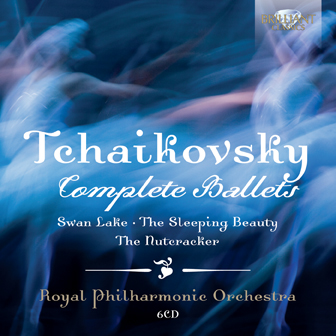
Tchaikovsky: Complete Ballets


This is my post from this week's Tuesday Blog.

This month on our podcasting channel, we are sharing many of our old Tchaikovsky montages, and this month’s Cover2Cover fits into the Tchaikovsky theme, with this mammoth Brilliant Classics YouTUbe post containing all three complete Tchaikovsky ballets.

Tchaikovsky’s ballets, Nutcracker, Sleeping Beauty and Swan Lake, are by far the most popular ballet music ever written, and count among the master’s most famous works. Tchaikovsky, tormented genius, found relief in writing these brilliant, featherweight works, conjuring up fantasy worlds of feel good fairy tales.

Though today all three ballets are much praised and performed,  this was not always so. It took time for their status to be established, and reactions to early productions were decidedly mixed during Tchaikovsky’s lifetime. Particularly saddening is the fact that the great composer died believing Swan Lake, perhaps his most celebrated ballet today, to be a failure – although this is in part due to the fact that the choreography most associated with the work today was developed after his death. The Sleeping Beauty, meanwhile, suffered the insult of a lukewarm imperial reception on its presentation to Tsar Alexander III in 1890; and Tchaikovsky himself believed The Nutcracker to be an inferior work, ‘infinitely worse than Sleeping Beauty’, in his own words.

In order to make the listening easier, I separated the three works into individual tracks in our music archive (and on the podcasting channel, with their publishing dates spread out throughout the month of December). Though all te music is performed by the Royal Philharmonic, each ballet is assigned to its own conductor.

Happy listening!
Pyotr Ilyich TCHAIKOVSKY (1840-1893)

Complete Ballets performed by the Royal Philharmonic Orchestra

Swan Lake (Лебединое озеро), Op. 20 [TH 12]

Nicolae Moldoveanu, conducting

Recorded at Cadogan Hall on the 13th-15th July 2009


The Sleeping Beauty (Спящая красавица), Op. 66 [TH 13]

Barry Wordsworth, conducting

Recorded at Cadogan Hall on the 31st May - 2nd June 2010


The Nutcracker (Щелкунчик), Op. 71 [TH 14]

David Maninov, conducting

Recorded at Henry Wood Hall on the 15th and 16th April 1995

Brilliant Classics 94949

Details - https://www.brilliantclassics.com/articles/t/tchaikovsky-complete-ballets


Internet Archivehttps://archive.org/details/1-01-swan-lake-op.-20


Tuesday, November 15, 2022

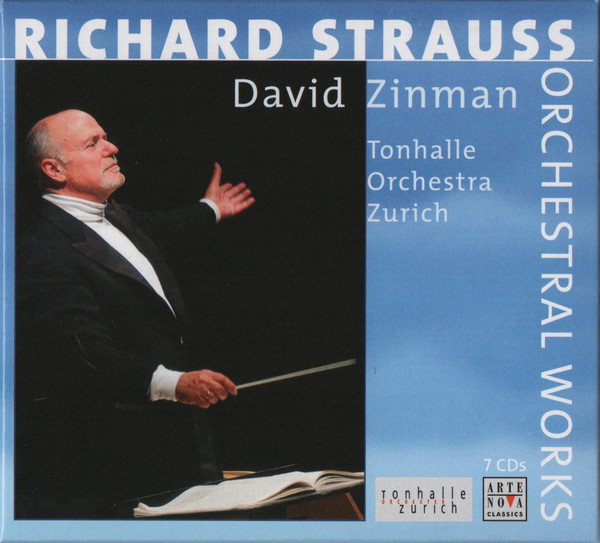
David Zinman Conducts Richard Strauss


This is my post from this week's Tuesday Blog.

Other than updates to old posts, the one share I have planned for this month is a trio of selections from David Zinman’s anthology of orchestral works by Richard Strauss. His complete set (over 7 CDs) compares well to a similar set by Rudof Kempe that we sampled in these pages in the past.

American conductor Davis Zinman trained as a violinist and conductor, with a significant apprenticeship (along with Lorin Maazel) under French-American conductor Pierre Monteux. Monteux had a strong mastery of French repertoire and was renowned for premiering many seminal works from the first two decades of the 20th century (such as Stravinsky’s Rite of Spring) but had a soft spot for German romantics (ditto for another French conductor who made his mark in Boston, Charles Munch).

Most of Zinman’s career has been based out of Europe – early stages in the Netherlands, and in the latter stages of  his memorable tenure  with the Baltimore Symphony (1985-1998), Zinman became music director of the Tonhalle-Orchester Zürich in 1995. 

Monteux’s influence on Zinman’s approach and his great all-around ability to navigate the entire Classical Music repertoire makes him in my mind one of the finest American conductors of his generation.

The below YouTube link points to the complete anthology, but the montage I ha eprepared focuses on three works, including the large tone poem Also Sprach Zarathustra. Aus Italien (From Italy), Strauss's first tone poem, is described by the composer as a "symphonic fantasy". It was completed in 1886 when he was 22 years old. It was inspired by the composer's visit to Italy in the summer of the same year, where he travelled to Rome, Bologna, Naples, Sorrento, Salerno, and Capri. He began to sketch the work while still on the journey.

Strauss’ single movement Romanze for cello and orchestra was composed bout the same time as his cello sonata. The piece somehow came to be forgotten, but was eventually published by Schott in 1987.

Happy Listening!


Richard STRAUSS (1864-1949)

Aus Italien, Symphonic Fantasy for large orchestra in G major, TrV 147 [Op.  16]

Romanze In F Major For Violincello & Orchestra, TrV 178 [AV 75]

Cello – Thomas Grossenbacher

 Also Sprach Zarathustra , tone poem freely after Nietzsche, for orchestra, TrV 176 [Op. 30]

Violin – Primož Novšak

Tonhalle-Orchester Zürich

Conductor – David Zinman

Discogs - https://www.discogs.com/release/20611123-Richard-Strauss-Tonhalle-Orchestra-Zurich-David-Zinman-Orchestral-Works

Arte Nova Classics – 74321 98495 2

Format: 7 x CD, Reissue

YouTube - https://www.youtube.com/playlist?list=PLt_iN-ytBvZxyzGsOuVfSVkSKXpJ4YXRJ

Archive Page - https://archive.org/details/c2c-46


Tuesday, October 4, 2022

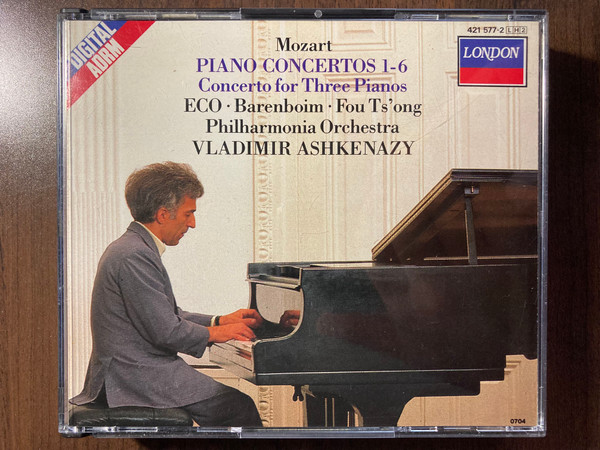
Mozart, Vladimir Ashkenazy – Piano Concertos 1–6 · Concerto For Three Pianos


This is my post from this week's Tuesday Blog.

Over the years, we’ve explored the Mozart piano concertos in several of our blog posts. In the process, we’ve featured several pianists’ recordings, and have often made use of two “cycles” – the Geza Anda cycle from the 1960’s, and the Vladimir Ashkenazy cycle from the 1980’s.

For October, on our podcasts, we are recycling many of these montages, and as part of that project, we are posting this Cover2Cover two CD partial excerpt from the Ashkenazy cycle, featuring the earliest six concerti, and the triple concerto.

Concertos Nos. 1–4 (K. 37, 39, 40 and 41) are orchestral and keyboard arrangements of sonata movements by other composers. The next three concertos (K. 107/1, 2 and 3), featured on our podcasting channel on October 4, are arrangements of piano sonatas by J.C. Bach (Op 5. Nos. 2, 3, and 4, all composed by 1766).

Concerto No. 5, K. 175 from 1773 was his first real effort in the genre, and one that proved popular at the time. Concerto No. 6, K. 238 from 1776 is the first Mozart concerto proper to introduce new thematic material in the piano's first solo section. Concerto No. 7, K. 242 for three pianos is quite well known.

London/Decca reissued the complete set by Ashkenazy and the Philharmonia in box sets several times, but today’s set was issued as a stand-alone collection. The multi-keyboard concertos (7 and 10) make use of Ashkenazy’s collaboration on another cycle issued by London/Decca by Daniel Barenboim. The YouTube link features the complete cycle, not just the first seven.

Happy Listening!


Wolfgang Amadeus Mozart (1756-1791)

All works feature Vladimir Ashkenazy, piano

Piano Concerto No.1 in F, K.37

Piano Concerto No.2 in Bb, K.39

Piano Concerto No.3 in D, K.40

Piano Concerto No.4 in G, K.41

Piano Concerto No.5 in D, K.175

Piano Concerto No.6 in Bb, K.238

Philharmonia Otchestra

(Ashkenazy conducting from the keyboard)


Piano Concerto No.7 in F, for 3 pianos, K.242 ('Lodron')

Fou Ts'Ong, piano

English Chamber Orchestra

Daniel Barenboim, conducting from the keyboard

Cadenzas by Vladimir Ashkenazy except– K40 I, K175 I-II, K238 & K242: Wolfgang Amadeus Mozart; K175 III: Paul Badura-Skoda

Recording locations: Kingsway Hall, London, April 1972 (K242), Walthamstow Assembly Hall, London, May 1986 (K175), October 1986 (K238), St Barnabas' Church, London, May 1987 (K37, K39-41)

London Records – 421 577-2

Format: 2 x CD, Compilation, Stereo

Released: 1988

Discogs - https://www.discogs.com/release/19590778-Mozart-ECO-Barenboim-Fou-TsOng-Philharmonia-Orchestra-Vladimir-Ashkenazy-Piano-Concertos-16-Concerto

YouTube - https://youtube.com/playlist?list=PL92mHU5BB1vs9r0ztMXTll6fbJIraLYMa

Internet Archive - https://archive.org/details/c-2-c-45b-mozart-piano-concertos-5


Tuesday, September 6, 2022

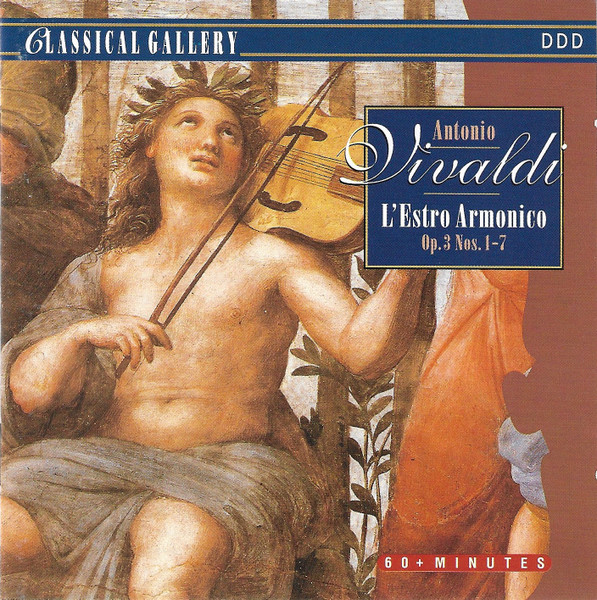
Vivaldi - Camerata Romana, Eugen Duvier – L'estro Armonico


This is my post from this week's Tuesday Blog.

For our first Tuesday Blog after our Summer break, I have prepared a Cover2Cover post of Vivaldi’s complete L’estro armónico.

L'estro armonico (The Harmonic Inspiration) is a set of 12 concertos for stringed instruments first published in Amsterdam in 1711. L'estro armonico was his first collection of Vivaldi  concertos appearing in print.

Each concerto was printed in eight parts: four violins, two violas, cello and continuo. The continuo part was printed as a figured bass for violone and harpsichord. The concertos belong to the concerto a 7 format, that is: for each concerto there are seven independent parts.

In each consecutive group of three concertos, the first is a concerto for four violins, the second for two violins, and the third a solo violin concerto. The cello gets solistic passages in several of the concertos for four and two violins, so that a few of the concertos conform to the traditional Roman concerto grosso format where a concertino of two violins and cello plays in contrast to a string orchestra.

The performances are from the early days of digital recording, when the Point Classics label issued a good number of decent performances at budget price – more on that and conductor Alfred Schotz in a montage in October.

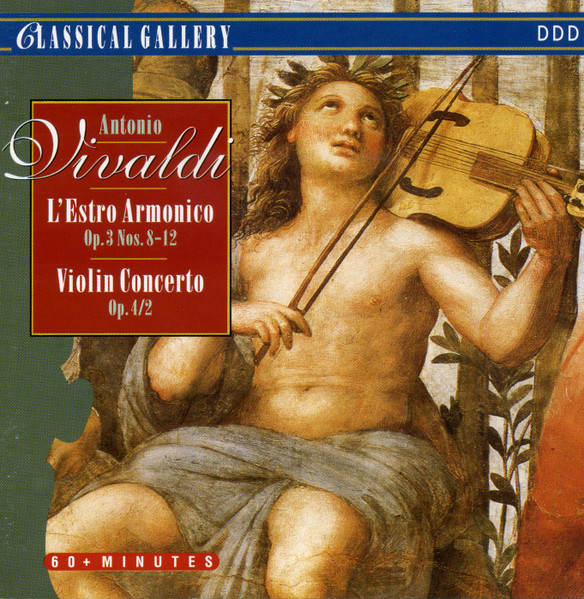
The recordings have been oft reissued, either as two separate CDs or as a 2 CD set. The senond CD (concerti 8-12) adds a concerto from La Stravaganza (op. 4, no. 2) as filler.

Happy Listening!

Antonio VIVALDI (1678-1741)

L'estro armonico, 12 concertos for 1-4 solo instruments, strings and continuo, Op. 3 (1711)

(DISK 1)

No.1 in D for 4 Violins and Cello (in 1st movement only), RV549

No.2 in G- for 2 Violins and Cello, RV578

No.3 in G for Violin, RV310

No.4 in E- for 4 Violins, RV550

No.5 in A, Double Violin Concerto, RV519

No.6 in A- for Violin, RV356

No.7 in F for 4 Violins and Cello, RV567


Classical Gallery – CLG 7108

Discogs - https://www.discogs.com/release/18646786-Camerata-Romana-Eugen-Duvier-Antonio-Vivaldi-LEstro-Armonico-Op3-Nos-1-7

YouTube - https://youtube.com/playlist?list=OLAK5uy_nnvJN5KUYtqRKnnRyX0xwSR8NTXCVT4CI


(DISK 2)

No.8 in A-, Double Concerto, RV522,

No.9 in D for Violin, RV230

No.10 in B- for 4 Violins and Cello, RV580

No.11 in D- for 2 Violins and Cello, RV565

No.12 in E for Violin Concerto, RV265


BONUS - "La Stravaganza" ( Op. 4 No. 2 )  Concerto in E-Flat RV 279


Classical Gallery – CLG 7109

Discogs - https://www.discogs.com/release/14942358-Camerata-Romana-Eugen-Duvier-Antonio-Vivaldi-LEstro-Armonico-Op3-Nos-8-12-Violin-Concertos-Op42-

YouTube - https://youtube.com/playlist?list=OLAK5uy_kVNkzK_g39b8hdhVr0N73VbFQO3kdeDzw

Camarata Romana

Eugen Driver, conducting

Internet Archive - https://archive.org/details/01-c-2-c-44a-vivaldi-concertos-op.


Tuesday, May 3, 2022

Mendelssohn: Lieder ohne Worte / Songs without Words


This is my post from this week's Tuesday Blog.

Our Cover2Cover share this month is taken from YouTube and Brilliant Classics. The following is from the official webpage:

Felix Mendelssohn was a virtuoso pianist, and it worth remembering that he was born in 1809, with his friend Schumann being born a year later in 1810, as was Chopin, and Liszt following in 1811. These composers were among the greatest pianists of the 19th century, and they were born at a time when the piano was a relatively modern instrument, and composers such as Hummel, Moscheles (Mendelssohn’s friend), Kalkbrenner and Ries were accorded adulation similar to pop stars today. Beethoven commenced his career in the 1790s as a virtuoso pianist.

No surprise then that the young Mendelssohn composed extensively for his chosen instrument from the outset. From early concertos and sonatas he quickly established his ‘mature’ style in works such as the Rondo capriccioso, and the Andante cantabile e Presto agitato. The masterpieces that followed include the famous Songs without Words. On this recording, these piano 'songs' are played by Dutch pianist Frank van der Laar.

We will deploy this share on our podcasting channel over 2 episodes, May 3rd and 4th). Happy Listening!


Felix MENDELSSOHN-BARTHOLDY (1809-1847)

Lieder ohne Worte (Songs without Words) 

Songs without Words, Book 1, Op.19b
Songs without Words, Book 2, Op.30
Songs without Words, Book 3, Op.38
Songs without Words, Book 4, Op.53
Songs without Words, Book 5, Op.62
Songs without Words, Book 6, Op.67
Songs without Words, Book 7, Op.85 
Songs without Words, Book 8, Op.102 

Frank van de Laar, piano

Brilliant Classics 93833
Release November 2007


Tuesday, March 8, 2022

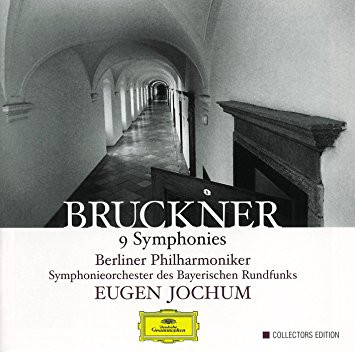
Anton Bruckner, Eugen Jochum, 9 Symphonies (1958,1964-68)


This is my post from this week's Tuesday Blog.

This month, my only Tuesday post is this Cover2Cover share of the great late fifties/early sixties Bruckner symphony cycle by Eugen Jochum. Thanks to this cycle, along with a later cycle with the Staatskapelle Dresden, Jochum has established himself as an authority when it comes to Bruckner’s orchestral output.

A few years back, a thread on TalkClassical explored the relative merits of both these cycles and I won’t be feeding the debate here. In my personal collection, I have individual albums by Jochum from both cycles, and I also have a weak spot for Tintner’s cycle for NAXOS.

As I’ve discussed in other circumstances, when I consider a cycle release, I look for consistency and cohesion between the individual performances. What is unique about this DGG ensemble is that this cohesion is achieved with two different orchestras (as opposed to the single orchestra with the EMI set). We can haggle over individual symphonies (I like the fourth with EMI better, as I do the Eighth with DGG). There are no wrong answers, though.

Enjoy the complete set here from YouTube. For listeners of my podcast, I will be sharing all nine symphonies over 8 different episodes, three of which will cross over on our Friday series.

Happy Listening!


Anton BRUCKNER (1824-1896)
Symphony No.1 in C-, WAB101 (1, 1966)
Symphony No.2 in C-, WAB102 (2, 1967)
Symphony No.3 in D-, WAB103 ('Wagner') (2, 1968)
Symphony No.4 in Eb, WAB104 ('Romantic') (1, 1967)
Symphony No.5 in Bb, WAB105 (2, 1958)
Symphony No.6 in A, WAB106 (2, 1967)
Symphony No.7 in E, WAB107 ('Lyric') (1, 1967)
Symphony No.8 in C-, WAB108 ('Apocalyptic') (1, 1964)
Symphony No.9 in D-, WAB109 ('Unfinished') (1, 1966)

Berliner Philharmoniker (1)
Symphonie-Orchester Des Bayerischen Rundfunks (2)
Eugen Jochum, conducting

Deutsche Grammophon – 469 810-2
(Reiisued, original recording dates as indicated)

DISCOGS - https://www.discogs.com/release/1091...n-Rundfunks-9-

Tuesday, February 1, 2022

Sibelius, Sir Colin Davis, London Symphony Orchestra – Symphonies Nos 5 & 6


This is my post from this week's Tuesday Blog.

For our second post featuring the symphonies of Jean Sibelius, I am featuring Cover2Cover a disc I acquired (of all places) at the Virgin store at Heathrow Airport about 15 years ago.

Since the beginning of his recording career, Colin Davis has been a champion of the music of Jean Sibelius, and his highly regarded cycle of the seven symphonies recorded between 1975 and 1979 with the Boston Symphony Orchestra has been a mainstay of many LP and CD collections over the years. This disc, however, is much more recent, part of anther Sibelius cycle from the early 2000’s with the London Symphony on the orchestra’s LSO Live home label.

In my opinion, the performances compare well to the oft-reissued BSO set. Crisp and clear, and helmed by a more mature (and restrained) Davis, these two symphonies get a very valid reading.

Hope you agree!


Jean SIBELIUS (1865-1957)
Symphony No 5 In E Flat Major, Op 82
Symphony No 6 In D Minor, Op 104

London Symphony Orchestra
Sir Colin Davis, condicting
Recorded live 10-11 December 2003 (No 5) and 28-29 September 2002 (No 6) at the Barbican, London

LSO Live – LSO0037
Format: CD
Released: Jun 2004

Discogs https://www.discogs.com/release/1329...honies-Nos-5-6

YouTube - https://youtube.com/playlist?list=OL...MshGIfGq7mxmB0

Tuesday, January 11, 2022

Chopin / Arthur Rubinstein, Skrowaczewski, Wallenstein – Concertos Nos. 1 & 2


This is my post from this week's Tuesday Blog.

This week’s Cover2Cover is part of a week-long series on our podcasting channel I have dubbed “The One-Two Punch”, focused on pairs of concerti that follow that numerical sequence. Our share is focused on the coupling of Chopin’s two piano concerti featuring the late great Arthur Rubinstein.

Here is a post tken nearly verbaim from Classics Today by Jed Distler:

[Rubinstein’s 1961 Chopin E minor concerto recording is easily] the finest of Rubinstein’s three recorded versions (indeed, one of his best recordings of anything), where panache and poetry fuse to magical, impeccably timed effect. Obviously Stanislaw Skrowaczewski’s beautifully balanced and shapely accompaniment inspires the soloist.

The F minor concerto performance is not quite on the same level, mainly because Rubinstein’s straightforward brio often yields perfunctory, even glib returns. For instance, there’s more anguish and drama in the slow movement’s octave outbursts than Rubinstein’s hard-nosed reading suggests, while opportunities for poetic nuance in the outer movements also go by unnoticed. […]

In addition, Alfred Wallenstein uncovers important orchestral detail many conductors ignore, such as the motives in the finale that pass back and forth between the solo wind players. Wallenstein also complies with two misguided textual emendations that Rubinstein always asked for–a foreshortened final tutti at the first movement’s end, and a “normal” bowing of the violins’ percussive ponticello (back of the bow) effect in the finale’s mazurka episode.
Happy Listening!


Frédéric CHOPIN (1810-1849)
All tracks feature Arthur Rubinstein, piano

Piano Concerto No.1 in E Minor, Op.11
New Symphony Orchestra Of London
Stanislaw Skrowaczewski, conducting
Recorded June 8 & 9, 1961 at Walthamstow, London

Piano Concerto No.2 in F Minor, Op.21
Symphony Of The Air
Alfred Wallenstein, conducting
Recorded January 20, 1958, Carnegie Hall, NYC.

RCA Red Seal – 82876-67902-2, Sony BMG Music Entertainment – 82876-67902-2
Format: SACD, Hybrid, Stereo, Compilation, Remastered

Discogs https://www.discogs.com/release/1489...certos-Nos-1-2

Friday, November 19, 2021

Beethoven: 3 Trios


No. 371 of the ongoing ITYWLTMT series of audio montages is this week's Friday Blog and Podcast. It can be found in our archives at https://archive.org/details/pcast371


 =====================================================================


Today’s Blog and Podcast is a “crossover” montage, intermingling our Friday series with an ongoing Tuesday Blog share discussed on November 2nd. As we deploy five CDs worth of Beethoven piano trios on our podcasting channel, part four of the set focuses on a pair of trios and a set of variations.

To begin today’s montage, the Piano Trio in B-flat major, Op. 11, is one of a series of early chamber works, many involving woodwind instruments because of their popularity and novelty at the time. The trio is scored for piano, clarinet (replaced here by the violin), and cello (sometimes replaced by bassoon). Beethoven dedicated this piano trio to Countess Maria Wilhelmine von Thun. The work is also sometimes known by the nickname "Gassenhauer Trio". A "Gassenhauer" usually denotes a (normally simple) tune that many people (in the streets, or Gassen) have taken up and sing or whistle for themselves. In the third movement , Beethoven provides nine variations on a theme from the then popular dramma giocoso “L'amor marinaro ossia Il corsaro” by Joseph Weigl. This particular melody, "Pria ch'io l'impegno" ("Before I go to work"), so popular it could be heard in many of Vienna's lanes.

In the same vein, the "Kakadu Variations" is the nickname given to Beethoven's set of variations for piano trio on the theme "Ich bin der Schneider Kakadu" by Wenzel Müller. The work is the last of Beethoven's piano trios to be published. The work is notable for the contrast between its solemn introduction and the lightweight variations that follow.

Beethoven  was known to recycle melodies, and circulated in many editions and arrangements for different forces. To conclude, the Septet in E-flat major, Op. 20 was one of Beethoven's most successful and popular works. The second movement of the Piano Sonata No. 20 shares a melodic theme with the Minuet of the Op. 20 Septet. In about 1803 Beethoven himself arranged the whole septet as a Trio for clarinet (again, replaced her by the violin), cello, and piano, and this version was published as his Op. 38 in 1805.


I think you will love this music too.

Tuesday, November 2, 2021

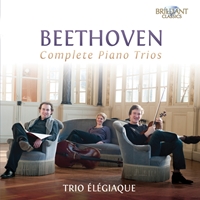
Beethoven: Complete Piano Trios (Brilliant Classics)


This is my post from this week's Tuesday Blog.
Our Cover2Cover post this week is another Brilliant Classics share in our series of collections. It is a five-disk set featuring the complete Beethoven piano trios; this set contains also the shorter works for piano trio, arrangements, and the transcription of the Symphony No. 2 for piano trio, by Beethoven himself.

The following notes are from the official promotional page for this set:

The piano trio existed, in other guises, long before Ludwig van Beethoven got his hands on it. But he was the composer who would expand the genre beyond all recognition, using his relentless creativity to exploit the piano trio to its full potential.

Beethoven considered his first three piano trios worthy of his Opus one; after his first two trios in the style of Haydn he pens a third, which foretells – almost ten years in advance – the heroism of the composer’s ‘middle period’.

The 2 trios Op. 70 form a bridge to late Beethoven, and find an equivalent in the Rasumovsky String Quartets Op. 59. In the ‘Archduke’ he displayed the sheer symphonic power with which we now associate him.

The young French Trio Elegiaque has already received great critical acclaim for their recording of Messiaen and Dusapin (Diapason d’Or!). They played the Beethoven trio cycle several times in concert series, and their performances bear witness of their insight, enthusiasm and ensemble culture.

Programming Note: The single-track clip from YouTube will be deployed in five parts (one disc at a time) on our podcasting channel, including a “crossover” montage on a Friday later in November.

Happy Listening!

Ludwig van BEETHOVEN (1770-1827)
Works for piano trio (piano, violin and cello)

DISK 1
Piano Trio in G, Op.1, No.2
Piano Trio in D, Op.70, No.1 ('Ghost')
Piano Trio in Eb, WoO38

DISK 2
Piano Trio in C-, Op.1, No.3
Piano Trio in Eb, Op.70, No.2
Variations on an Original Theme in Eb for Piano Trio, Op.44

DISK 3
Piano Trio in Eb, Op.1, No.1
Piano Trio in D (transcr. of Symphony No.2, Op.36, by composer)
Allegretto in Eb for Piano Trio, Hess48

DISK 4
Piano Trio in Bb, Op.97 ('Archduke')
Allegretto in Bb for Piano Trio, WoO39
Piano Trio in E-Flat Major, Op. 63, After String Quintet, Op. 4

DISK 5
Piano Trio in B-Flat Major, Op. 11 “Gassenhauer”
Variations in G on Müller’s Ich bin der Schneider Kakadu, for piano trio, Op.121a
Piano Trio in Eb, Op.38 'Piano Trio No.8' (Arr. from Septet, Op.20)

Trio Élégiaque
Laurent Le Flécher, violin
Virginie Constant, cello
François Dumont, piano
Brilliant Classics 94327
Recorded in 2012, released in November 2013

Official page - https://www.brilliantclassics.com/ar...e-piano-trios/


Internet Archivehttps://archive.org/details/4-01-piano-trio-in-b-flat-major-op.


Friday, September 10, 2021

Paganini: Violin Concertos Nos. 2 & 5


No. 366 of the ongoing ITYWLTMT series of audio montages is this week's Tuesday Blog. It can be found in our archives at https://archive.org/details/pcast366

.


=====================================================================

Today’s Blog and Podcast is a “crossover” montage, intermingling our Friday series with an ongoing Tuesday Blog share discussed on September 7. As we deploy three CDs worth of Paganini concertos on our podcasting channel, part two of the set focuses on concertos 2 and 5.

As we wrote this past Tuesday, Paganini’s output for the violin has many memorable pieces; most of them intended to display Paganini’s virtuosity and “devilish” ability on the instrument. Surprisingly, his concertos don’t get as much attention in that regard. Some will argue that they are indeed designed to showcase the soloist yet don’t give much attention to the orchestral part of that “duel”. There is, however, a notable twist here…

The third movement of Paganini's Second Concerto owes its nickname "La Campanella" or "La Clochette" to the little bell which Paganini prescribes to presage each recurrence of the rondo theme. The character of the bell is also imitated in the orchestra and in some of the soloist's passages featuring harmonics. The outcome is a very transparent texture, which gains extra charm of gypsy coloration of the rondo theme. This movement has served as the basis of compositions by other composers, such as the Étude S. 140 No. 3 "La campanella" by Liszt, and Johann Strauss I's Walzer à la Paganini Op. 11.

The Violin Concerto No. 5 was composed in 1830. It is in fact the last concerto of Paganini (the concerto #6 was partly written in 1815 and is sometimes referred to as “#0”). This concerto by the most famous of all violin virtuosi can be called a monologue for the violin because only the solo part exists; the orchestral score either was not written down or has not yet been discovered., the concerto can be performed if suitably reconstructed.

In 1958 Vittorio Baglioni entrusted this task to Federico Mompellio on behalf of the Accademia Musicale Chigiana, and in September 1959, the concerto received its premier performance. Franco Gulli was the soloist and Luciano Rosada the conductor. The success of this performance induced Guli to present the concerto in many European cities.

I think you will love this music too


Tuesday, September 7, 2021

Paganini: Violin Concertos (Complete)


This is my post from this week's Tuesday Blog.

This week’s Cover2Cover starts the ball rolling with a Brilliant Classics three-disk release of the complete violin concertos of Nicolò Paganini performed by Alexandre Dubach and the Monte Carlo Philharmonic. Here are a few thoughts collected from the Brilliant Classics website (link below) and a BBC Music web article by Freya Parr.

‘A blazing comet’ was how Hector Berlioz described Italian violinist Niccolò Paganini. So faultless was his playing that many were convinced he had made a pact with the devil ¬– a theory substantiated by his somewhat ghoulish stage persona. A true musical legend of his era, Paganini inspired musicians such as Robert Schumann and Franz Liszt to forge their own careers as a pianists. Franz Schubert was also a regular audience member at Paganini’s concerts, despite the outlandish ticket prices.

The music he composed and performed throughout the early 19th century completely altered people’s perceptions of what could be done on a violin. His dazzling collection of techniques and special effects would often drive members of his audience to hysteria. Yet Paganini often remarked that, despite his legendary status as a violinist, he found it rather difficult to compose for the instrument.

Though there are many showpieces from Paganini’s violin output that are notorious – like the 24 caprices for solo violin we featured in 2014 the six concertos don’t get as much airplay, save maybe for numbers 1 and 2. Paganini relied on the guitar (in lieu of the piano) as an aid in composition; the orchestral parts for his concertos were often polite, unadventurous, and clearly supportive of the soloist. In this, his style is consistent with that of other Italian composers such as Giovanni Paisiello, Gioachino Rossini, and Gaetano Donizetti, who were influenced by the guitar-song milieu of Naples during this period.

Hopefully, sharing the complete set will allow you to take in all their mischief!

Programming Note: The single-track clip from YouTube will be deployed in three parts (one disc at a time) on our podcasting channel, including a first-time “crossover” montage this coming Friday.

Happy Listening!


Nicolò PAGANINI (1782-1840)
The six violin concertos
Disk 1:
Violin Concerto No. 4 in D Minor, MS 60
Violin Concerto No. 1 in D Major, MS 21 [Op. 6]

Disk 2:
Violin Concerto No. 3 in E Major, MS 50
Violin Concerto No. 6 in E Minor, MS 75

Disk 3:
Violin Concerto No. 5 in A Minor, MS 78
Violin Concerto No. 2 in B Minor, MS 48 [Op. 7]

Alexandre Dubach, violin
Orchestre Philharmonique de Monte-Carlo
Michel Sasson (Disk 1) and Lawrence Foster (Disks 2 & 3), conducting

Brilliant Classics 99582
Recorded 1991-94
Details: https://www.brilliantclassics.com/ar...rtos-complete/

Internet Archivehttps://archive.org/details/04-violin-concerto-no.-6-in-e-minor 

Tuesday, June 8, 2021

Walton / Nigel Kennedy / André Previn / RPO ‎– Violin & Viola Concertos


This is my post from this week's Tuesday Blog.


What do Maxim Vengerov, Sir Yehudi Mnuhon and Nigel Kennedy have in common? They are all renowned violinists who traded their violin for a viola in a recording of William Walton's viola concerto. Today’s Cover2Cover share, my last in that series before mu annual summer hiatus, is a 1987 coupling of Walton’s viola and violin concerti featuring Kennedy as soloist with the Royal Philharmonic under Andre Previn.

The pair of concertante works are workhorses of 20th-century British repertoire, and both were revised years after their creation. The viola concerto was created by none other than Paul Hindemith; the violin concerto by Jacha Heifitz.

Nigel Kennedy is a colourful personality in the musical world; his early career was primarily spent performing classical music with highly acclaimed recordings, and he has since expanded into jazz, klezmer, and other music genres. One could say his eclectic repertoire has dominated his records and performances for about three decades. This Walton recording, made in the early phase of his career, allows us to appreciate his unique brand of music making.

As stated earlier, Menuhin recorded both these works with Walton conducting. Not surprisingly, Kennedy's jazz sympathies give his playing a natural bite in the sharply syncopated passages so typical of Walton, matching Previn's similarly jazz-founded understanding.

Happy Listening!


Sir William Turner WALTON (1902 –1983)
Concerto for Viola and Orchestra, C22
Concerto for Violin and Orchestra, C37

Nigel Kennedy, viola (C22) and violin (C37)
Royal Philharmonic Orchestra
Andre Previn, conducting
Recorded in No.1 Studio, Abbey Road, London 27 June and 9 September 1987

EMI – CDC 7 49628 2
Format: CD, Album
Released: 1987
Discogs https://www.discogs.com/Walton-Nigel...elease/2684691

Tuesday, April 27, 2021

Glenn Gould Plays Beethoven – Piano Sonatas 5-10


This is my post from this week's Tuesday Blog.


Today’s Cover2Cover post launches a three-part series of shares of Beethoven piano sonatas. I avoided programming Beethoven so far in 2021, simply because we had so much of it last year for the 250th anniversary of the composer’s birth. However, one area we did not dedicate much Tuesday Blog posts on last year was the vast corpus (32 in all) of his piano sonatas, spanning the whole arc of his career as a composer. Over this short set, we will consider almost half of those – 15 in fact – which reminds us that not all Beethoven sonatas are created equal, and that even the “short ones” pack a good punch!

Two of the posts planned in this short series feature Glenn Gould as the performing artist. The choice is no coincidence – we are entering our tenth year of Tuesday Blogs and Gould is a frequent guest around here… If you scan the Gould discography, you’ll find that after Bach, Beethoven is probably the composer Gould recorded the most, be it in his many years at Columbia/CBS or in some of the CBC archival broadcast recordings re-issued on their “Perspectives” series.
Gould recorded all the concerti, bagatelles, variations and of course most (not all) of the piano sonatas. In fact, Gould did something almost sacrilegious, issuing the triptych of the last three piano sonatas as his second release for Columbia in 1956! This was an interesting choice for a rather young pianist, when these mature Beethoven sonatas are usually left for mature artists to perform.

The two discs featured today – six sonatas in total – cover two complete sets (op. 10 and 14), plus the more familiar Pathétique sonata. Gould is in fine form (humming along, as usual), and his performance of the op. 10 set feels especially inspired. Beethoven composed these sonatas early on in his career and for himself as a touring pianist. Gould shows incredible dexterity and deftness – he plays the fast parts really fast, the slow parts lyrically (noteworthy for Gould who’s never sentimental…). His Pathétique is performed in “puritan” mode, where he scrupulously sticks to Beethoven’s indications with little to no ornamentation. The music speaks for itself, and it does so eloquently.

Happy Listening!


Ludwig van BEETHOVEN (1770-1827)

Piano Sonata No.5 in C Minor, Op.10, No.1
Piano Sonata No.6 in F Major, Op.10, No.2
Piano Sonata No.7 in D Major, Op.10, No.3

YouTube https://www.youtube.com/playlist?lis...Ul__6_IasGQ7Co


Piano Sonata No.8 in C Minor, Op.13 ('Pathétique')
Piano Sonata No.9 in E Major, Op.14, No.1
Piano Sonata No.10 in G Major, Op.14, No.2

YouTube https://www.youtube.com/playlist?lis...LBmc_selkUIS5s

Tuesday, February 9, 2021

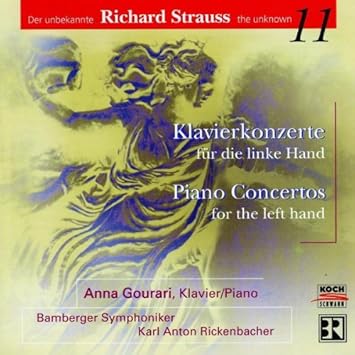
The Unknown Richard Strauss, Piano Concertos For the Left Hand


This is my post from this week's Tuesday Blog.


In August of 2019, I wrote a post on my Blogspot Music Blog about music written specifically for the Left Hand. At that time I wrote the following:

[...] Austrian pianist Paul Wittgenstein [had] his right arm amputated during the First World War. He devised novel techniques, including pedal and hand-movement combinations that allowed him to play chords previously regarded as impossible for a five-fingered pianist.

A musician who enjoyed the company of several luminaries of the day during his youth (Johannes Brahms, Gustav Mahler, Josef Labor, and Richard Strauss - with whom the young Paul played duets - among them), a determined Wittgenstein approached famous composers, asking them to write material for him to perform. Benjamin Britten, Paul Hindemith, Alexandre Tansman, Erich Wolfgang Korngold, Sergei Prokofiev, Karl Weigl, Franz Schmidt, Sergei Bortkiewicz, and Richard Strauss all produced pieces for him. Maurice Ravel wrote his Piano Concerto for the Left Hand, which became more famous than any of the other compositions that Wittgenstein inspired.
Today's share showcases Richard Strauss’ fascinating, somewhat atypical concertante works for piano left hand composed for Wittgenstein . At times the slow-motion harmonic scansion and rhapsodic piano writing throughout the Paregon to the Symphonia Domestica evoke Scriabin’s misty muse. By contrast the Panathenäenzug, subtitled Symphonic Etudes in the form of a passacaglia, uses a time-honored baroque form to generate opulently scored, post-Wagnerian froth.

Happy Listening!


Richard STRAUSS (1864-1949)

Parergon zur Sinfonia Domestica, for piano, left hand & orchestra, Op. 73 (TrV 209a)

Panathenäenzug (Symphonic Etudes in the form of a Passacaglia), for piano, left hand & orchestra, Op. 74 (TrV 254)

Anna Gourari, piano
Bamberger Symphoniker
Karl Anton Rickenbacher, conducting

Koch International 3-6571-2

YouTube https://www.youtube.com/playlist?lis...PWGQjgRqSIYPmD

Tuesday, December 22, 2020

Mozart, The Royal Philharmonic Orchestra ‎– Symphonies No. 40, 41, Marriage Of Figaro


This is my post from this week's Tuesday Blog.


My final Tuesday Blog for 2020 features a CD I acquired in the early 2000’s, from an early set of self-produced discs by the Royal Philharmonic under their own label. These disks, distributed in North America by Intersound, spanned the repertoire from Mozart to Leonard Bernstein.

According to Discogs, this album was originally released in 1993 and features the Royal Philharmonic under guest conductor Jane Glover in a coupling of Mozart’s final two numbered symphonies (40 and 41) with the overture to The Marriage of Figaro as filler.

According to her website, Jane Glover made her professional debut at the Wexford Festival in 1975, conducting her own edition of Cavalli’s LʼEritrea. She joined Glyndebourne in 1979 and was music director of Glyndebourne Touring Opera from 1981 until 1985. She was artistic director of the London Mozart Players from 1984 to 1991, and has also held principal conductorships of both the Huddersfield and the London Choral Societies. From 2009 until 2016 she was Director of Opera at the Royal Academy of Music where she is now the Felix Mendelssohn Visiting Professor. She was recently Visiting Professor of Opera at the University of Oxford, her alma mater.

Jane Glover has conducted all the major symphony and chamber orchestras in Britain, as well as orchestras in Europe, the United States, Asia, and Australia. In recent seasons she has appeared with the New York Philharmonic, the Cleveland Orchestra, the Philadelphia Orchestra, the Minnesota Orchestra, the San Francisco, Houston, St. Louis, Sydney, Cincinnati, and Toronto symphony orchestras, the Orchestra of St. Luke’s, and the Bamberg Symphony.

The works themselves don’t need any introduction. As a period instrument scholar, Mrs Glover manages to convey a sense of lilt and urgency in her interpretations, which are in general respectful of the composer’s wishes and quite easy to the ear.

Happy Listening


Wolfgang Amadeus MOZART (1756-1791)

Overture to Le nozze di Figaro, K.492
Symphony No.40 in G Minor, K.550
Symphony No.41 in C Major, K.551 ('Jupiter')

Royal Philharmonic Orchestra
Jane Glover , conducting
Recorded October 1993 at All Saints Church, Petersham, Surray

Tring International PLC ‎– TRP004
RPO Records – 204404-201
Original Issue - 1993

Discogs https://www.discogs.com/The-Royal-Ph...elease/6926786

YouTube https://youtube.com/playlist?list=OL...jb-YwQbBTjLaTo