This week’s Blog and Podcast – our quarterly “Fifth Tuesday” post - features two of Sir Edward Elgar’s three concertos – his concerto for violin and his more famous cello concerto.
According to the Elgar Society’s website, two concertos for the cello are performed more often than any others. One is by Antonin Dvorak, an epic work brimming with melodies and embracing a wide range of emotion. The other is Elgar's: intimate, highly-concentrated and unlike any other ever written for the instrument.
Elgar wrote the concerto in 1919, just after the Great War. Appalled and disillusioned by the suffering caused by the war, he realized that life in Europe would never be the same after such destruction. His first reaction had been to withdraw from composition, and he wrote very little music during the war's first four years. Then, over a period of twelve months - from August of 1918 to the following August - Elgar poured his feelings into four works that rank among the finest he ever composed. Among that set was the Cello Concerto, Elgar's lament for a lost world. The performance I chose is by Canadian cellist Shauna Rolston.
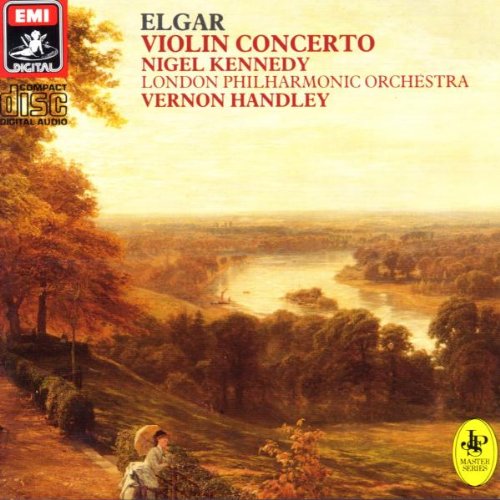
Elgar was at the height of his fame when the Philharmonic Society commissioned a violin concerto in 1909. The work was dedicated to Fritz Kreisler, the internationally famous violinist who was the soloist at its first performance.
The work is long for a violin concerto and expansive in mood but nevertheless compelling and not overblown. It contains none of the pomposity and swagger found in many of Elgar's works which some commentators find disturbing and rather distasteful. The work is firmly established in the classical repertoire although not performed frequently. The performance on the montage is one by Nigel Kennedy during the early stages of his career.
It is easy to dismiss Salut d'Amour as an insignificant trifle, salon music not deserving a wider audience. However, for the work to establish itself so forcefully in what was a fiercely competitive field says much for its charm and quality. The version of the piece I chose to complete the podcast is a setting for violin and small ensemble, featuring Gil Shaham and the Orpheus Chamber Orchestra.
As of August 31, 2012, this montage will no longer be available on Pod-O-Matic. It can be heard or downloaded from the Internet Archive at the following address / A compter du 31 août 2012, ce montage ne sera plus disponible en baladodiffusion Pod-O-Matic. Il peut être téléchargé ou entendu au site Internet Archive à l'adresse suivante:
=====================================================================
English Commentary –le commentaire français suit
We are already into our fourth post in the great escape series!
Today, London is holding the opening ceremonies to the 2012 Summer Olympic Games at the new Olympic Stadium. London has had the Olympics twice before: in 1908 and in 1948, so they are old hack at this business.
Our montage today has one Olympic-related selection (I just couldn’t resist), but it has nothing to do with London; rather it relates to the 1924 Olympics in Paris.
The 1981 Best Picture Oscar-winning film Chariots of Fire, which depicts Britain's athletics successes in the 1924 Olympics, is also a recurring theme in promotions for the 2012 London Olympics. The film's theme tune was featured at the opening of the 2012 London New Year's fireworks celebrating the Olympics, and the film's iconic beach-running scene and theme tune are utilized in The Sun's "Let's Make It Great, Britain" Olympic ads.The five thousand runners who first tested the new Olympic Park were also spurred on by the Chariots of Fire theme tune. The film was admirably scored by Vangelis, and the main theme is played in our montage by the Boston Pops.
The montage opens with Elgar’s Cockaigne overture – subtitled “In London Town”. Cockaigne or Cockayne is a medieval mythical land of plenty, an imaginary place of extreme luxury and ease where physical comforts and pleasures are always immediately at hand and where the harshness of medieval peasant life does not exist. 'Cockaigne' was a term used by moralists in Elgar’s time as a metaphor for gluttony and drunkenness, while Britain adopted the name humorously for London. Elgar’s overture gives a lively and colourful musical portrait of Edwardian London.
In a post last year, I commented that Bach’s French suites weren’t French as much as they were composed “in a French manner”. The 19th-century Bach biographer Johann Nikolaus Forkel suggested that the set of suites BWV 806–811 might have been composed for an English nobleman. For that reason, I suspect, they have been clumped under the appellation “English suites”. As for their French cousins and the six partitas, these suites follow the Italian formula of a sequence of baroque dances. Glenn Gould performs one of these suites in our montage.
Haydn’s London symphonies, sometimes called the Salomon symphonies after the impresario who introduced London to Joseph Haydn, were composed between 1791 and 1795. There are 12 in total (Hoboken 93 to 104, which – interestingly – excludes the number 92 Oxford symphony). At first glance, these symphonies are typical, formulaic, classical-era symphonies, but closer scrutiny suggests otherwise. Many of the lot have some unique characteristics to them – the “Surprise” effect (in no. 94), the tick—tock of the Clock (no,. 101), the large presence of percussions (in the nos. 100 and 103), and so on.
The last symphony of the set (and, in fact, the last symphony of the Hoboken catalog) has the subtitle “London”, and is possibly the most modern of Haydn’s symphonies. I may be alone to think this, but I find quite a few similarities between this symphony and Mozart’s Jupiter, in particular the finale. Tell me if you agree!
After a short trip eo WIndsor (with Otto Nicolai), we close the montage with a lovely rendition of the Gershwin standard “A Foggy Day” by Rosemary Clooney (yes, actor George’s aunt, who used to sell us Coronet paper plates). The song was introduced by Fred Astaire in the 1937 film A Damsel in Distress, making it one of the last songs Gershwin wrote before his death that year.
Déjà à mi-chemin dans notre grande évasion, avec ce quatrième montege... Aujourd'hui, nous nous déplaçons au Sud du mur d'Hadrien, et la ville Olympique de Londres, siège des jeux d'été de 1908, 1948 et maintenant 2012. Afin d'ajouter une saveur olympique à notre montage, j'ai choisi le thème principal du film Chartots de feu, sacré film de l'année en 1981, dont la musique fut l'objet des publicités britanniques pour ces jeux. Le film relate les exploits des atthlètes Anglais aux jeux d"été de Paris et 1924, et met en vedette la musique du compositeur Grec Vangelis - l'adaptation pour notre montage est celle des Boston Pops. En lever de rideau, l'ouverture de concert Cockaigne de Sir Edward Elgar. Cockaigne a une double signification - un paradis des légendes médiévales et une allégorie pour la vie excessive à Londres au début de l'ère Edwardienne. La musique d'elgar se veut un portrait de la ville de Londres du temps du compositeur. Johann Sebastian Bach a composé près d'une vingtaine de suites pour clavier seul: les partitas, les suites dites françaises, et une série de suites supposément commandées par un noble Anglais - d'oû les suites anglaises. Je vous offre une de ces suites sous les doigts de notre Gould National. Après plus de 30 ans au service de la cour des Esterhazy, Joseph Haydn entreprit une courte mais fructueuse association avec l'impressario Salomon, qui lui fit découvrir l'Angleterre. Pour Salomon, Haytdn composa 12 symphonies (dites Londonniennes) pour des académies de concert qu'il y dirigea. Plusieurs de ces symphonies ont des caractéristiques musicales particulières (la Surprise de la 94e, l'horloge de la 101e, etc.) mais la dernière de la série (la 104e) a non seulement le sous-titre "Londres", mais a une sonorité qui me rappelle la grande 41e symphonie de Mozart (Jupiter). Des oeuvres de Nicolai et Gershwin complètent ce montage. Bonne écoute!
Le lied, ce style d'art lyrique qui fut populaire durant la période romantique, est un genre musical qui trouva sa place durant la fin du XIXie et tout au long du XXie siècles.
Quoiquue surtout associé avec des textes allemands, un bon nombre de compositeurs ont adapté des textes russes, anglais et français. En français, par exaemple, Debussy composa plueiurs chansons, ainsi que Ravel, et même le compositeur québécois Jacques Hétu, adaptant la poésie de Verlaine, de Nelligan, et d'autres poètes contemporains.
On doit, toutefois, se poser la question: qui sont les véritables héritiers de la tradition du lied? Est-ce Ravel, Debussy , Mahler et d'autres, ou ne serait-ce pas Jacques Brel, Paul Piché ou Bob Dylan? Voici une question qui se pose entre amis...
Je vais toutefois esquiver cette question, et plutôt présenter trois exemples de cycles dits "contemporains", dans trois langues différentes, composés durant une période s'étalant sur une ciquantaine d'années.
Sir Edward ELGAR (1857-1934) Sea Pictures, pour contralto etorchestre, Op . 37 Gladys Ripley et le London Symphony Orchestra sous George Weldon
"Sea Slumber Song" de Roden Noel
"In Haven (Capri)" de Caroline Alice Elgar (l'épouse du compositeur)
"Sabbath Morning at Sea" d' Elizabeth Barrett Browning
Le plus vieux des trois cycles est celui d'Elgar, créé en 1899 par la contralto Clara Butt (portant un costume de sirène) et l'orchestre du festival de Norwich sous la direction du compositeur.
Les Sea Pictures sont contemporaines aux Variations Enigma d'Elgar, et ont donc une parenté musicale qui sera sans doute évidente lors de l'audition. La chanteuse que j'ai choisie, la contralto Gladys Ripley (1908-1955), a une voix, une diction et une clarté d'expression qui est parfaitement adaptée à cette oeuvre, et nous fait regretter son décès prématuré (l'anée qui suit cet enregistrement).
Maurice RAVEL (1875-1937) Schéhérazade, poèmes pour soprano (ou ténor) avec orchestre, MR 41Marilyn Horne et l'Orchestre National de France sous Leonard Bernstein (Texts by Tristan Klingsor)
Le catalogue Ravel compte deux Schéhérazades: son ouverture de féérie et ce cycle de chansons. Autant l'ouverture évoque le magique et le fantastique, autant ce cycle présente un contexte exotique, les contrées lointaines, et le mystère. Cependant, la musique change de cap après le mystérieux premier volet, et utilise la flûte pour nous ramener aux nuits d'Arabie.
Richard STRAUSS (1864-1949) Vier letzte Lieder (Quatre dernières chansons) pour soprano et orchestre (1948) Lucia Popp et le Chicago Symphony Orchestra sous Georg Solti
"Frühling" ("Printemps") (de Hermann Hesse)
"September" (de Hermann Hesse)
"Beim Schlafengehen" ("Sommeil") (de: Hermann Hesse)
"Im Abendrot" ("Au crépuscule") (de Joseph von Eichendorff)
Notre dernier chox est de Richard Strauss, qui fut un compositeur de lieder prolifique. Dans cette oeuvre "testamentaire", composée par un Strauss nonagénaire, la thématique discute de mortalité, de la fin d'une longue vie. Strauss nous propose un voyage dans le temps, usant des méthodes qu'il abusa en début de carrière, offrant une approche romantique tardive, et traite ainsi du sujet avec délicatesse, sérénité et sincérité.
Project 366 continues in 2019 with "Dates on the Musical Calendar
This month makes the final installment of Project 366, a long-standing long-term project we began in April 2016 to mark what was then the fifth anniversary of our music blog. Today, we will share the last few listener guides in this series, and will discuss in a post later this month how we will program our daily podcasts for the foreseeable future - stay tunes.
15-Aug - Happy Birthday Samuel Coleridge-Taylor (*1875) [Guide #363]
18-Aug - Happy Birthday Antonio Salieri (*1750) [Guide #146]
22-Aug - Happy Birthday Claude Debussy (*1862) [Guide #84]
31-Aug - FP of Weill's Threepenny Opera (OTD 1928) [Guide #366]
If you recall, our very first listener guides were our two-part musical alphabet. As a fitting close to the project, and to fill the remaining dates on the calendar, we will revisit the musical alphabet therough a series of listener guides. Here is our "new" alphabet (noting some listener guides tackle more than one letter)
Verdi composed his first opera (Oberto) in 1839 and from
then on strung together great works achieving critical and popular success:
Nabucco (1842), Rigoletto (1851), Il trovatore (1853), and the list goes on and
on. Probably one of Opera’s most celebrated spectacles of excesses, Aida was a
commission by the ruler (Khedive) of Egypt for the great opera house he’d
inaugurated in Cairo in 1869. Versi’s Rigoletto was the first production put up
at the opera house, and so Verdi was approached to create the spectacular stage
work. [Once or
Twice a Fortnight - August 15th, 2013]
[L/G 357 – Acts 1 & 2, L/G 358 – Acts 3 & 4]
Listener Guides
#359 - E for Elgar
Elgar was at the height of his fame when the Philharmonic
Society commissioned a violin concerto in 1909. The work was dedicated to Fritz
Kreisler, the internationally famous violinist who was the soloist at its first
performance. The work is long for a violin concerto and expansive in mood but
nevertheless compelling and not overblown. It contains none of the pomposity
and swagger found in many of Elgar's works which some commentators find
disturbing and rather distasteful. The work is firmly established in the
classical repertoire although not performed frequently. [ITYWLTMT Montage # 294 – October
30 2018]
Listener Guides
#360 - J for Jongen
Joseph Jongen’s Symphonie Concertante of 1926 is a tour de
force, considered by many to be among the greatest works ever written for organ
and orchestra. The work was commissioned by Rodman Wanamaker for debut in the
Grand Court of his palatial Philadelphia department store, Wanamaker's. Its
intended use was for the re-dedication of the world's largest pipe organ there,
the Wanamaker Organ. As part of a series of concerts Rodman Wanamaker funded
with Leopold Stokowski and the Philadelphia Orchestra. Wanamaker's death in
1928 precluded the performance of the work at that time in the venue for which
it was written, but it was finally performed for the first time with the
Wanamaker Organ and the Philadelphia Orchestra in 2008. [ITYWLTMT
Montage #191 - March 27, 2015]
Listener Guides
#361- K for Kabalevsky & Khachaturian
After a tenure with the Bolshoi Theatre (1943-56), Kirill
Kondrashin concentrated on orchestral conducting, becoming sought after as a
concerto accompanist and working with the country’s leading instrumentalists,
such as Emil Gilels, Leonid Kogan, David Oistrakh, Sviatoslav Richter and
Rostropovich. In the first International Tchaikovsky Competition in 1958,
Kondrashin was the conductor for Van Cliburn, who won the first prize. After
the competition he toured the USA with Cliburn, being the first Russian
conductor to visit America since the Cold War began. The two suites (Comedians and
Masquerade) are taken from the same October 20, 1958 Manhattan Center recording
by the RCA Symphony Orchestra (the likely remnants of the NBC Symphony/Symphony
of the Air) under Kondrashin, a few months after the Cliburn sessions at
Carnegie Hall. [ITYWLTMT
Montage #316 - July 12, 2019]
Listener Guides
#362- The Left Hand
Pianists limited to the use of their left hands are not
uncommon. As an example, in 1964, American pianist Fleisher lost the use of his
right hand due to a condition that was eventually diagnosed as focal dystonia.
Fleisher commenced performing and recording the left-handed repertoire while
searching for a cure for his condition. In the 1990s, Fleisher was able to
gradually overcome his focal dystonia symptoms after experimental botox
injections to the point where he could play with both hands again. [ITYWLTMT
Montage #320 - August 13, 2019]
Listener Guides
#363- The Dark Continent
The Dark Continent has long been associated with adventure,
immense deserts, fierce predators and a population that lives in the extremes
of riches and poverty. Africa has also been the stage of colonial expansion,
followed by self-governance and (often times, it seems) civil war, unrest and
despots. [ITYWLTMT
Montage #118 - August 16, 2013]
Listener Guides
#364- O for Offenbach
Offenbach was born in Germany of a musician father, cantor
of a synagogue. Early on, Jacob Offenbach showed himself adept at the cello,
which convinced his father to send him to study in Paris. Offenbach joined the
Conservatoire to become a soloist, but his clownish behavior saw him leaving
after a year. Thanks to his talent, he still performs in concert - after having
francized his given name - then joins the orchestra of the Opéra-Comique in
which he plays while establishing himself as a composer. [ITYWLTMT
Montage #299 - December 21, 2018]
Listener Guides
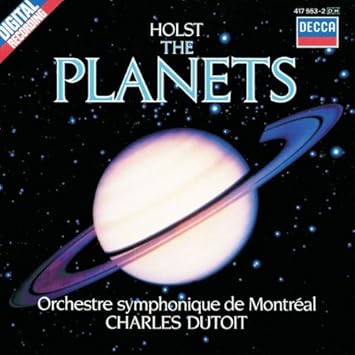
#365 - P for the Planets
Written between 1914-1916 by British composer Gustav Holst, ‘The
Planets’ is a suite of seven short tone poems, each representing one the known
planets of the Solar System seen from Earth at the time, and their
corresponding astrological character. [Vinyl’s
Revenge #33 - December 12, 2017]
Listener Guides
#366 - The Three-Penny Opera
A milestone of 20th century musical theatre, The Threepenny
Opera rolls on unstoppably into the 21st. In their opera "by and for
beggars", Weill and Brecht transformed old-fashioned opera and operetta
forms, incorporating a sharp political perspective and the sound of 1920s
Berlin dance bands and cabaret. Weill's acid harmonies and Brecht's biting
texts created a revolutionary new musical theatre that inspired such subsequent
hits as Cabaret, Chicago, and Urinetown. [Once
or Twice a Fortnight - August 31st, 2013]
To launch
our summer series of podcasts, I thought I’d provide a “musical passport”
montage, something we haven’t done much of in the past couple of summers. In
past years, we’ve provided travelogue-style podcasts that explore specific
countries and regions, often not by native composers.
Today’s
theme has to do with “going South”. South can be both a relative and an
absoluter term. To illustrate, in one of his solo albums, Québec singer-song
writer Michel Rivard talks of the South in this way (my translation) – At
the pub, they sing farewell to Johnny, who’s headed South. South of
Shefferville isn’t Jamaica, it’s Québec CIty, or Matane, or New Brunswick.
It’s in
that vein that we should consider our first track, the concert overture In
the South by Edward Elgar. Subtitled “Alassio” for the Italian
Riviera town where Elgar and his family stayed in the winter of 1903 to 1904,
it paints a picture of Elgar strolling around during the visit, while the
buildings, landscape and history of the town provided him with sources of
inspiration. In his words, “Then in a flash, it all came to me – the conflict
of the armies on that very spot long ago, where I now stood – the contrast of
the ruin and the shepherd – and then, all of a sudden, I came back to reality.
In that time I had composed the overture – the rest was merely writing it
down.”
We turn
later in the montage to another British composer, Ralph Vaughan Williams,
and his seventh symphony subtitled “Sinfonia antartica”. The symphony revisits
the music Vaughan Williams provided for the film Scott of the Antarctic
in 1947.
The
symphony is in five movements; the composer specified that the third movement
lead directly into the fourth. The score includes a brief literary quotation at
the start of each movement. They are sometimes declaimed in performance,
although the composer did not say that they were intended to form part of a
performance of the work. The quotes are:
To suffer
woes which hope thinks infinite,/ To forgive wrongs darker than death or
night,/ To defy power which seems omnipotent,/ ... / Neither to change, nor
falter, nor repent:/ This ... is to be/ Good, great and joyous, beautiful and
free,/ This is alone Life, Joy, Empire and Victory. (Shelley, Prometheus
Unbound)
There go
the ships, and there is that Leviathan whom thou hast made to take his pastime
therein. (Psalm 104, Verse 26)
Ye ice
falls! Ye that from the mountain's brow/ Adown enormous ravines slope amain —/
Torrents, methinks, that heard a mighty voice,/ And stopped at once amid their
maddest plunge!/ Motionless torrents! Silent cataracts! (Coleridge, Hymn
before Sunrise, in the vale of Chamouni)
Love, all
alike, no season knows, nor clime,/ Nor hours, days, months, which are the rags
of time. (Donne, The Sun Rising))
I do not
regret this journey; we took risks, we knew we took them, things have come out
against us, therefore we have no cause for complaint. (Scott's Last Journal)
The only
work on today’s montage emanating from a Southern composer is by Argentina’s
King of the Tango. Written between 1965 and 1970, the Cuatro Estaciones
Porteñas, are a set of four tango compositions written by Ástor
Piazzolla, which were originally conceived and treated as different
compositions rather than one suite. By giving the adjective porteño, referring
to those born in Buenos Aires, the Argentine capital city, Piazzolla gives an
impression of the four seasons in Buenos Aires. Note the order of the seasons
doesn’t match the “Northern” order of Vivaldi’s concerti!
The pieces
were scored for his quintet of violin (viola), piano, electric guitar, double
bass and bandoneón. The version I chose is an arrangement for piano trio.
Si
on reconnaît aujourd’hui Davis comme un des grands chefs Brittaniques de sa
génération, on aurait eu peine à prédire qu’il aurait eu droit à une grande carrière
sur le podium. Jeune homme, malgré avoir été admis au Royal College of Music de
Londres comme clarinettiste, on lui refusa systématiquement l’admission au
programme de direction d’orchestre car il n’avait pas de formation comme…
pianiste. "Diriger un orchestre a plus à faire avec le chant et la
respiration qu’au piano" remarque-t-il en 1991.
Son
admission au collège ne fut pas sans peine: doué pour les sciences, on
tenta en vain de l’y diriger. Pendant son service militaire, il se joindra à l’harmonie
de son unité, et une fois son service complété, il parviendra à se former comme
chef, et fera son apprentissage auprès de formations amateures.
Après
des années à trimer dur, il est finalement invité à diriger des orchestres de
renom: les orchestres de la BBC et l’orchestre de la radiodiffusion
Bavaroise entre autres. Il sera également titulaire de deux maisons d’opéras
britanniques (Sadler's Wells Opera et le Royal Opera House). Il sera chef
invité en Amérique (Boston, New-York) et en Europe (Amsterdam et Dresde). Après
l’avoir dirigé fréquemment durant toute sa carrière, il est nommé à la
direction artistique du London Symphony Orchestra en 1995, poste qu’il occupera
jusqu’en 2007, devenant son président. Tout au long de ces années, soit comme
premier chef ou president, il dirigera le LSO dans des intégrales (Sibelius, Berlioz, Bruckner, Mozart, Elgar, Beethoven, et Brahms), en plus d’enregistrer plusieurs disques sur
le label-maison LSO Live.
Sir
Colin nous laisse une discographie variée et étoffée, incluant une intégrale
Berlioz des années 1970 qui est encore aujourd’hui appréciée des mélomanes. C’est
d’ailleurs le point de départ de notre hommage YouTube de cette semaine.
Parmi
mes disques préférés de Davis, je compte son intégrale des symphonies Londoniennes
de Haydn, avec l’orchestre du Concertgebouw
d’Amsterdam, don’t une est intégrée à la playlist. Celle-ci est complétée par Mozart,
Stravinski et Elgar.
Bonne écoute!
DETAILS (Toutes sélections sous Sir Colin Davis)
Hector BERLIOZ (1803-1869) Le Roi Lear, grande ouverture, en la mineur , op. 4 [H. 53]
London Symphony Orchestra
Wolfgang Amadeus MOZART (1756-1791)
Concerto pour piano no.20 en ré mineur, K.466
(Cadences: Paul Badura-Skoda)
Alicia de Larrocha, piano
English Chamber Orchestra
Franz Josef HAYDN (1732-1809)
Symphonie no. 100 en sol majeur, Hob. I:100 (Militaire)
Koninklijk Concertgebouworkest
Igor STRAVINSKI (1882-1971)
"Basle" Concerto, en ré majeur (1946)
Koninklijk Concertgebouworkest
Sir Edward ELGAR (1857-1934) Enigma Variations, op. 36
Koninklijk Concertgebouworkest
Histoire de commencer la Nouvelle Année du bon pied, je vous propose une playlist YouTube d’ouvertures de concert – donc, pas d’ouvertures musicales pour la scène. Les musiques choisies couvrent le romantique et le moderne.
Ma première sélection est de Franz von Suppé, qui est plutôt reconnu pour sa musique de scène. Toutefois, il a signé de courtes œuvres de concert sur des thèmes viennois (pensons à Matin, midi et soir à Vienne). L’ouverture de la jubilation Viennoise est à propos en ce jour du Nouvel An, traditionnellement célébré en grandes pompes par la Philharmonique locale.
Parlant de jubilaires, Johannes Brahms sera à l’affiche tout le mois durant – en célébration de son 180e anniversaire de naissance. À propos, donc, de programmer son ouverture tragique, une de deux ouvertures de concert du compositeur Autrichien – l’autre étant son ouverture de festivals académiques, prévue pour notre montage du 11 janvier.
Felix Mendelssohn a plusieurs ouvertures de concert à son actif, certaines ayant déjà fait l’objet de montages antérieurs: Les Hébrides et Mer calme et voyage prospère. Cette ouverture de concert de jeunesse, surnommée la trompette, nous suggère la foirmule qu’il adoptera dans ses grandes oeuvres pour orchestre. Comme Mendelssohn avant lui, Berlioz signe un bon nombre d’ouvertures de concert également (nous avons déjà programmé le carnaval Romain et Rob Roy). Le Corsaire est, sans doute, son ouverture la plus populaire, pleine de rebondissements et de couleur.
Les ouvertures Cockaigne (Elgar) et Cubaine (Gershwin) Cuban sont des oeuvres évocatrices – dans le cas d’Elgar, on y évoque une ville de Londres mythique et chez l’Américain, l’exotisme de voyages dans les Caraïbes, avec l’ajoût d’instruments insulaires.
Pour finir, de Tchaïkovski, l’Année 1812 dans sa version pour choeirs et orchestre. Rarement montée en concert sous cette forme, la présence du choeur accapella dans la première section, et l’aspect jubilatoire de l’intervention chorale qui annonce le coda accordent l’aspect solennel requis par le compositeur de cette ouverturem, aujourd’hui plutôt offerte en concert comme «grande finale». Bonne écoute, et bonne année 2013!
DETAILS
Franz von SUPPÉ (1819-1895) Wiener Jubelouvertüre (Jubilation Viennoise) Christian Pollack dirige la Philharmonique Slovaque de l’Est (Kosice)
Johannes BRAHMS (1833-1897) Tragische Ouvertüre (Ouverture tragique) en ré mineur, op. 81 Sir Colin Davis dirige l’orchestre des jeunes de l’Union Européenne
Felix MENDELSSOHN-BARTHOLDY (1809-1847) Ouverture en ut majeur ('Trompette'), op. 101 Francesco d'Avalos dirige le Philarmonia Orchestra
Sir Edward ELGAR (1857-1934) Cockaigne Overture (In London Town), op. 40 Sir Alexander Gibson dirige le Royal Scottish National Orchestra
Hector BERLIOZ (1803-1869) Le Corsaire, ouverture, en ut majeur, op. 21 Lionel Bringuier dirige le BBC Symphony Orchestra
George GERSHWIN (1898-1937) Cuban Overture ( 1932) Jeff Tyzik dirige le Rochester Philharmonic Orchestra
Pyotr Ilich TCHAÏKOVSKI (1840-1893) L’année 1812, ouverture solennelle en mi bémol majeur, op. 49 (Version for pour chœurs, orchestre, canons et cloches) Eugene Ormandy. Dirige le Philadelphia Orchestra, et le Mormon Tabernacle Choir. (
Canons provenant de la Valley Forge Military Academy)
A yearly tradition, this coming Saturday will be the Last Night at the Proms. I thought it would be appropriate to recycle an old broadcast to illustrate and discuss this special concert and its unique format.
The BBC Proms, or The Henry Wood Promenade Concerts presented by the BBC, is an eight-week summer season of daily orchestral classical music concerts and other events held annually, predominantly in the Royal Albert Hall in central London, England.
Founded in 1895, each season currently consists of more than 70 concerts in the Albert Hall, a series of chamber concerts at Cadogan Hall, additional Proms in the Park events across the United Kingdom on the last night, and associated educational and children's events. It is without question the United Kingdom's biggest annual music festival.
Prom is short for promenade concert, a term which originally referred to outdoor concerts in London's pleasure gardens, where the audience was free to stroll around while the orchestra was playing. This "tradition" has been copied everywhere around the world, and every major orchestra today has "Pops" series though nothing compares quite with the symbolism and oozing nationalism of the seminal event of the festival, the "Last Night" concert.
Indeed, many people's perception of the Proms is taken from the Last Night, although this concert is very different from the others. Broadcast nationally on BBC Television, the concert typically has a more "accessible classics" first part followed by a series of British patriotic pieces in the second half of the concert.
This sequence established in 1954 includes Edward Elgar's "Pomp & Circumstance March No. 1" (to part of which "Land of Hope and Glory" is sung) and Henry Wood's "Fantasia on British Sea Songs", followed by Thomas Arne's "Rule, Britannia!". The concert concludes with Hubert Parry's "Jerusalem" (a setting of a poem by William Blake), and the British national anthem.
The video I chose today happens to be one of the few "complete" broadcasts I could find on YouTube, and happens to be Leonard Slatkin's farewell concert with the BBC Symphony.
Richard STRAUSS (1864-1949) Horn Concerto No. 1 in E flat major, op. 11 [TrV 117] David Pyatt, horn
Ralph VAUGHAN WILLIAMS (1872-1958) 5 Mystical Songs, for baritone, chorus ad lib and orchestra (1911) Thomas Allen, baritone
Samuel BARBER (1910-1981) Toccata Festiva, for organ and orchestra, op. 36 Simon Preston, organ
PART 2 [Starts at 1:12:00]
Sir Peter Maxwell DAVIES (1934-2016) Ojai Festival Overture, for orchestra, J. 240
Giacomo PUCCINI (1858-1924) Coro a bocca chiusa (Humming Chorus) from Madama Butterfly (1904)
Showtune Medley featuring Thomas Allen, baritone: Richard RODGERS (1902-1979) "Oh, what a beautiful morning" from Oklahoma! (1943, arr. Robert Russell Bennett)
Cole PORTER (1891-1964) "Where is the life that late I led?" from Kiss Me Kate (1948)
Sir Arthur SULLIVAN (1842-1900) - "I've got a little list" , rom The Mikado (1884-85) - additional lyrics by Kit Hesketh-Harvey
John Philip SOUSA (1854-1932) March 'The Liberty Bell' (1893)
Sir Edward ELGAR (1857-1934) Pomp and Circumstance March No. 1 in D major ('Land of Hope and Glory'), op. 39, no. 1
Sir Henry J. WOOD (1869-1944) Fantasia on British Sea Songs (1905, with additional Songs arranged by Stephen Jackson)
Sir Charles Hubert Hastings PARRY (1848-1918) Jerusalem ('And did those feet in ancient time', 1910)
TRADITIONAL National Anthem (arr. Henry Wood)
BBC Singers BBC Symphony Chorus BBC Symphony Orchestra Leonard Slatkin, conductor
Royal Albert Hall Saturday 11 Sep 2004 Alan Titchmarsh, presenter
As of March 1st, 2013, this montage will no longer be available on Pod-O-Matic. It can be heard or downloaded from the Internet Archive at the following address / A compter du 1er mars 2013, ce montage ne sera plus disponible en baladodiffusion Pod-O-Matic. Il peut être téléchargé ou entendu au site Internet Archive à l'adresse suivante: https://archive.org/details/Pcast090
=====================================================================
English Commentary –le commentaire français suit
For February, I confess that I am having a relapse of one of my numerical obsessions. After my "number 1" obsession and Music by the Numbers (this past June), time now for my "number 2" obsession, featuring works that have in common the number two.
Today's montage looks at "second" works, or "number twos" from different composers, eras and forms. Let's begin by a couple of "second rhapsodies". Both Debussy and Gershwin had their "first rhapsodies" featured last year. Debussy's first rhapsody (for clarinet) was followed later by a second, this time for saxophone. The work, originally set for saxophone and piano, was later set for orchestra at first by Debussy himself, and finished in 1919 by Roger Ducasse.
Gershwin's Second Rhapsody stems from the time he turned his activities towards Hollywood and film. Originally designed as a "rhapsody in rivets", it is reminiscent of the skyscrapers of his native New-York. The work follows in many ways the same format as the Rhapsody in Blue, though without the same emphasis on jazz and blues.
Walter Buczynski received a commission by the then Montreal International Piano Competition for the so-called "set piece" that all contestants in the final round had to perform. Canadian pianist Hung-Kwan Chen won the award that year for the best interpretation of that piece, and the performance of Lyric II in today's podcast is from the gala concert that typically caps off such competitions.
Johann Sebastian Bach composed four overtures or suites, and his second and third suites are among his most played works for orchestra. The second suite features the flute predominantly and in particular in its most famous section, the badinerie.
The remainder are shorter selections by Canadian composer Reginald Godden (which, if I am not mistaken, was part of the opening credits to the old PBS anthology series Mystery!), Sir Edward Elgar (his less heard Pomp and Circumstance March no. 2), and two "danceable" works that require a some additional explanation.
When Stravinsky was working on his homage ballet The Fairy's Kiss (Le baiser de la fée), he revisited some of the great ballet music by Tchaikovsky (in the same way he's looked at Pergolesi's music for Pulcinella). In the course of that process, he reconstructed (from memory, I believe) Tchaikovsky's famous pas de deux sequence from Sleeping Beauty, and the result is, well, a hybrid between modern and classical sounds.
Shostakovich dusted up the old Vincent Youmans fox-trot Tea for Two, giving it a distinct Shostakovich twist in a short orchestral nugget he simply called Tahiti Trot.
Je souffre une rechute d'une de mes obsessions numérologiques: après mes obsessions avec le numéro 1 et notre numérologie musicale du mois de juin dernier, c'est maintenant une crise de mon obsession muméro 2 en février. Soyez donc prçets à "souffrir" de pièces qui ont en commun le chiffre 2.
Le montage d'aujourd'hui jette un regard particulier à des pièces de compositeurs, époques et genres variés qui ont en commun le chiffre deux ou qui sont des "sedondes" pièces d'ine séquence. Dans cette catégorie on retrouve la deuxième marche Pomp and Circumstance d'Elgar, la deuxième ouverure (ou suite) de Bach (avec sa fameuise badinerie pour flûte) et d'autres oeuvres qui méritent des propos supplémentaires.
J'ai retenu une paire de deuxièmes rhapsodies: celle de Debussy (pour saxophone) avait une orchestration inachevée, chose qui fut complétée posthumememtn (en 1919) par Roger Ducasse. La Second Rhapsody de Gershwin (moins populaire que sa pièce fétiche, Rhapsody in Blue) a un caractàre Hollywooduen, et se veut plus impressioniste (avec son évocation des gratte-ciels New-Yorkais) qu'une étude du jazz ou du Blues.
Deux pièces canadiennes: de Reginald Godden, ses petites "sweets" (jeu de mots, sweet voulant dire bonbon), et de Walter Buczynski, la pièce imposée du concours de piano International de Montréal de 1984, extrait du concert des lauréats du même concours.
Après avoir rendu hommage au maître Intalien Pergolesi dans son ballet Pulcinella, Igor Stravinski rend hommage aux ballets de Tchaikovski dans Le baiser de la fée. Afin de se faire la main, Stravinski prépara (de mémoire, si je ne m'abuse) une version poiur petit orchestre du faneux Pas de deux du ballet La Belle au Bois Dormant - un son hyriude qui marie à merveille le classique et le moderne.
Chostakovich termine notre montage avec sa version très personnelle (et coquette) du classique des salles de danse Tea for Two.
NDLR: La chronique du disque est un billet présenté mensuellement, relatant mes achats et acquisitions du mois qui s’achève. Ceci n’est pas une «critique du disque», mais plutôt un billet d’informations : qu’est-ce que j’ai trouvé, où l’ai-je trouvé, et qu’est-ce que j’en pense. Des informations qui peuvent piquer votre curiosité et (peut-être) vous amener à considérer les pièces ou même les prestations que je propose, afin de les ajouter à votre collection.
Parce qu’il se doit, je vais assigner une «note» (une lettre entre A et D) pour ces achats – en fait, deux notes, comme on le fait au patinage artistique. Une note sera attribuée à laqualité sonore (QS), et une autre pour l’impression globale (IG). Voici un barème :
Pour la qualité sonore: mon point de référence est mon iPod avec écouteurs de type bouton. J’écoute mon iPod au travail et dans l’autobus, donc avec un certain niveau de bruit de fond. Une «bonne» note est assignée si la prise de son est bonne, la musique est claire et exempte de bruits de surface, et généralement permet une audition claire de la prestation sans dérangement.
Pour l’impression globale: il s’agît-là d’une note subjective, entièrement basée sur la performance dans le contexte d’auditions comparables. Une «bonne» note requiert une prestation convaincante, pleine de virtuosité, représentative de l’ère et des traditions qui accompagnent la pièce.
Mes acquisitions pour août
MILHAUD: Scaramouche / VILLA-LOBOS: Descobrimento do Brasil [eMusic]
Depuis quelques années, le chef Brésilien Roberto Minczuk occupe le poste de directeur artistique de la Philharmonique de Calgary, poste précédemment occupé par l'Autrichien Hand Graf (son chef lauréat depuis 2006). Sous M. Graf, l'orchestre endisqua pour Radio-Canada des oeuvres d'inspiration brésiliennes de Darius Milhaud, une paire de suites de Villa-Lobos et, en complément, Scaramouche pour saxophone et orchestre avec Jeremy Brown. La discographie de Scaramoudhe offre des interprétations fort supérieures à ce qui est offert ici, mais l'ensemble du disque est réussi. A- pour la QS, B+ pour l'IG.
David Oistrakh Plays Lalo: Symphonie Espagnole [eMusic]
La Symphonie Espagnole de Lalo est un incontournable du répertoire concertant pour violon, et fait partie du répertoire des grands solistes. David Oistrakh ne fait pas exception à cette règle, et ce couplage "occidental" avec Jean Matinon m'a suffisamment intrigué pour que j'en fasse l'achat. Osistrakh est fidèle à lui-même: un archet souple, une articulation juste et une lecture inteligente. Là où j'ai mes réserves est au niveau de l'orchestre: la reproduction sonore (sans doute un transfert numérique) a ses problèmes ici, et l'orchestre semble étouffé, manquant de relief, choise qui n'est pas le cas - par exemple - dans les deux cersions (Chung et Bell) avec Dutoit. B pour la QS, B+ pour l'IG.
LALO: Cello Concerto in D minor / Cello Sonata [eMusic]
L'autre oeuvre de Lalo qui a sa place dans le répertoire des grands orchestres est son concerto pour violoncelle, et le voici dans un couplage NAXOS avec des oeuvres pour violoncelle et piano. Certaines mauvaises langues suggèreront que les deux concerti de Saint-Saens sont des summum du répertoire français pour violoncelle, mais il ne faut pas pour autant négliger ce concerto intelligent, joué ici avec clarté par Maria Kliegel. J'ai fait ici la découverte des chansons russes - une belle trouvaille, qu'on devrait jouer plus souvent que, par exemple, le cygne de Saint Saens dans un contexte intime. A- pour la QS, A- pour l'IG.
Coleridge-Taylor: Legend, Romance in G, Violin Concerto, Harrison: Bredon Hill London Philharmonic Orchestra [eMusic]
Plus tôt cette année, j'ai présenté un autre disque de M. Braithwaite dirigeant la Philharmonique de Londres dans des pièces Britanniques post-Victoriennes (c'était un disque de transcriptions de Sir Henry Wood). Le voici encore dans un répertoire similaire, présentant une série d'oeuvres concertantes du compositeur Britannique d'ascendance Africaine Samuel Coleridge-Taylor. Gare aux amateurs d'Elgar: Coleridge-Taylor a un style très distinct, qui s'apparente plus au jazz naïf préconisé par Gershwin et Ravel avec ses rythmes d'inspiratioon africaines. Son coincerto pour violon ne suit pas les normes établies - son concerto est avant-coureur de ce que Glass fera presque un siècle plus tard - pas en termes de séries mais plutèot par la sollicitation continuelle du violon, dans une séquence de mouvements qui n'ont pas le contraste de, disons, celui d'elgar. Vaut la peine d'être écouté! A- pour la QS, A- pour l'IG.
Haydn - The Seven Last Words, Hob. III/50-56 [Torrent ]
Joseph Haydn offre plusieurs adaptations des Sept dernières paroles du Christ sur la Croix (Hob. XX). Haydn a adapté l'Moeuvre pour cheoru et orchestre, pour piano seul et - dans sa version la plus courante - pour quatuor. Les "sept paroles" sont représentées par une série de sept "sonates" en un mouvement (dans le catalogue des quatuors, les no. 50 – 56). Dans la version chorale, Haydn ajoute un "prologue" et une "épilogue", qui sont généralement également jouées par le quatuor, mais ce n'est pas le cas dans le téléchargement que j'ai fait qui se veut fidèle à la version de 1786 pour orchestre réduit. On s'attend, généralement à une musique de circonstances - lugubre et triste - mais Haydn ne s'abandonne pas à cette facilité, et présente une musique sobre, mais surprenamment énergétique, et c'est l'essentiel de la prestation du quatuor Emerson dans cet enregistrement. A- pour la QS, A pour l'IG.





:format(jpeg):mode_rgb():quality(90)/discogs-images/R-8495659-1535084332-2775.jpeg.jpg)
:format(jpeg):mode_rgb():quality(90)/discogs-images/R-3126025-1316978189.jpeg.jpg)
:format(jpeg):mode_rgb():quality(90)/discogs-images/R-1944517-1318100777.jpeg.jpg)


