Tuesday, December 10, 2019

Mozart: Symphonies 36 & 39, Lockhart/RPO


This is my post from this week's Tuesday Blog.


This week's Cover2Cover is a selection from the Royal Philharmonic's own label, from about 20 years ago. These CDs were distributed by third parties in North America and parts of Europe, and I happen to have acquired a few f them around 2005-06. I have a couple of those titles lined up next year in fact.

This Royal Philharmonic Masterworks Audiophile Collection disc features the RPO under the baton of James Lockhart in a selection of later Mozart works. Lockhartworked as an organist in Edinburgh and London, and then as an assistant conductor in German opera houses and at the Royal Opera House, Covent Garden, London. He was director of opera at the Royal College of Music, London 1986–93, and of the London Schools' Vocal Faculty, from 1993.

The program begins with the overture to The Magic Flute, Mozart's final opera. Despite the large orchestra used in the performance, this track still manages to maintain a sense of lightness, spryness, and crisply executed articulations.

The main body of the disc includes two of Mozart's later symphonies: his 39th (one of the :big three") and his delightful Linz symphony.

Happy Listening!


Wolfgang Amadeus MOZART (1756-1791)

Overture to Die Zauberflöte (The Magic Flute), K.620
Symphony No. 36 In C Major K. 425 'Linz'
Symphony No. 39 In E Flat Major K. 543

The Royal Philharmonic Orchestra
James Lockhart , conducting

Label: RPO Records ‎– 204438-201
Format: CD, Compilation
Year: 1996

Discogs - https://www.discogs.com/Mozart-The-R...master/1478241

YouTube - https://www.youtube.com/playlist?lis...e0ZrA2iFTMDzfQ

Internet Archive - https://archive.org/details/06symphonieno.39enmibemolmaj 

Friday, December 6, 2019

Beethoven in Berlin


This montage from our Podcast Vault revisits a post from January 27, 2017. It can be found in our archives at https://archive.org/details/pcast238


 =====================================================================


Today’s podcast, dug out of the Podcast Vault, is nearly three years old, dating January 2017. It was assembled, in part, to feed into our Trifecta chapter of Project 366, which is currently being explored in our daily shares these days. The montage takes new significance on this Beethoven year (though we are technically a year away from Beethoven’s actual 250th birthday, but who attention to those details!)

The original theme of the montage had works by Beethoven performed by Berlin-based orchestras. (The trifecta angle is our programming of the Triple Concerto and Third symphony).

Our bonus feature this week is a performance by a third Berlin-based orchestra. With a tradition reaching back to 1570, the Staatskapelle Berlin is one of the oldest orchestras in the world. Initially it performed exclusively for the Court. However, when Frederick the Great founded the Royal Court Opera in 1742 – today’s State Opera – and merged the Opera and Orchestra, the sphere of activity of the Staatskapelle was broadened and the success story began.

The Staatskapelle Berlin is an essential part of the State Opera: it undertakes the majority of the opera and ballet performances. In a series of concerts each season the Orchestra performs major symphonic works of the Classic, Romantic and Modern periods, commissioned works, and a broad variety of chamber music.

Over time famous conductors have contributed to the orchestra’s characteristic sound and musical interpretation. Daniel Barenboim was appointed general music director of the Staatskapelle in 1992.

The recording I chose for today’s bonus clip is a vintage DG recording of the Staatskapelle under Otto Klemperer


I think you will (still) love this music too.

Sunday, December 1, 2019

Project 366 - Dates on the Musical Calendar for December 2019

Project 366 continues in 2019 with "Dates on the Musical Calendar". Read more here.


December is Holiday Season, as evidenced by most of the highlighted dates

Highlights

  • December 22nd - FP of Beethoven's Symphonies 5 and 6 (Guide #180)
  • December 24 - Christmas Eve (Guide #50)
  • December 25 - Christmas Day (Guide # 318)
  • December 26 - Boxing Day (Guide # 227)
  • December 31 - New Year's Eve (Guide # 65)

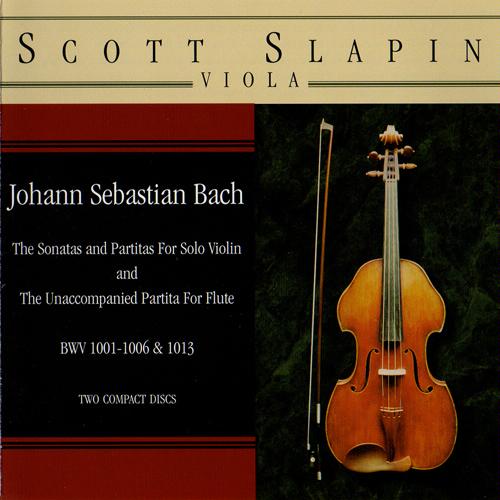
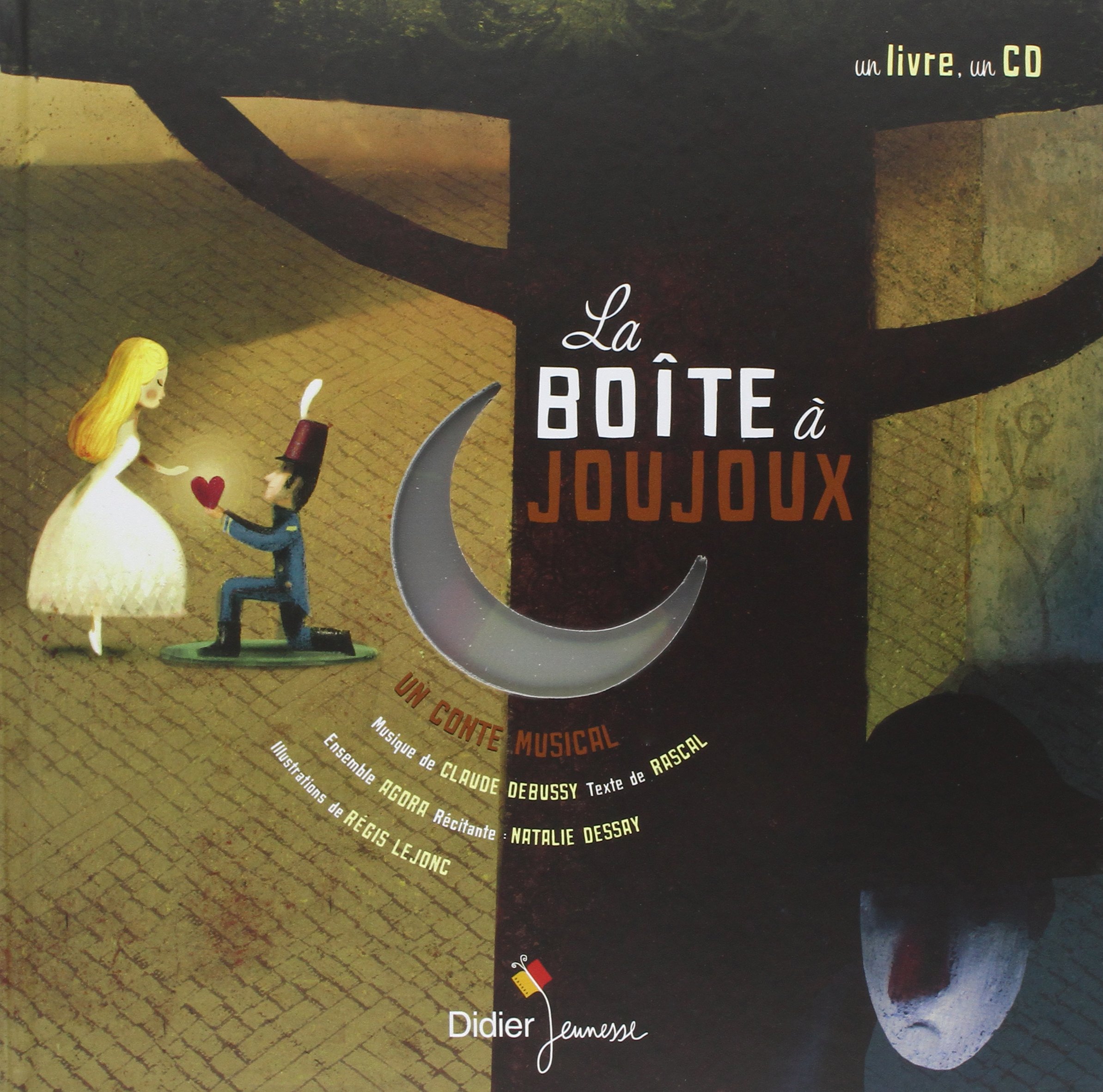
As we work through Part 1 of the Project, we encounter “the trifecta” which is a good opportunity to add a few “threesomes” as filler guides (Guides 315 and 316) and provide complete Scott Slapin’s rendering of J.s S. Bach’s works for solo violin (and solo flute) performed on the viola (Guide #317). As a “bonus” holiday selections, we added Amahl and the Night Visitors (Guide #63) and Debussy’s delightful “Toy Box” (Guide #319). Finally, notice a few Beethoven Listener Guides, in keeping with the Beethoven Year.

Your Listener Guides

Listener Guide # 315 - Three Scandinavian Symphonies
Jean Sibelius wrote seven symphonies; and his Third Symphony represents a turning point in Sibelius's symphonic output. His First and Second symphonies are grandiose Romantic and patriotic works. The Third, however, is a good-natured, triumphal, and deceptively simple-sounding piece which hardly foreshadows the more austere complexity of his later symphonies. The Sibelius is flanked by a pair of symphonies by the early-romantic Swedish composer Franz Berwald. (Once Upon the Internet #55 – 17 January 2017)


Listener Guide # 316 - Afro-American Opera
If Porgy and Bess is without a doubt the most well-known opera that deals with African Americans, there are many other works that have African American subject matters in the stage repertoire, and I chose to assemble three of them in this Listener Guide. Works by Scott Joplin, George Gershwin and Jerome Kern. (ITYWLTMT Podcast #209 - 11 Sep. 2015)


Listener Guide # 317 - J.S. Bach: Sonatas for Solo Violin
The complete set of solo violin works by J.S. Bach consists of three sonatas da Chiesa (or church sonatas), in four movements, and three partitas (or partias), which are “dance suites”. The set was completed by 1720, but was only published in 1802 by Nikolaus Simrock in Bonn. Even after publication, it was largely ignored until the celebrated violinist Joseph Joachim started performing these works. Today, Bach's Sonatas and Partitas are an essential part of the violin repertoire, and they are frequently performed and recorded. (Once Upon theInternet #38 – 9 June 2015)


Listener Guide # 318 - Christmas
This Christmas playlist programs titles from both the French (Canadian) and English repertoires. Some of the "stand alone" classics come from Adolphe Adam (Minuit, Chrétiens, which is known in English as O Holy Night), Frederick Delius (his charming sleigh ride) and Corelli's Christmas Concerto. Bemjamin Britten and Ralph Vaighan-WIlliams both provide variations based on a pair of well-known carols: God Rest Ye Merry, Gentlemen and Greensleeves. Marcel Dupre also adapted a well-known French carol for organ. (ITYWLTMT Podcast #212 - 25 Dec 2015)

 
Listener Guide # 319 – Child’s Play
Kids and Toys are what Christmas is about. This Listener Guide proposes some music that is appropriate for young (and young at heart) music lovers. There are three main ideas that intermingle in this montage: children, children’s tales and (of course) toys. (ITYWLTMT Podcast #85 - 21 Dec 2012)


Friday, November 29, 2019

Glenn Gould Plays J. S. Bach


This montage from our Podcast Vault revisits a post from June 21, 2014. It can be found in our archives at https://archive.org/details/pcast161


 =====================================================================


This week’s Podcast Vault selection is from June of 2014, marking what was then the 60th anniversary of Glenn Gould’s first recorded performance of the Goldberg Variations – a broadcast performance from the CBC archives.

A year later, in 1955, Gould recorded the Goldberg Variations for Columbia records, his breakthrough work. Although there was some controversy at Columbia about the appropriateness of this "debut" piece, the record received phenomenal praise and was among the best-selling classical music albums of its era. Gould became closely associated with the piece, playing it in full or in part at many recitals. A new recording of the Goldberg Variations, made in 1981, would be among his last albums; the piece was one of only a few he recorded twice in the studio. The 1981 release was one of CBS Masterworks' first digital recordings. The 1955 interpretation is highly energetic and often frenetic; the later is slower and more deliberate —the 1954 CBC performance, I find, sits som ewhere between the two.

Gould revered J.S. Bach, stating that the Baroque composer was "first and last an architect, a constructor of sound, and what makes him so inestimably valuable to us is that he was beyond a doubt the greatest architect of sound who ever lived". He recorded most of Bach's other keyboard works, including both books of The Well-Tempered Clavier and the Partitas, French Suites, English Suites, Inventions and Sinfonias, keyboard concertos, and a number of toccatas (which interested him least, being less polyphonic).

As our bonus filler, I chose his studio recording (1963-64) of the two and three-part inventions. We can compare these with tracks from the CBC broadcast.