Showing posts sorted by date for query elgar. Sort by relevance Show all posts

Friday, January 22, 2021

Brahms Symphony no. 4


This montage from our Podcast Vault revisits a post from January 25, 2013. It can be found in our archives at 
https://archive.org/details/BrahmsFestivalPart4


 =====================================================================

Throughout the week, I programmed our Brahms Cycle podcasts from January 2013 in sequence, culminating today with a Podcast Vault share featuring Brahms’ Symphony no. 4.

In his Classical Net review of Eugen Jochum’s Brahms cycle with the Berlin Philharmonic reissued on CD, Brian Wingman makes an audacious claim, given the high standard the Berlin orchestra has maintained in the German repertoire under luminaries like Furtwangler, Karajan, Abbado and even more recently Simon Rattle: this is the finest Brahms cycle to ever come out of Berlin. More than simply having the Berlin Philharmonic sounding splendid for 1952, Jochum is also able to bring out enormous amounts of detail through his careful attention to the winds and brass - freewheeling, but always musical.

Ignoring monophonic recordings is a dangerous gamble that causes you to miss out on exceptionally great musicianship. Jochum was nothing if not a great musician, and his Brahms recordings happily stand the test of time. Jochum did record these pieces later in stereo, with the London Philharmonic on EMI. Those readings (available on YouTube here) are wonderful, and the best Brahms with that particular ensemble.

Completing the original montage, a lively interpretation  of Brahms’ Serenade no. 1 by Raffi Armenian and his then orchestra in Kitchener-Waterloo.

As our bonus share, another recording by Jochuim and a London orchestra (this time, the LSO) in Brahms’ Haydn Variations (we heard the two-piano version this past Tuesday), coupled with Elgar’s Enigma Variations

https://youtube.com/playlist?list=PL3B_RNobM-BQl3M_QPc1rIU4gMv8vSkhV

I think you will (still) love this music too.


Saturday, August 1, 2020

Project 366 - Dates on the musical calendar for August 2020

Project 366 continues in 2019 with "Dates on the Musical Calendar


This month makes the final installment of Project 366, a long-standing long-term project we began in April 2016 to mark what was then the fifth anniversary of our music blog. Today, we will share the last few listener guides in this series, and will discuss in a post later this month how we will program our daily podcasts for the foreseeable future - stay tunes.

Highlights

  • 10-Aug - Happy Birthday Marie-Claire Alain (*1929) [Guide #10
  • 13-Aug - Left-Handers Day [Guide # 362]
  • 15-Aug -  Happy Birthday Samuel Coleridge-Taylor (*1875) [Guide #363]
  • 18-Aug -  Happy Birthday Antonio Salieri (*1750) [Guide #146]
  • 22-Aug  -  Happy Birthday Claude Debussy (*1862) [Guide #84]
  • 31-Aug - FP of Weill's  Threepenny Opera (OTD 1928) [Guide #366]

If you recall, our very first listener guides were our two-part musical alphabet. As a fitting close to the project, and to fill the remaining dates on the calendar, we will revisit the musical alphabet therough a series of listener guides. Here is our "new" alphabet (noting some listener guides tackle more than one letter)


Your Listener Guides

Listener Guides #357 & 358 - A for Aida

Verdi composed his first opera (Oberto) in 1839 and from then on strung together great works achieving critical and popular success: Nabucco (1842), Rigoletto (1851), Il trovatore (1853), and the list goes on and on. Probably one of Opera’s most celebrated spectacles of excesses, Aida was a commission by the ruler (Khedive) of Egypt for the great opera house he’d inaugurated in Cairo in 1869. Versi’s Rigoletto was the first production put up at the opera house, and so Verdi was approached to create the spectacular stage work. [Once or Twice a Fortnight - August 15th, 2013]

[L/G 357 – Acts 1 & 2, L/G 358 – Acts 3 & 4]


Listener Guides #359 - E for Elgar

Elgar was at the height of his fame when the Philharmonic Society commissioned a violin concerto in 1909. The work was dedicated to Fritz Kreisler, the internationally famous violinist who was the soloist at its first performance. The work is long for a violin concerto and expansive in mood but nevertheless compelling and not overblown. It contains none of the pomposity and swagger found in many of Elgar's works which some commentators find disturbing and rather distasteful. The work is firmly established in the classical repertoire although not performed frequently. [ITYWLTMT Montage # 294 – October 30 2018]


Listener Guides #360 - J for Jongen

Joseph Jongen’s Symphonie Concertante of 1926 is a tour de force, considered by many to be among the greatest works ever written for organ and orchestra. The work was commissioned by Rodman Wanamaker for debut in the Grand Court of his palatial Philadelphia department store, Wanamaker's. Its intended use was for the re-dedication of the world's largest pipe organ there, the Wanamaker Organ. As part of a series of concerts Rodman Wanamaker funded with Leopold Stokowski and the Philadelphia Orchestra. Wanamaker's death in 1928 precluded the performance of the work at that time in the venue for which it was written, but it was finally performed for the first time with the Wanamaker Organ and the Philadelphia Orchestra in 2008. [ITYWLTMT Montage #191 - March 27, 2015]


Listener Guides #361- K for Kabalevsky & Khachaturian

After a tenure with the Bolshoi Theatre (1943-56), Kirill Kondrashin concentrated on orchestral conducting, becoming sought after as a concerto accompanist and working with the country’s leading instrumentalists, such as Emil Gilels, Leonid Kogan, David Oistrakh, Sviatoslav Richter and Rostropovich. In the first International Tchaikovsky Competition in 1958, Kondrashin was the conductor for Van Cliburn, who won the first prize. After the competition he toured the USA with Cliburn, being the first Russian conductor to visit America since the Cold War began. The two suites (Comedians and Masquerade) are taken from the same October 20, 1958 Manhattan Center recording by the RCA Symphony Orchestra (the likely remnants of the NBC Symphony/Symphony of the Air) under Kondrashin, a few months after the Cliburn sessions at Carnegie Hall.  [ITYWLTMT Montage #316 - July 12, 2019]


Listener Guides #362- The Left Hand
Pianists limited to the use of their left hands are not uncommon. As an example, in 1964, American pianist Fleisher lost the use of his right hand due to a condition that was eventually diagnosed as focal dystonia. Fleisher commenced performing and recording the left-handed repertoire while searching for a cure for his condition. In the 1990s, Fleisher was able to gradually overcome his focal dystonia symptoms after experimental botox injections to the point where he could play with both hands again. [ITYWLTMT Montage #320 - August 13, 2019]


Listener Guides #363- The Dark Continent
The Dark Continent has long been associated with adventure, immense deserts, fierce predators and a population that lives in the extremes of riches and poverty. Africa has also been the stage of colonial expansion, followed by self-governance and (often times, it seems) civil war, unrest and despots. [ITYWLTMT Montage #118 - August 16, 2013]


Listener Guides #364- O for Offenbach
Offenbach was born in Germany of a musician father, cantor of a synagogue. Early on, Jacob Offenbach showed himself adept at the cello, which convinced his father to send him to study in Paris. Offenbach joined the Conservatoire to become a soloist, but his clownish behavior saw him leaving after a year. Thanks to his talent, he still performs in concert - after having francized his given name - then joins the orchestra of the Opéra-Comique in which he plays while establishing himself as a composer. [ITYWLTMT Montage #299 - December 21, 2018]


Listener Guides #365 - P for the Planets

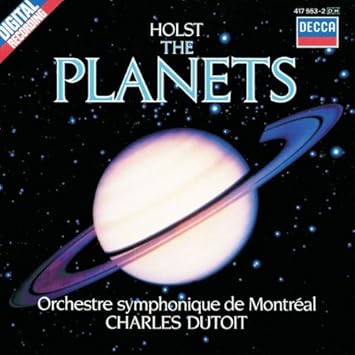
Written between 1914-1916 by British composer Gustav Holst, ‘The Planets’ is a suite of seven short tone poems, each representing one the known planets of the Solar System seen from Earth at the time, and their corresponding astrological character. [Vinyl’s Revenge #33 - December 12, 2017]


Listener Guides #366 - The Three-Penny Opera

A milestone of 20th century musical theatre, The Threepenny Opera rolls on unstoppably into the 21st. In their opera "by and for beggars", Weill and Brecht transformed old-fashioned opera and operetta forms, incorporating a sharp political perspective and the sound of 1920s Berlin dance bands and cabaret. Weill's acid harmonies and Brecht's biting texts created a revolutionary new musical theatre that inspired such subsequent hits as Cabaret, Chicago, and Urinetown. [Once or Twice a Fortnight - August 31st, 2013]


Tuesday, June 23, 2020

London


This montage from our Podcast Vault revisits a post from July 27, 2012. It can be found in our archives at https://archive.org/details/London_837


 =====================================================================

Before I get started today, I wanted to acknowledge a couple of missteps in managing our podcasting channel – a couple of times in the past week I posted some material and failed to pick the right date for the automatic publisher to activate the selections. As a result, my Wednesday and Friday posts were on line a few days ahead of schedule – which explains why I chose to “expedite” this week’s foray into the Podcast Vault. This is completely an error in my part but, since nobody seemed to be bothered by that programming snafu, it’s a reminder for me to be more focused and disciplined when I line up my publishing…


While I am mindful of avoiding “dated” programming, from time to time there are montages that don’t quite age well. It’s not to say that the program for this week is completely anachronous, I am obliged to remind listeners that this 2012 montage was published around the time of the London Summer Olympics, which explains how Vangelis found his way here. Overall, however, the podcast does keep to the overall theme of music written for or inspired by London and England.
The main work on the podcast is a nice performance by Sir Colin Davis of the last of Haydn’s London Symphonies (his no. 104) that completes our Project 366 survey of the complete set of 12. The nickname for that symphony aptly is “London”. Works by Bach, Elgar, Otto Nicolai and Gershwin feed this overall theme.

As our bonus track, another London-nicknamed symphony, this one by Ralph Vaughan Williams


I think you will (still) love this music too.

Tuesday, October 30, 2018

Sir Edward Elgar (1857-1934)


This is my po st from this week's Tuesday Blog.

No. 294 of the ongoing ITYWLTMT 
series of audio montages, which can be found in our archives at https://archive.org/details/pcast294


=====================================================================

This week’s Blog and Podcast – our quarterly “Fifth Tuesday” post - features two of Sir Edward Elgar’s three concertos – his concerto for violin and his more famous cello concerto.

According to the Elgar Society’s website, two concertos for the cello are performed more often than any others. One is by Antonin Dvorak, an epic work brimming with melodies and embracing a wide range of emotion. The other is Elgar's: intimate, highly-concentrated and unlike any other ever written for the instrument.

Elgar wrote the concerto in 1919, just after the Great War. Appalled and disillusioned by the suffering caused by the war, he realized that life in Europe would never be the same after such destruction. His first reaction had been to withdraw from composition, and he wrote very little music during the war's first four years. Then, over a period of twelve months - from August of 1918 to the following August - Elgar poured his feelings into four works that rank among the finest he ever composed. Among that set was the Cello Concerto, Elgar's lament for a lost world. The performance I chose is by Canadian cellist Shauna Rolston.

Elgar was at the height of his fame when the Philharmonic Society commissioned a violin concerto in 1909. The work was dedicated to Fritz Kreisler, the internationally famous violinist who was the soloist at its first performance.

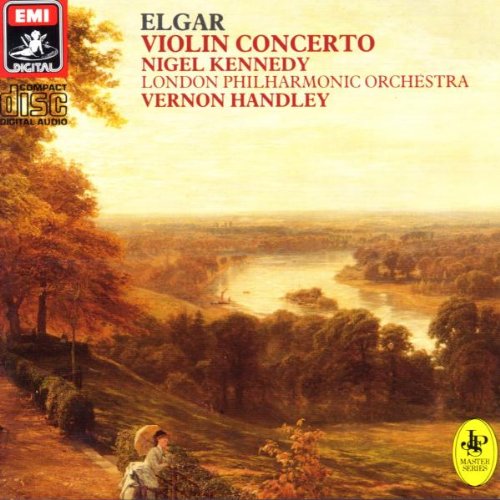
The work is long for a violin concerto and expansive in mood but nevertheless compelling and not overblown. It contains none of the pomposity and swagger found in many of Elgar's works which some commentators find disturbing and rather distasteful. The work is firmly established in the classical repertoire although not performed frequently. The performance on the montage is one by Nigel Kennedy during the early stages of his career.

It is easy to dismiss Salut d'Amour as an insignificant trifle, salon music not deserving a wider audience. However, for the work to establish itself so forcefully in what was a fiercely competitive field says much for its charm and quality. The version of the piece I chose to complete the podcast is a setting for violin and small ensemble, featuring Gil Shaham and the Orpheus Chamber Orchestra.

I think you will love this music too.

Friday, July 13, 2018

Due South

No. 284 of the ongoing ITYWLTMT  series of audio montages, which can be found in our archives at https://archive.org/details/pcast284


=====================================================================

To launch our summer series of podcasts, I thought I’d provide a “musical passport” montage, something we haven’t done much of in the past couple of summers. In past years, we’ve provided travelogue-style podcasts that explore specific countries and regions, often not by native composers.
Today’s theme has to do with “going South”. South can be both a relative and an absoluter term. To illustrate, in one of his solo albums, Québec singer-song writer Michel Rivard talks of the South in this way (my translation) – At the pub, they sing farewell to Johnny, who’s headed South. South of Shefferville isn’t Jamaica, it’s Québec CIty, or Matane, or New Brunswick.

It’s in that vein that we should consider our first track, the concert overture In the South by Edward Elgar. Subtitled “Alassio” for the Italian Riviera town where Elgar and his family stayed in the winter of 1903 to 1904, it paints a picture of Elgar strolling around during the visit, while the buildings, landscape and history of the town provided him with sources of inspiration. In his words, “Then in a flash, it all came to me – the conflict of the armies on that very spot long ago, where I now stood – the contrast of the ruin and the shepherd – and then, all of a sudden, I came back to reality. In that time I had composed the overture – the rest was merely writing it down.”

We turn later in the montage to another British composer, Ralph Vaughan Williams, and his seventh symphony subtitled “Sinfonia antartica”. The symphony revisits the music Vaughan Williams provided for the film Scott of the Antarctic in 1947.

The symphony is in five movements; the composer specified that the third movement lead directly into the fourth. The score includes a brief literary quotation at the start of each movement. They are sometimes declaimed in performance, although the composer did not say that they were intended to form part of a performance of the work. The quotes are:

  • To suffer woes which hope thinks infinite,/ To forgive wrongs darker than death or night,/ To defy power which seems omnipotent,/ ... / Neither to change, nor falter, nor repent:/ This ... is to be/ Good, great and joyous, beautiful and free,/ This is alone Life, Joy, Empire and Victory. (Shelley, Prometheus Unbound)
  • There go the ships, and there is that Leviathan whom thou hast made to take his pastime therein. (Psalm 104, Verse 26)
  • Ye ice falls! Ye that from the mountain's brow/ Adown enormous ravines slope amain —/ Torrents, methinks, that heard a mighty voice,/ And stopped at once amid their maddest plunge!/ Motionless torrents! Silent cataracts! (Coleridge, Hymn before Sunrise, in the vale of Chamouni)
  • Love, all alike, no season knows, nor clime,/ Nor hours, days, months, which are the rags of time. (Donne, The Sun Rising))
  • I do not regret this journey; we took risks, we knew we took them, things have come out against us, therefore we have no cause for complaint. (Scott's Last Journal)

The only work on today’s montage emanating from a Southern composer is by Argentina’s King of the Tango. Written between 1965 and 1970, the Cuatro Estaciones Porteñas, are a set of four tango compositions written by Ástor Piazzolla, which were originally conceived and treated as different compositions rather than one suite. By giving the adjective porteño, referring to those born in Buenos Aires, the Argentine capital city, Piazzolla gives an impression of the four seasons in Buenos Aires. Note the order of the seasons doesn’t match the “Northern” order of Vivaldi’s concerti!

The pieces were scored for his quintet of violin (viola), piano, electric guitar, double bass and bandoneón. The version I chose is an arrangement for piano trio.


I think you will love this music too

Saturday, April 15, 2017

Wagner's Tristan und Isolde

This is my post from this week's Once or Twice a Fortnight.


In June 2016, Hugo Shirley wrote a very interesting article for Gramophone titled “The opera that changed music”. The article opens with quotes from Alma Mahler, Clara Schumann and Edward Elgar as they each react to Wagner's Tristan und Isolde; a quote from one of Grieg’s pen pals is especially “graphic”:

[T]he most enormous depravity I have ever seen or heard, but in its own crazy way it is so overwhelming that one is deadened by it as by a drug. […] Even more immoral…than the plot is this seasick music that destroys all sense of structure in its quest for tonal colour. In the end, one just becomes a glob of slime on an ocean shore, something ejaculated by that masturbating pig in an opiate frenzy!
The Gramophone article is a great read, especially for those of us who have mixed emotions about sitting through a Wagner opera from curtain rise to curtain fall – let alone try and sink their teeth into the material and make sense if it all. This is a commitment, to be sure!
Shirley writes that the past 150 years are littered with writers trying to express the fascination, revulsion (or both!) that Tristan inspires. Even today, Tristan remains a work that can inspire fierce devotion or baffled resistance: it eludes clear definition and explanation and encourages intemperate hyperbole at every turn. Maybe Michael Tanner’s thought-provoking description is one of the best: ‘Along with Bach’s St Matthew Passion,’ he writes, ‘it is one of the two greatest religious works of our culture.’

The Internet is littered with resources and authoritative (as well as authoritative-sounding) articles regarding Tristan, and I would hate to add more… To me, Tristan is in many ways a “regular day in the office” for Wagner: the creative convergence of Wagner’s devotion to the philosophy of Arthur Schopenhauer, the soap-opera that is his own love life and musical exploration that takes him away from established musical convention.

The re-discovery of mediaeval Germanic poetry, including Gottfried von Strassburg's version of Tristan, the Nibelungenlied and Wolfram von Eschenbach's Parzival, left a large impact on the German Romantic movements during the mid-19th century. Again, we note here subject matter that Wagner has mined to form the core of his epic operas.

Tristan took five years to compose with the bulk of the work between 1857 and 1859. Sections of the opera and libretto were composed in Switzerland and Italy, as Wagner’s 20-year marriage was disintegrating in large part because of his relationship with German poet and author Mathilde Wesendonck , the wife of a wealthy silk trader. (Wagner set five songs to her words, called the Wesendonck Lieder, in the same time period).

Staging an opera isn’t easy – and it is even less so when it comes to a Wagner opera! The completed work remained unstaged for several years and it’s only after King Ludwig II of Bavaria became Wagner’s sponsor that enough resources were secured to mount the premiere of Tristan und Isolde. Hans von Bülow was chosen to conduct the production at the Nationaltheater in Munich. This of course is happening at the time Wagner was having an affair with his wife Cosima which resulted in a daughter – Isolde – born about two months before the premiere on 10 June 1865.
The next production of Tristan was in Weimar in 1874. Wagner himself supervised another production of Tristan in Berlin in March 1876, but the opera was only performed at the Bayreuth Festival after his death; Cosima (now his widow) oversaw this widely acclaimed production in 1886.

Today’s 1953 performance is also from the Festspielhaus in Bayreuth. In a review by Webster Forrest for wagnerdiscography.com, he writes:

This recording of Tristan is especially valuable, as it is the only available recording featuring the Isolde of the great Astrid Varnay. The performance is led by one of the German repertoire's most competent if not most passionate conductors: Eugen Jochum […] and this Tristan emits more heat and commitment than many […] From the outset the key words for this performance are concentration, accuracy, and commitment. Jochum handles the orchestra with a beautiful skill that reminds one of the more sensitive and beautiful performances […] The pace is exciting - and measured. The conducting throughout keeps the drama moving very convincingly, though there is not very much in the way of sudden excitement where it might be wanted.
Varnay's Isolde is rather intelligent and proud, and where it counts, passionate. […] Varnay's was a voice of huge volume and a rather hot and heavy timbre; some found that she sat on words, using a peculiar pronunciation of consonants to pry her way into a note. This can be true in some of her recorded performances, but here […] she displays great vocal facility as well as incredible musicality. Her involvement in the entire night scene, ending with the great love duet in Act II is exceptionally rewarding both musically and dramatically. Her Liebestod must be regarded as one of the finest ever recorded.
[…] The much-loved and under-recorded Ramón Vinay sings Tristan, and he is a fine choice for the role. Vinay's tenor is one of fine baritonal strength and a robust and penetrating top. His approach to the role is full-blooded and martial without being at all strident. […] He certainly makes a great deal of the text in many ways and in most instances convinces us of his character. His dying words are a touching yet well-controlled expression of deranged love.
[…] The last forty minutes of the opera - from somewhere around Tristan's 'Ach Isolde ... wie schön bist du' there is a distortion in the sound at the upper dynamic levels. (This alone may perhaps account for the recording's rarity.) It's a crackling, as though the recording levels were a little too high, but it is a noise on top of the recorded music, and apart from it there is no distortion of the actual sound captured (no loss of detail, e.g., or no muffling - just this extra noise on top, like a scratch on a record.)

Richard WAGNER (1813-1883)
Tristan und Isolde, WWV 90
music drama in three acts
German libretto by the composer, based largely on the romance by Gottfried von Strassburg.


Tristan - Ramón Vinay
Isolde - Astrid Varnay
Brangäne - Ira Malaniuk
Kurwenal - Gustav Neidlinger
Marke - Ludwig Weber
Melot - Hasso Eschert
Ein Hirt - Gerhard Stolze
Ein Seemann - Gene Tobin
Ein Steuermann - Theo Adam
Chor und Orchester der Bayreuther Festspiele
Conductor: Eugen Jochum


Festspielhaus Bayreuth
July 30, 1953 (Live recording)


INFO - http://www.wagnerdiscography.com/rev...ri53jochum.htm
SOURCE - https://www.liberliber.it/online/aut...an-und-isolde/


Synopsis - http://www.opera-arias.com/wagner/tr...olde/synopsis/
Libretto - http://www.opera-arias.com/wagner/tr...olde/libretto/


Internet Archive URLs

Act 1 - https://archive.org/details/wagner_tristan_je_01_einlei_etc
Act 2 - https://archive.org/details/wagner_tristan_je_41_mir_di_etc
Act 3 - https://archive.org/details/wagner_tristan_je_51_muss_i_etc

Sunday, February 19, 2017

Project 366 - Themes and Variations

To mark the fifth anniversary of ITYWLTMT, we are undertaking a long-term project that will introduce - and re-introduce - musical selections in the context of a larger thematic arc I am calling "A Journey of Musical Discovery". Read more here.


This month’s installment of Project 366 is another stand-alone theme with illustrations, this one dusting up a thematic arc from January 2014.

The Oldest Trick in the Book

In one of our earliest chapters, we talked about sonatas, and introduced the general concept of musical form – that is to say, the “method behind the madness” of organizing a piece of music. Forms can be very strict (the sonata form, or three-part form is a good example of that), and others can be less rigid, but form is after all form, and there has to be a set of “simple rules” that allow us to build a piece (or recognize how a piece is built). In his famous Omnibus television lecture on Beethoven’s Fifth Symphony, Leonard Bernstein talked about form as “a mold of Jell-O”.

One example if a popular musical form is the “theme and variations”. In its simplest manifestation, a musical theme is “exposed” and is repeated in altered form or accompanied in a different manner through a set of variations “developed” from that theme. T & V structure generally begins with a theme (which is itself sometimes preceded by an introduction), typically between eight and thirty-two bars in length; each variation, particularly in music of the eighteenth century and earlier, will be of the same length and structure as the theme.

The basic principle of beginning with simple variations and moving on to more elaborate ones has always been present in the history of the variation form, since it provides a way of giving an overall shape to a variation set, rather than letting it just form an arbitrary sequence. In a way, this form may in part have derived from the practical inventiveness of musicians.

According to a fine article in Wikipedia, works in T & V form first emerge in the early sixteenth century. Keyboard works in variation form were written by a number of 16th-century English composers, including William Byrd, Hugh Aston and Giles Farnaby. Outstanding examples of early Baroque variations are the "ciaccone" of Claudio Monteverdi and Heinrich Schütz] Two famous variation sets from the Baroque era, both originally written for harpsichord, are George Frideric Handel's The Harmonious Blacksmith set, and Johann Sebastian Bach's Goldberg Variations.

In the Classical era, Wolfgang Amadeus Mozart wrote a great number of variations, such as the first movement of his Piano Sonata in A, K. 331, or the finale of his Clarinet Quintet. Joseph Haydn specialized in sets of double variations, in which two related themes, usually minor and major, are presented and then varied in alternation; outstanding examples are the slow movement of his Symphony No. 103, the Drumroll, and the Variations in F minor for piano, H XVII:6.

Musicians of the Classical era also could improvise variations; both Mozart and Beethoven made powerful impressions on their audiences when they improvised. Modern listeners can get a sense of what these improvised variations sounded like by listening to published works that evidently are written transcriptions of improvised performances, in particular Beethoven's Fantasia in G Minor, Op. 77, and Mozart's Variations on an Aria by Gluck, K. 455. Beethoven wrote many variation sets in his career. Some were independent sets, for instance the Diabelli Variations, and the Eroica Variations . Others form single movements or parts of movements in larger works, such as the variations in the final movement of the Third Symphony (Eroica).

We could continue the list through the Romantic (Chopin and Mendelssohn) and the Late Romantic (Johannes Brahms). Variation sets have also been composed by notable twentieth-century composers, including Sergei Rachmaninov (Rhapsody on a Theme of Paganini, and his variations for solo piano on themes by Chopin and Corelli), Charles Ives (Variations on "America"), Arnold Schoenberg (Theme and Variations, Opp. 43a and 43b), and the list goes on…

A significant sub-set of the above consists of variations on a theme by another composer – Brahms’s variations on themes by Haydn and Paganini, Chopin, Liszt and many others based on operatic arias by Mozart and others, the list can go on for pages!

Your Listener Guides

Listener Guide #77 “TDMH June 1954”. Taken from the broadcast archives of the CBC, Glenn Gould performs the Goldberg Variations and other Bach favourites (ITYWLTMT Podcast # 161 - 20 June 2014)


Listener Guide #78 – “Tchaikovsjy Suites nos. 3 and 4”. From my vinyl collection, a pair of recordings of Tchaikovsky Orchestral; Suites, both with elaborate Theme and Variation movements (Vinyl’s Revenge # 24 - 3 Jan 2017)


Listener Guide #79 – “Theme and Variations: Paganini Edition”. Rachmaninov, Brahms and Liszt use themes by Paganini in elaborate T & V works. (ITYWLTMT Podcast # 137 - 3 Jan 2014)


Listener Guide #80 – “Variations on a Song”. “Twinkle Twinlkle Little Star”, “The Carnival of Venice” and :”I Got Rhythm” are example of songs that get the T & V treatment in this montage. (ITYWLTMT Podcast # 139 - 17 Jan 2014)


Listener Guide #81 – “Variations for Orchestra”. A set of works for orchestra that exploit the T & V form by Elgar and Britten among others (ITYWLTMT Podcast #131 - 31 Jan 2014)


Friday, January 13, 2017

Mahler in New-York

No. 237 of the ongoing  ITYWLTMT series series series of audio montages can be found in our archives at https://archive.org/details/pcast237


=====================================================================

This week’s Blog and Podcast re-visits a topic we first discussed on the Tuesday Blog back in 2012 and feeds this month’s Project 366 chapter on The Concert Experience.

Let me shamelessly borrow from the original post, with significant updates about the performances – and performers – I retained this time.

Off and on, New-York has had more than one professional symphony orchestra holding subscription concerts - Sergey Rachmaninov appeared as soloist in the world premiere of his Third Piano Concerto on November 28, 1909, which took place at the New Theater in New York City. Walter Damrosch was conducting the Symphony Society of New York (From the archives of the New-York Philharmonic)

In a memorable evening at Carnegie Hall on 16 January 1910, Rachmaninov gives the third performance of his Piano Concerto no.3, with the New York Philharmonic under its new music director, Gustav Mahler.

Rachmaninov deemed Mahler “the only conductor whom I considered worthy to be classed with (Arthur) Nikisch. He touched my composer’s heart straight away by devoting himself to my Concerto until the accompaniment, which is rather complicated, had been practiced to the point of perfection, although he had already gone through another long rehearsal. According to Mahler, every detail of the score was important—an attitude which is unfortunately rare amongst conductors.”
The New York Herald reported the following day:

The impression made at the earlier performances of the essential dignity and beauty of the music and the composer’s playing was deepened, and the audience was quite as enthusiastic in its expression of appreciation as at the performance at The New Theater on 28 November last and at the Carnegie Hall two days later. […] The work grows in impressiveness upon acquaintance and will doubtless rank among the most interesting piano concertos of recent years, although its great length and extreme difficulties bar it from performances by any but pianists of exceptional technical powers.

The Symphony and Philharmonic Societies merged under the Philharmonic banner in 1928, and remained the single main professional orchestra in the area until 1937, when David Sarnoff formed the NBC Symphony Orchestra for Arturo Toscanini to conduct as the network’s flagship orchestra. Although its initial home was Studio 8-H at 30 Rockefeller Plaza, the orchestra regularly held court at Carnegie Hall, where the acoustics (and space) were better suited for public broadcasts.

The NBC Symphony was disbanded after Toscanini’s retirement in 1954 but continued to record and perform for another decade or so as the Symphony of the Air notably under Leonard Bernstein and Leopold Stokowski.

Upon his return from winning the first International Tchaikovsky Competition in 1958, American pianist Van Cliburn appeared in a Carnegie Hall concert with the Symphony of the Air, conducted by Kirill Kondrashin (who had led the Moscow Philharmonic in the prize-winning performances in Moscow). The performance of the Rachmaninov 3rd at this concert was subsequently released by RCA Victor on LP and is one of the four works I retained in the re-creation of the Mahler/Rachmaninov concert of January 1910.

Keeping to the original Philharmonic program, the opening work was a Mahler “original”, as the Philharmonic also premiered an orchestration by Mahler of selections of J. S. Bach’s 2nd and 3rd Suites for Orchestra. Compared to the hyper-romantic arrangements of Bach organ music turned out in the first few decades of the twentieth century (by the likes of Schoenberg, Elgar, and Stokowski) Mahler's version of music from Bach suites is surprising forward-looking and restrained.

Wilhelm Mengelberg was principal conductor of the Concertgebouw Orchestra of Amsterdam forsome 50 years (1895 - 1945). Mengelberg met and befriended Gustav Mahler in 1902, and invited Mahler to conduct his Third Symphony in Amsterdam in 1903, and on 23 October 1904 Mahler led the orchestra in his Fourth Symphony twice in one concert, with no other work on the program. Mahler edited some of his symphonies while rehearsing them with the Orchestra, making them sound better for the acoustics of the Concertgebouw. This is perhaps one reason that this concert hall and its orchestra are renowned for their Mahler tradition. The Mahler Suite after Bach is performed today by the Concertgebouw orchestra under Riccardo Chailly.

The second half of the concert features performances of music from operas familiar to New-York audiences and within the Mahler repertoire; the Prelude and Liebestod from Wagner’s Tristan und Isolde, an opera Mahler first conducted in his earliest assignment at the Hamburg Stadttheater and at his New York debut at the Metropolitan Opera on 1 January 1908 and Smetana’s opera The Bartered Bride was one of the last operas Mahler conducted during his short stint with the Metropolitan Opera - on 19 February 1909.

The “end” of the NBC Symphony/Symphony of the Air came when in 1962 Stokowski founded a new orchestra, the American Symphony Orchestra whose mission is to demystify orchestral music and make it accessible and affordable for all audiences. Stokowski was 80 years old when he founded the orchestra and served as music director together with assistant Amos Meller until May 1972 when, at the age of 90, he returned to England. Today, Leon Botstein is the orchestra's music director and principal conductor. They perform regularly at Carnegie Hall and Symphony Space in New York City, and are also the resident orchestra at Bard College, Annandale-on-Hudson. The Wagner is performed by Bolstein and the American Symphony in today’s montage.

The concluding piece of the montage, the overture to Smetana’s opera, is taken from a broadcast recording by the NBC Symphony under Mahler’s long-time collaborator, Bruno Walter.


I think you will love this music too!

Tuesday, September 6, 2016

Last Night of the Proms (2004)


This is my post from this week's Tuesday Blog.


A yearly tradition, this coming Saturday will be the Last Night at the Proms. I thought it would be appropriate to recycle an old broadcast to illustrate and discuss this special concert and its unique format.

The BBC Proms, or The Henry Wood Promenade Concerts presented by the BBC, is an eight-week summer season of daily orchestral classical music concerts and other events held annually, predominantly in the Royal Albert Hall in central London, England. 

Founded in 1895, each season currently consists of more than 70 concerts in the Albert Hall, a series of chamber concerts at Cadogan Hall, additional Proms in the Park events across the United Kingdom on the last night, and associated educational and children's events. It is without question the United Kingdom's biggest annual music festival.

Prom is short for promenade concert, a term which originally referred to outdoor concerts in London's pleasure gardens, where the audience was free to stroll around while the orchestra was playing. This "tradition" has been copied everywhere around the world, and every major orchestra today has "Pops" series though nothing compares quite with the symbolism and oozing nationalism of the seminal event of the festival, the "Last Night" concert.

Indeed, many people's perception of the Proms is taken from the Last Night, although this concert is very different from the others. Broadcast nationally on BBC Television, the concert typically has a more "accessible classics" first part followed by a series of British patriotic pieces in the second half of the concert. 

This sequence established in 1954 includes Edward Elgar's "Pomp & Circumstance March No. 1" (to part of which "Land of Hope and Glory" is sung) and Henry Wood's "Fantasia on British Sea Songs", followed by Thomas Arne's "Rule, Britannia!". The concert concludes with Hubert Parry's "Jerusalem" (a setting of a poem by William Blake), and the British national anthem. 

The video I chose today happens to be one of the few "complete" broadcasts I could find on YouTube, and happens to be Leonard Slatkin's farewell concert with the BBC Symphony.

Enjoy!

PART 1 [Stats at 3:00]

Antonín DVOŘÁK (1841-1904)
Karneval, koncertní ouvertura (Carnival Overture), op. 92 [B. 169]1911

Richard STRAUSS (1864-1949)
Horn Concerto No. 1 in E flat major, op. 11 [TrV 117]
David Pyatt, horn

Ralph VAUGHAN WILLIAMS (1872-1958)
5 Mystical Songs, for baritone, chorus ad lib and orchestra (1911)
Thomas Allen, baritone

Samuel BARBER (1910-1981)
Toccata Festiva, for organ and orchestra, op. 36
Simon Preston, organ

PART 2 [Starts at 1:12:00]

Sir Peter Maxwell DAVIES (1934-2016)
Ojai Festival Overture, for orchestra, J. 240 

Giacomo PUCCINI (1858-1924)
Coro a bocca chiusa (Humming Chorus) from Madama Butterfly (1904)

Showtune Medley featuring Thomas Allen, baritone:


Richard RODGERS (1902-1979)
"Oh, what a beautiful morning" from Oklahoma! (1943, arr. Robert Russell Bennett)

Cole PORTER (1891-1964)
"Where is the life that late I led?" from Kiss Me Kate (1948)

Sir Arthur SULLIVAN (1842-1900)
- "I've got a little list" , rom The Mikado (1884-85) - additional lyrics by Kit Hesketh-Harvey

John Philip SOUSA (1854-1932)
March 'The Liberty Bell' (1893)

Sir Edward ELGAR (1857-1934)
Pomp and Circumstance March No. 1 in D major ('Land of Hope and Glory'), op. 39, no. 1

Sir Henry J. WOOD (1869-1944)
Fantasia on British Sea Songs (1905, with additional Songs arranged by Stephen Jackson)

Sir Charles Hubert Hastings PARRY (1848-1918)
Jerusalem ('And did those feet in ancient time', 1910)

TRADITIONAL
National Anthem (arr. Henry Wood)

BBC Singers 
BBC Symphony Chorus 
BBC Symphony Orchestra 
Leonard Slatkin, conductor

Royal Albert Hall
Saturday 11 Sep 2004 
Alan Titchmarsh, presenter


Tuesday, July 12, 2016

Wolfgang Schneiderhan (1915 –2002)


This is my post from this week's Tuesday Blog.


In past Once Upon the Internet posts, I have shared parts of recordings featuring first chairs of the Vienna Philharmonic such as Walter Barylli and, more recently, Leopold Wlach. Today, I add a third post featuring a longtime member of the famed orchestra, violoinust Wolfgang Schneiderhan.


Schneiderhan was born in Vienna where he primarily studied under Julius Winkler. At age 10 he publicly performed Bach's Chaconne in D minor. The next year he made his debut in Copenhagen playing theMendelssohn Violin Concerto. In the late 1920’s, he moved for a time to England before returning to Vienna to become the first Concertmaster of the Vienna Symphony Orchestra from 1933 to 1937, and from 1937 to 1951 led the Vienna Philharmonic Orchestra. He nevertheless maintained his career as a soloist in concerts and recordings - He was the soloist in the Viennese premiere of Elgar's Violin Concerto in 1947, and in September 1952 he made his benchmark Deutsche Grammophon recordings of all ten Beethoven violin sonatas with Wilhelm Kempff in the Konzerthaus, Mozartsaal, Vienna.

He held teaching posts in Salzburg, Vienna and Lucerne. In 1956 he founded the Lucerne Festival Strings together with Rudolf Baumgartner. He gave the 1959 premiere of his friend Karl Amadeus Hartmann's revised Concerto funebre.

Today’s post features tracks I downloaded a few years back from the old Japanese site Public Domain Classic. The main feature is a “famous reference performance by Schneiderhan with Paul van Kempen conducting the Berlin Philharmonic Orchestra recorded with true audiophile sound quality of the BrahmsViolin Concerto in D, probably sometime in 1952.

To complete the post, I added a pair of Beethoven sonatas from the 1952 set he recorded with Wihelm Kempff.

Happy Listening!


(All tracks feature Wolfgang Schneiderhan, violin)

Johannes BRAHMS (1833-1897)
Concerto For Violin And Orchestra In D Major, op. 77
Berliner Philharmoniker
Paul Van Kempen, conducting

Ludwig van BEETHOVEN (1770-1827)
Violin Sonata No.8 in G Major, op. 30, no. 3 
Violin Sonata No.10 in G Major, op. 96 ('The Cockcrow') 
Wilhelm Kempff, piano


Tuesday, October 13, 2015

Vivaldi - New Philharmonia Orchestra - Leopold Stokowski ‎– Le Quattro Stagioni


This is my post from this week's Tuesday Blog.


This month. Vinyl’s Revenge returns with a somewhat nostalgic look (or should I say listen) at a “guilty pleasure” recording that has been part of my vinyl collection for years.

An Amazon reviewer says it best:


Stokowski's performance of The Four Seasons made me enjoy this work as no other performance has […] If you already love this music, please listen to it as conducted by this great artist.

Indeed, as teased in my recent post on Leopold Stokowski, we are of course talking about Stokowski’s “Phase 4 Stereo” recording of Vivaldi’s Four Seasons with the “New” Philharmonia Orchestra featuring its then-concertmaster (leader) Hugh Bean as soloist.

Why is it a guilty pleasure? I guess it's the unashamedly "big band" sound... For the record, this recording was displaced in my music collection by the 1982 original instrument version by Simon Standage and the English Concert conducted by Trevor Pinnock. 

Perhaps the finest "big band" Seasons comes from this oft-reissued Phase 4 recording which brims with the conductor's characteristic and highly personal tonal color, rescoring and inflection, but it's deeply heartfelt and thoroughly delightful. Indeed, the dynamic continuo and vivid recording even render it highly stylish. 

At 45 1/2 minutes it's seductively slow, but as our soloist Hugh Bean once said of Stokowski's generation,” they made time vanish”.

And Bean would know a thing or two about that generation of conductors, having served as co-leader, and later leader of the “old” Philharmonia under the great Otto Klemperer. Hugh Bean was, by all accounts, one of the finest British violoinists of his day, a tenured teacher at the Royal Conservatory of Music and an accomplished chamber and orchestral performer. Bean is also well-known for performances of great British violin works: the Elgar Violin Concerto and Vaughan-Williams’ The Lark Ascending, which he both recorded at around the same time as these Vivaldi concerti.

Happy Listening!


Antonio VIVALDI (1678-1741)
The Four Seasons from "Il cimento dell'armonia e dell'inventione" op. 8 (nos 1-4)
Hugh Bean violin
Charles Spinks, Harpsichord
New Philharmonia Orchestra
Leopold Stokowski, conducting
Recorded at Kingsway Hall, London, 11 June 1966 
AAA, London VIVA Series, VIV 3