Friday, January 9, 2015

Mendelssohn & Mendelssohn: Trios

No. 180 of the ongoing ITYWLTMT series of audio montages can be found in our archives at https://archive.org/details/pcast180


=====================================================================

Today’s second “Mad for Mendelssohn” podcast features a trio of trios, two of them by Felix and one by his sister Fanny, who was herself an accomplished musician and composer.


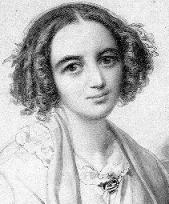
Fanny Mendelssohn is the oldest of the four Mendelssohn children and shared the early musical education and upbringing of her younger brother Felix, including tuition from Carl Friedrich Zelter who, at one point it seems from some of his letters , favoured Fanny over Felix. However, Fanny was limited by prevailing attitudes of the time toward women, attitudes apparently shared by her father, who was tolerant, rather than supportive, of her activities as a composer. Felix did however arrange with her for some of her songs to be published under his name (three in his Op. 8 collection, and three more in his Op. 9). In 1842 this resulted in an embarrassing moment when Queen Victoria, receiving Felix at Buckingham Palace, expressed her intention of singing the composer her favourite of his songs, "Italien", which Mendelssohn confessed was by Fanny.


Her Piano Trio dates from 1846 and was completed shortly before her death. It is a lovely mid romantic trio with many fresh ideas. In four movements, the opening Allegro molto vivace, begins with a flowing, restless accompaniment in the piano over which a beautiful, broad melody of yearning is sung by the strings. The gorgeous second movement, though very romantic, is introspective and reflective in mood. Fanny subtitled the third movement Lied (song in German) and indeed is a charming Song Without Words of the sort Felix made famous. The finale, Allegro moderato, has a lengthy piano introduction before the strings finally join in. The somewhat heavy, Hungarian-sounding theme has a sad but not quite the ragic aura to it. Cross rhythms and the second theme serve to lighten it.

Fanny’s trio is preceded and followed in our montage by her brother’s two trios, performed in a vintage Soviet-era recording by David Oistrakh and friends. Felix Mendelssohn's Piano Trio in D minor is one of Mendelssohn's most popular chamber works and is recognized as one of his greatest along with his Octet, Op. 20. The later Piano Trio  in C minor is dedicated the work to the violinist Louis Spohr, who played through the piece with the composer at least once. A notable feature of the finale of this work is its use of the melody of a chorale taken from the sixteenth-century Genevan psalter Vor deinen Thron tret ich hiermit, also known as Gelobet seist du, Jesu Christ, as the culminating melody. The tune is known in English as Old Hundredth from its association with the 100th Psalm and is commonly sung to the lyrics "Praise God from Whom All Blessings Flow."

I think you will love this music too!

Friday, January 2, 2015

Check us out on hubub.com

I am trying out something new, at least for the next few months to see how things go..

My monthly theme will turn into a topic on the service hubub.com.

Check out "Mad for Mendelssohn" at https://www.hubub.com/296900

Let me know what you think!

Felix Mendelssohn: Symphonies no. 1 & 5

No. 179 of the ongoing ITYWLTMT series of audio montages can be found in our archives at https://archive.org/details/pcast179


=====================================================================

This week is the first of  a series of montages that fall under the thematic arc "Mad For Mendelssohn"where we will program many of Mendelssohn's mature symphonies, concertos and some of his more intimate works. Some of these mature works have already been programmed in the past, namely his Scottish and Italian symphonies, his early double concerto and his great Violin Concerto.

Aside from the youthful String Symphonies, Mendelssohn composed five "mature" symphonies, numbered approximately in the order that they were published, rather than the order in which they were composed. The order of actual composition is: 1, 5, 4, 2, 3. The placement of No. 3 in this sequence is problematic because he worked on it for over a decade, starting sketches for it soon after beginning work on No. 5, but completing it after both Nos. 5 and 4.

So, although the two symphonies we feature today appear to book-end Mendelssohn's symphonic output, they are in fact his first two "mature" symphonies.

The Symphony No. 1 in C minor for full-scale orchestra was written in 1824, when Mendelssohn was aged 15. This work is experimental, showing the influences of Beethoven and Carl Maria von Weber. Mendelssohn conducted this symphony on his first visit to London in 1829, with the orchestra of the Royal Philharmonic Society.

For the third movement he substituted an orchestration of the Scherzo from his Octet. In this form the piece was a success, and laid the foundations of his British reputation. The performance in our montage - by the Calgary Philharmonic and Mario Bernardi - has the original scherzo - here is the "Octet" scherzo, as orchestrated by Mendelssohn - for the London performance:


A grandson of the philosopher Moses Mendelssohn, Felix Mendelssohn was born into a prominent Jewish family. Although initially he was raised without religion, he was later baptised as a Reformed Christian. Althugh one would expect Mendelssohn to have had a "mixed allegiance" to the Jewish and Christian faiths, it is the latter that had Mendelssohn's devotion - Mendelssohn married Cécile Charlotte Sophie Jeanrenaud, the daughter of a French Reformed Church clergyman, on 28 March 1837. During 1829 and 1830 Mendelssohn wrote his Symphony No. 5, known as the Reformation. It celebrated the 300th anniversary of the Lutheran Church. Mendelssohn remained dissatisfied with the work and did not allow publication of the score. It was not published until 1868, 21 years after the composer's death, which explains its numbering...

Apart from the pair of symphonies and conceti mentioned previously, I also have programmed some of Mendelssohnès concert and stage overtures in the past. To complete today's montage, I added a pair of overtures: Son and Stranger (or Return of the Roamer) was a comedy of mistaken identity written in honor of his parents' silver anniversary and unpublished during his lifetime. As for Ruy Blas, it is a romantic concert overture inspired by the Victor Hugo play.

I think you will love this music too.


Thursday, January 1, 2015

Programming - January 2015

=====================================================================

Monthly Theme

Welcome to another year of ITYWLTMT, on Fridays, Tuesdays (on TalkClassical) and twice a month-ish (on OperaLively).


To start things off, I have prepared a set of posts under the theme “Mad For Mendelssohn”, where we plan on completing our Mendelssohn Symphony cycle (we already posted performances of the Scottish and Italian symphonies in 2012 and 2014, respectively), and provide some extras in the chamber music, piano solo and concertante departments. Here are some of the posts you can look forward to this month in our different series:


Pierre’s Tuesday Blog


Once or Twice a Fortnight


NOTE: Since OTF posts do not get published on set dates, make sure to visit OperaLively regularly or …

Subscribe to our ITYWLTMT Fan Page on Facebook

All of our Tuesday, Friday and ad-hoc posts, as well as OTF and YouTube Channel updates get regularly mentioned (with links) on our Fan Page. If you are a user of Facebook, simply subscribe to get notified so you never miss anything we do!

And also on hubub.com... Our monthly hubub this month can be found at https://www.hubub.com/296900